


Domande e Tecniche di Colloquio
8 min di lettura
Aggiornato il:
Jan 27, 2026
Le 8 migliori tecniche di intervista
Vuoi condurre le interviste nel modo migliore? Ecco la tua guida con le migliori pratiche.

Puoi fare le domande «giuste» per il colloquio e comunque fare l'assunzione sbagliata.
La differenza sta nel come intervistare.
In questo articolo, scoprirai migliori tecniche di intervista puoi candidarti immediatamente.
1. Ascolta attivamente
Ascolto è una delle competenze più sottovalutate ma di impatto che puoi apportare come reclutatore.
I reclutatori che ascoltano attivamente possono cogliere sottigliezze (motivazioni nascoste, preoccupazioni o incertezze) che potrebbero non apparire in un curriculum.
Ecco come si presenta in pratica l'ascolto attivo:
- Mantieni il contatto visivo e il linguaggio del corpo aperto. Ciò dimostra impegno e incoraggia il candidato ad aprirsi.
- Presta attenzione ai segnali non verbali, come esitazione, cambiamenti di tono e postura. I candidati spesso comunicano sentimenti o incertezze più profondi attraverso questi segnali.
- Evita di interrompere. Lascia che i candidati finiscano i loro pensieri, anche se sei ansioso di porre la domanda successiva: questo ti darà un quadro più completo del loro processo di pensiero.
- Chiedi un follow-up accurato. Quando scopri qualcosa di interessante o poco chiaro, immergiti più a fondo invece di andare avanti troppo velocemente.
- Riassumi e rifletti. Parafrasare ciò che un candidato gli ha detto non solo dimostra che comprendi, ma gli dà anche la possibilità di chiarire o approfondire.
2. Struttura le domande del colloquio
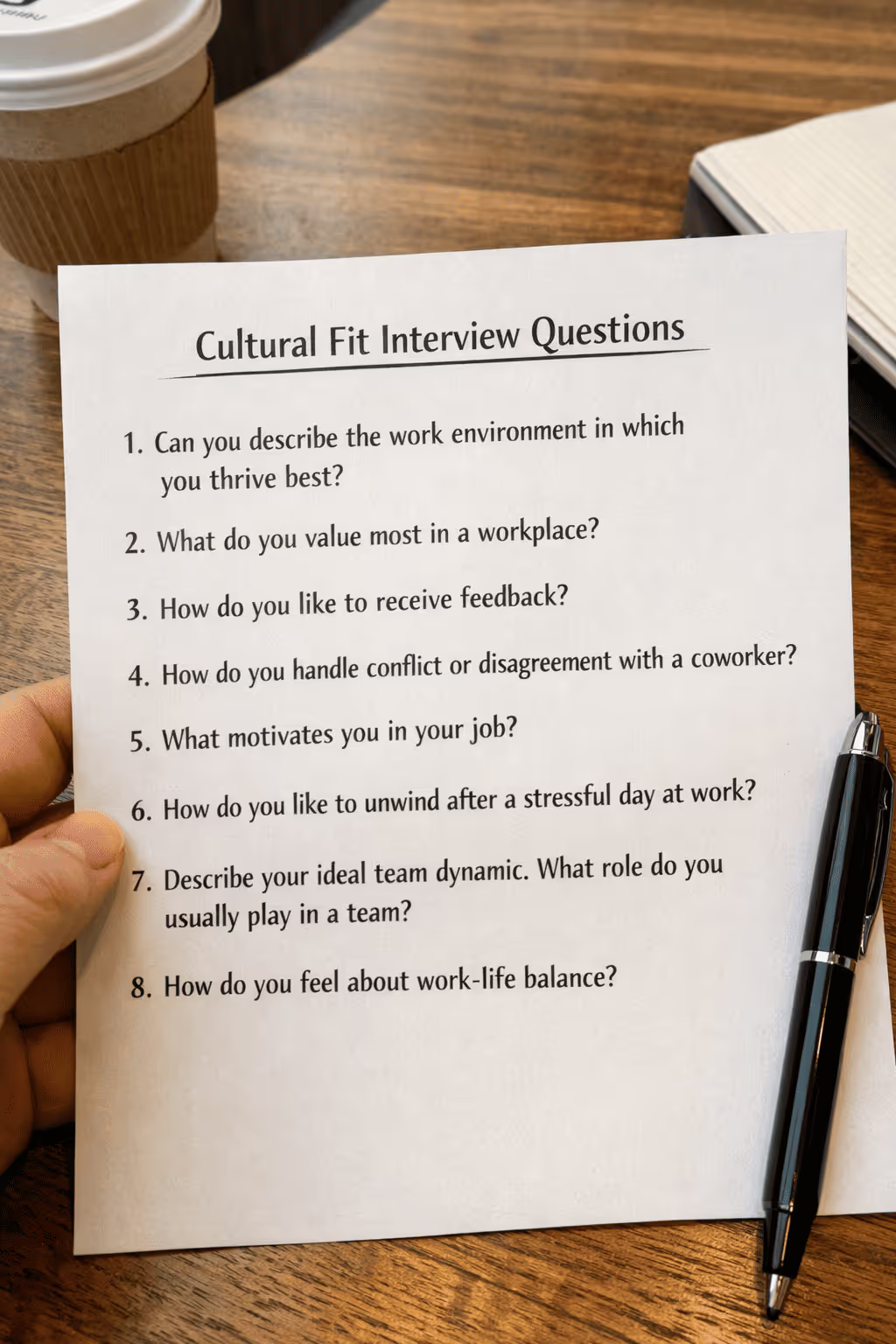
Uno dei maggiori errori commessi dai reclutatori è trattare le interviste come una conversazione informale che scorre naturalmente. Ma, senza una struttura coerente, rischi di paragonare le mele alle arance, e questo è il risultato più difficile assumere la persona giusta.
UN intervista strutturata significa utilizzare uno script coerente che rifletta la realtà del lavoro e il successo sul lavoro. Questa coerenza consente di raccogliere informazioni comparabili, in modo da poter prendere decisioni basate su prove.
Una meta-analisi dei metodi di intervista ho persino scoperto che le interviste strutturate sono quasi due volte più predittivo delle prestazioni lavorative.
Per creare un set di domande strutturato, inizia con un analisi del lavoro — comprendere a fondo le competenze, i comportamenti e i risultati richiesti dal ruolo. Quindi crea domande che rispondano a quei criteri in modo da valutare le cose giuste
Un approccio strutturato può includere diversi tipi di domande:
- Verifica (per confermare l'esperienza fattuale)
- Comportamentale (per vedere le azioni passate)
- Situazionale (per testare il pensiero futuro).
Ogni domanda dovrebbe essere legata a una tua competenza preoccuparsi di.
3. Usa una Consistent Scorecard
Invece di fare affidamento sui sentimenti viscerali, tu e il tuo team di assunzione volete assegna un punteggio oggettivo ai candidati e confrontali fianco a fianco con sicurezza. Le scorecard ti aiutano a passare dalle impressioni soggettive a decisioni di assunzione basate sull'evidenza.
Un scheda di valutazione dell'intervista è essenzialmente un strumento di valutazione standardizzato che elenca le competenze e i comportamenti chiave legati al ruolo, fornisce una scala di valutazione coerente e dà spazio ai commenti che spiegano perché un candidato ha ottenuto un punteggio pari a quello ottenuto. Garantisce che ogni candidato sia valutato in base agli stessi fattori e con la stessa attenzione, il che favorisce l'equità e la chiarezza del processo.
Inizia identificando le competenze e gli attributi specifici essenziali per il ruolo. Questi dovrebbero essere in linea con la descrizione del lavoro e le effettive esigenze della posizione. Ad esempio, potresti includere:
- Competenze tecniche (ad esempio, conoscenza di determinati software o linguaggi di programmazione)
- Competenze trasversali (ad es. comunicazione, lavoro di squadra)
- Adattamento culturale (ad esempio, allineamento con i valori aziendali)
Usa una scala numerica per valutare ogni abilità o competenza. Un sistema comune è una scala da 1 a 5, dove 1 indica che il candidato non ha le competenze richieste e 5 dimostra che è altamente competente. Ad esempio:
- 1: Non soddisfa le aspettative
- 2: Soddisfa parzialmente le aspettative
- 3: Soddisfa le aspettative
- 4: Supera le aspettative
- 5: Supera di gran lunga le aspettative
Assicurati di definire il significato di ciascun numero per evitare interpretazioni diverse da parte degli intervistatori.
Assegna pesi a ciascuna abilità. Ad esempio, a un'abilità tecnica cruciale per il ruolo potrebbe essere attribuito un peso maggiore rispetto a un'abilità trasversale desiderabile ma non essenziale. Potresti utilizzare i coefficienti per riflettere questa priorità, ad esempio ponderando un'abilità tecnica a 5 e una soft skill a 2.
4. Suggerisci scenari realistici

Se vuoi interviste prevedere le prestazioni reali, devi inserire i candidati scenari realistici potrebbero effettivamente affrontare il lavoro.
Le domande sullo scenario realistico, chiamate anche domande di intervista situazionali o basate su scenari, chiedono ai candidati di immagina una potenziale sfida che potresti aspettarti che affrontino o per descrivere come sono ha effettivamente gestito una situazione simile in passato. Queste domande mettono in primo piano il giudizio e il processo, offrendoti una visione più affidabile delle prestazioni future.
Ad esempio:
- «Immagina che il tuo team non rispetti una scadenza importante perché due contributori chiave avevano priorità contrastanti. Cosa faresti?»
- «Raccontami di una volta in cui hai dovuto risolvere un conflitto tra colleghi che non riuscivano a collaborare».
5. Cerca il comportamento (non solo le parole)
Quando fai un colloquio, le risposte che hai sentire sono solo l'inizio. Ciò che conta davvero è il comportamento che il candidato dimostra attraverso quelle risposte.
Piuttosto che concentrarti su argomenti di discussione provati o affermazioni astratte di abilità, cerca esempi concreti di comportamento in situazioni reali. Questo rivela come una persona ha effettivamente agito in contesti simili a quelli che dovrà affrontare nella tua squadra.
Questo è esattamente il motivo per cui molti reclutatori moderni si affidano a colloquio comportamentale: it lets you assess past actions as predictors of future performance.
Behavioral interviewing is based on a simple principle: past behavior is the best indicator of future actions in similar circumstances. Instead of asking “Would you handle X?” you ask candidates to describe situations they’ve already lived through : situations where they handled conflict, made tough decisions, adapted to change, collaborated under pressure....
A classic way to structure these responses is the STAR method (Situation, Task, Action, Result). With STAR, candidates break down their examples into digestible parts:
- Situation: the context or challenge they faced,
- Task: what they were responsible for,
- Action: what steps they took,
- Result: the outcome of those actions.
6. Ask Unexpected Questions

Unexpected questions break candidates out of autopilot. Too many interviews rely on the same predictable questions — “What are your strengths?” or “Why do you want to work here?” Candidates anticipate those and prepare canned responses.
In contrast, well-chosen unexpected questions require candidates to think on their feet and share authentic insight about their decision-making, values, and creativity.
For example:
- “If you could have any superpower, what would it be — and how would you use it at work?”
- “What’s one thing you would change about your last job if you could?”
- “It’s noon one year from now — what are you doing?”
Unexpected questions are especially useful when you want to gauge soft skills and non-technical traits. For instance, asking a candidate how they’d reinvent their previous job can reveal whether they’re curious and improvement-oriented.
7. Rephrase Answers to Test Understanding
One powerful interviewing technique you can adopt right away is rephrasing or paraphrasing candidate answers back to them.
After a candidate responds to a question, pause and reflect their answer in your own words — a bit like “I’m hearing that…” or “So you’re saying…”. This tells the candidate you’re actively present and gives them the chance to correct or expand on parts the first answer didn’t fully cover.
You don’t need special training to rephrase effectively, but there are a few tips to make this technique work smoothly in real interviews:
- Use neutral language — don’t “lead” with your own judgement (“You did great here…”), just restate the core meaning.
- Pause after their answer before rephrasing — don’t rush in. A brief silence helps you digest and respond accurately.
- Invite clarification or elaboration if something still feels vague (“Does that mean…?”).
8. Take Structured Notes with AI

Manual note-taking can distract you from listening actively. That’s where Noota comes in :
Automated Recording & Transcription
Noota records your interviews — whether they’re on Zoom, Google Meet, Teams, or even in-person — and converts speech into text accurately and quickly. You don’t have to juggle a laptop and candidate conversation at the same time, which means you stay present and engaged.
Structured Summaries & Reports
After the interview, Noota doesn’t just hand you a long transcript. It transforms your conversation into clean, structured insights — highlighting key points, decisions, candidate strengths, and important quotes — giving you a ready-to-share interview report in minutes.
Smart Scorecards Tailored to Your Criteria
Instead of manually writing evaluation notes after each interview, AI can generate smart scorecards aligned with your hiring criteria. This makes it easier for you and your team to compare candidates objectively and consistently.
Integration with Your Tools
Noota syncs with ATS systems and communication tools like Slack, Notion, and CRM platforms, so interview insights don’t get stuck in one place. Your candidate records, notes, and summaries move seamlessly into the systems you already use — no copy-paste, no lost information.
Searchable Transcripts & Highlights
With Noota, you can quickly search through transcripts to find specific moments, phrases, or candidate responses you want to revisit. This is a huge advantage when you’re comparing answers across multiple candidates or just double-checking a detail before a decision.
FAQ
❓ What’s the difference between structured and unstructured interviews?
Structured interviews use a consistent set of questions for every candidate, asked in the same order. This helps you compare responses objectively because you’re gathering the same type of information from everyone. Unstructured interviews feel more like a casual conversation and can be useful for rapport, but by themselves they make comparisons between candidates less reliable and may introduce bias. Structured techniques lead to better hiring decisions and fairer evaluation.
❓ Why are behavioral and situational questions so important?
Behavioral questions ask candidates to describe real situations they’ve experienced, which gives you evidence of how they actually behave under pressure or in complex scenarios. Situational questions, on the other hand, present hypothetical challenges relevant to the role and assess how they would think on their feet. Both techniques help you move beyond generic answers and evaluate how someone might perform in similar situations at your company.
❓ How do I make sure I’m listening actively during interviews?
Active listening means focusing fully on the candidate’s words, tone, and body language without planning your next question while they speak. Techniques like paraphrasing answers back to the candidate and asking thoughtful follow-ups show you’re engaged and help clarify meaning. This improves your understanding and signals respect, which often leads to richer responses.
❓ What is a scorecard and why do I need one?
A scorecard is a structured evaluation tool that lists the key competencies, behaviours, and skills you’re assessing — each with a consistent rating scale. Using scorecards helps ensure every candidate is evaluated fairly and against the same criteria, which improves consistency and reduces bias in your hiring decisions. Recruiters often use them alongside techniques like STAR (Situation, Task, Action, Result) to evaluate responses to behavioral questions.
❓ How do I handle unexpected answers or silence?
Instead of letting silence hang, use it as an opportunity to dig deeper. Try rephrasing the question or summarising what you’ve heard so far and invite the candidate to clarify or expand. Silence often encourages candidates to think more deeply and reveal insights they wouldn’t otherwise share. This also gives you clearer data to score and compare later.
❓ Should I tailor questions for each candidate?
Yes — to a degree. You should have a core set of structured questions for consistency, but leaving room to follow up based on a candidate’s specific background or responses helps you understand their real thought process and how their experience translates to your role. Balancing structure with thoughtful flexibility is a key skill in effective interviewing.
❓ How do I avoid bias during interviews?
Bias often creeps in when interviewers rely on gut feeling or unstructured conversations. To reduce it:
- Use structured questions and scorecards so comparisons are consistent.
- Focus on behavioural evidence rather than impressions.
- Involve multiple interviewers and compare notes objectively.
These practices help ensure you hire based on skills and fit — not on charisma or first impressions.
❓ What’s the most actionable tip for better interviewing?
Prepare a list of job-relevant scenarios and behavioral questions ahead of time, use consistent evaluation criteria (like a scorecard), and practice active listening throughout the process. When you combine these techniques, you move from fare domande a raccolta di informazioni utili che prevedono realmente le prestazioni future del tuo team.
Chi è l'autore

Anais scrive di tecniche di colloquio, AI nelle assunzioni, verbali delle riunioni e registrazione delle chiamate, con anni di esperienza come redattrice specializzata in HR.
FAQ
Applica l'ascolto attivo, struttura le domande in base alle competenze richieste, usa scorcard obiettive e valuta comportamenti passati oltre alle risposte superficiali.
- Mantieni contatto visivo e linguaggio del corpo aperto
- Presta attenzione ai segnali non verbali e alle esitazioni
- Poni domande di follow-up approfondite e riflessive
Le interviste strutturate sono quasi il doppio più predittive della performance lavorativa perché usano criteri consistenti, permettono confronti equi tra candidati e riducono i bias soggettivi nelle decisioni di assunzione.
- Valutano tutti i candidati sugli stessi fattori
- Raccolgono informazioni comparabili e obiettive
- Eliminano decisioni basate su impressioni personali
Noota registra automaticamente le interviste, trascrive in 80+ lingue e genera scorcard obiettive. A differenza di altri tool, Noota risparmia 6,4h/settimana di admin (-80%) con valutazioni standardizzate e confrontabili, usato da 5000+ team con rating 4,9/5 su G2.
- Registrazione e trascrizione automatica multilingue
- Scorcard standardizzate per valutazioni obiettive
- Prova Noota gratis — nessuna carta di credito richiesta
Noota è la soluzione ideale: registra interviste, genera trascrizioni accurate e crea scorcard obiettive che garantiscono equità. Risparmia 6,4h/settimana di lavoro amministrativo e riduce bias decisionali con dati verificabili.
- Scorcard automatiche basate su competenze definite
- Confronto side-by-side di tutti i candidati
- Prova Noota gratis — nessuna carta di credito richiesta