


Meeting Notes & Templates
8 min reading
Updated on:
Apr 24, 2024
9 Agenda Meeting Templates to Use Right Away
Do you want to some agenda meeting examples and templates to make the most of your conversations ? Here's everything for you.

We've all had meetings that drag on and on without any concrete decisions.
And that's pretty frustrating with working days already overloaded with numerous tasks.
Fortunately, an agenda can help you structure your meetings so that you always come away with specific decisions and actions to take.
Here are the key elements to include in your meeting agenda, and examples to copy and paste for all your types of meetings.
Why have an agenda for your meeting?

An agenda serves as a roadmap to direct your meeting, ensuring that every important point is covered and that the meeting runs efficiently within the dedicated time.
Maximizing the effectiveness of your meetings
The agenda sets out clear objectives for the meeting. It's a true declaration of intent.
By specifying what you want to achieve, you ensure that each participant arrives prepared and aligned with the objectives.
Better engage your participants
An agenda helps you to ensure that each essential point receives the necessary attention.
It also helps to keep participants engaged, as they know how much time they need to concentrate and can prepare themselves mentally for the different segments of the meeting.
Facilitating preparation
When your collaborators see the points to be discussed in advance, they can prepare their interventions, gather the necessary documents and come up with precise ideas.
This enriches the discussion, helps build consensus and solutions more quickly, and reduces the time spent 'refreshing' less informed participants.
Having a reference document
Another significant advantage of the agenda is that it becomes a reference document for the future.
Have you finished the meeting? The agenda, complete with decisions made and actions to be taken, becomes a practical record. There's no need to dig through notes to remember what was decided - it's all there, structured and clear.
Equalizing participation
A well-designed agenda ensures that everyone gets the chance to speak.
By clearly identifying who should speak about what, you give everyone the opportunity to express themselves. This is particularly crucial in diverse teams, where not everyone feels comfortable speaking up.
What to put on a meeting agenda

Preparing an agenda for your next meeting? Here are the essential elements to include to ensure your meeting is both structured and productive.
1. Purpose of the meeting
It all starts here. What is the purpose of this meeting? Are you there to solve a problem, monitor the progress of a project, or make strategic decisions?
The objective should be clear and concise. This helps everyone understand why this meeting is important and what you hope to get out of it.
2. List of participants
Indicate who needs to attend the meeting and why.
Does each participant have a specific role? Make sure that the people invited are those who can really contribute or who need to be informed about the discussions.
3. Points to cover
Here, detail the topics to be covered with a brief description for each point.
For example, if you're discussing the launch of a new product, you could include sub-points such as deadlines, resources needed, and responsibilities of each team.
4. Strategic questions
For each agenda item, formulate key questions to guide the discussion.
For example, "What are the current obstacles to the progress of project X, and how can we overcome them?" These questions help focus the discussion on what's essential, and encourage active participation.
5. Time allocation
Allocate a specific amount of time to each item on the agenda.
This helps keep the meeting on schedule and ensures that each topic receives the attention it needs. Be realistic in your estimates to avoid having to rush important discussions.
6. Responsibilities
Specify who is responsible for presenting each point. This could be you, a member of your team, or an external expert.
Ensuring that each item has an 'owner' clarifies expectations and sets the scene for an effective meeting.
Example and template of a meeting agenda

There's nothing better than a ready-to-use template for structuring your meetings.
You can download a generic agenda template in Word format here.
Alternatively, you can copy/paste one of the agenda templates tailored to various type of meeting below:
Agenda Template : Weekly Team Meeting
- Meeting objective [Clear and concise objective of the meeting]
- Participants [List of team members who must attend]
- Items to be discusseds :
- Item 1: Update on current projects Responsible: [Name] Time allocated: 10 minutes
- Point 2: Review of previous week's objectives Responsible: [Name] Time allocated: 15 minutes
- Point 3: Task planning for the coming week Responsible: [Name] Time allocated: 20 minutes
- Point 4: Problems and obstacles Open discussion to identify challenges and propose solutions Responsible: [Name] Time allocated: 15 minutes
- Strategic questions :
- What are the main obstacles to our current progress?
- How can we improve collaboration within the team?
- Support documents :
- [List of reports, charts, or reference documents that participants should review prior to the meeting].
- Review of Previous Actions :
- [List of tasks or decisions taken at the last meeting and update their status].
- Miscellaneous :
- [Space for unscheduled items or open discussions].
- Next meeting :
- [Date and time of next team meeting].
Agenda Template : Project Kick-Off Meeting
- Meeting Purpose: Define project expectations and objectives, and assign roles and responsibilities.
- Participants: [List of project stakeholders, including project manager and team leaders]
- Points to Discuss:
- Project Overview Present project outline, including objectives and key deliverables Responsible: Project Manager Time allocated: 20 minutes
- Schedule and Milestones Discussion of key milestones and approval of project schedule Responsible: Project Planner Time allocated: 15 minutes
- Resources and Budget Review of resources required and budget allocated for the project Responsible: Financial Manager Time allocated: 15 minutes
- Risks and Mitigations Identification of potential risks and planning of mitigation strategies Responsible: Risk Manager Time allocated: 10 minutes
- Supporting documents :
- Project plan
- Detailed budget
- Risk analysis
- Miscellaneous :
- Open questions and team concerns
- Next step :
- Assign initial tasks and schedule next follow-up meeting.
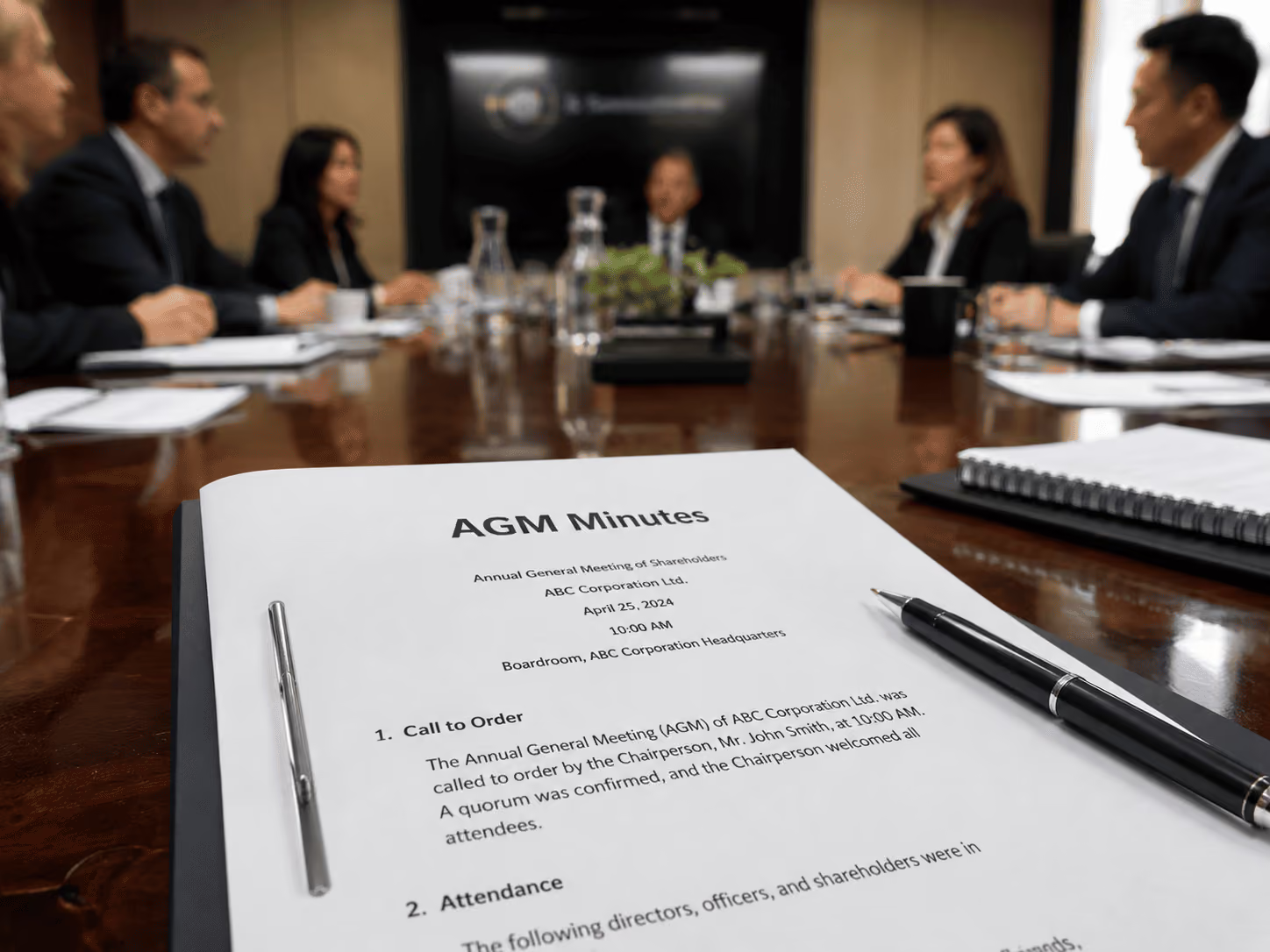
Agenda Template : Annual General Meeting
- Purpose of Meeting: To review the company's annual performance and discuss future strategies.
- Participants: [List of shareholders, board members and senior executives]
- Items for Discussion :
- President's Annual Report Presentation of the past year's achievements and challenges Time allocated: 30 minutes
- Financial Review Presentation of financial statements and discussion of financial results Responsible: CFO Time allocated: 30 minutes
- Board elections Election of new board members or renewal of mandates Time allocated: 20 minutes
- Shareholders' Questions Shareholders' open question session. allocated time: 30 minutes
- Support documents :
- Annual reports
- Financial statements
- Miscellaneous :
- Important announcements
Agenda Template : Executive Committee
- Meeting objective:Evaluate current company strategies and make strategic decisions.
- Participants:[List of board members and other invited executives]
- Points to discuss :
- Performance Analysis Assessment of the performance of the company's various divisions. allocated time: 20 minutes
- Strategic Initiatives Discussion and approval of new strategic initiatives. allocated time: 30 minutes
- Risk Management Review of major risks and mitigation plans. allocated time: 10 minutes
- Innovation and Technology Review of innovation and technology investment opportunities Time allowed: 20 minutes
- Support documents :
- Performance reports
Agenda Template : All-Hands Meeting
- Meeting ObjectiveCommunicate key company updates and strengthen alignment and engagement of all employees.
- ParticipantsAll company employees
- Points to discuss :
- CEO's welcome Introduction and overview of the company's current state Time allocated: 10 minutes
- Department Updates Short presentations by each department head on successes and challenges. Time allocated: 20 minutes
- Important Announcements Launch of new products, organizational changes, etc. Allocated time: 15 minutes.
- Employee Recognition Celebrating significant contributions and work anniversaries Time allocated: 15 minutes
- Question and Answer Session Open session where employees can ask management questions. Allocated time: 30 minutes.
- Support documents :
- Department presentations
- Important announcements brochure
- Miscellaneous:
- Feedback on the event, suggestions for future meetings.
- Closing :
- Thank you and reminder of key points by the CEO.
Agenda template : Scrum Meeting (Daily Stand-up)
- Purpose of the Meeting:Synchronize the team's daily activities and identify obstacles.
- Participants:[List of Agile team members, including Scrum Master and Product Owner]
- Points to discuss :
- Individual Updates Each member briefly answers the three scrum questions: What did I accomplish yesterday? What are my goals for today? What obstacles do I face? Time allowed: 2 minutes per person
- Identification of blockagessome text
- Quick discussion of potential solutions to the problems raised.
- Next stepssome text
- Assignment of blockage resolution tasks.
- Miscellaneoussome text
- Brief announcements or important reminders.
Agenda Template : Human Resources Meeting
- Meeting Purpose:Discuss HR policy updates, current recruitments and staff development issues.
- Participants:[List of HR team members, plus relevant guests, such as department heads]
- Items for Discussion :
- HR Policy Updates Discussion of recent policy changes and how they affect employees Responsible: HR Manager Time allocated: 20 minutes
- Recruitment and Onboarding Status of open positions and introduction of new recruits Responsible: Recruiter Time allocated: 15 minutes
- Personnel Development Plans for employee training and skills development Responsible: Training Manager Time allocated: 20 minutes
- Miscellaneous :
- Questions and concerns raised by team members.
Agenda Template : Marketing Meeting
- Meeting Purpose:Evaluate current campaigns, plan upcoming marketing initiatives and discuss market analysis.
- Participants:[List of marketing team members, plus guests from interdependent departments such as sales]
- Points to discuss :
- Review of Current Campaigns Review of the performance of current marketing campaigns and necessary adjustments Responsible: Marketing Project Manager Time allocated: 20 minutes
- New Initiatives Presentation and discussion of proposed new campaigns Responsible: Creative Director Time allocated: 20 minutes
- Market Analysis Review of latest market trends and potential opportunities Responsible: Market Analyst Time allocated: 15 minutes
- Support documents :
- Campaign performance reports
- Recent market studies
- Various :
- Suggestions and new ideas from the team.
A few best practices to maximize the impact of your agendas

Do you want your meetings to be not only effective, but also appreciated by all participants?
Here's how you can optimize your meetings with a well thought-out agenda.
Share in advance
First, make sure you share the agenda well in advance of the meeting. Ideally, send it out a few days in advance.
This gives each participant time to prepare, to think about the points to be discussed, and to give you any suggestions or modifications they may have.
Be precise and concise
Your agenda should be clear and to the point. For each item to be discussed, indicate not only the subject but also the specific objective of the discussion.
For example, instead of simply noting "Marketing budget", specify "Validation of third-quarter marketing budget". This helps participants understand exactly what is expected and how they can contribute effectively.
Allocate time realistically
Each item on the agenda should have a specific time allocation. This helps keep the meeting within the time available and ensures that you cover all the important points without rushing.
Be realistic about the time needed to discuss each topic, and allow a little margin for unexpected discussions.
Include points for open discussion
It's often useful to include an agenda item for open discussion, where participants can bring up unlisted or emerging topics.
This can be very beneficial in uncovering unexpected ideas or concerns that may require further attention.
Use the agenda as a template for the minutes
After the meeting, turn your notes into a structured record by following the agenda. These minutes can then be shared with all participants and other relevant stakeholders.
Make sure that the minutes clearly outline the actions to be taken, the responsibilities assigned and the deadlines set.
Automatic agenda: Noota

Do your meetings lack structure and often end without clear outcomes? Noota enables you to draw concrete actions and decisions from each of your discussions.
Here's how:
- Customizable agenda template: Noota lets you customize your meeting agenda template according to the type of meeting you're organizing, whether it's a project update or a strategy meeting. In this way, each meeting is prepared with clear intent, and the agenda is tailored to meet the specific needs of the moment.
- Automated recording and transcription: No more fuzzy handwritten notes or inaudible recordings. Noota records your discussions and transcribes them in real time. This transcription becomes a searchable database that makes it easy to review the key points discussed, ensuring no loss of information.
- Automatic extraction of actions: Beyond transcription, Noota identifies and extracts the actions discussed during the meeting. Each task is automatically noted with associated responsibilities and deadlines. This ensures that decisions taken at the meeting are turned into concrete actions.
- Easy sharing: Once the meeting is over, sharing the minutes becomes child's play. One click is all it takes to send documents to the whole team or to specific stakeholders, ensuring that everyone is on the same page, whether they attended the meeting or not.
- Integration with management tools: Noota integrates seamlessly with many project management tools (CRM, ATS, Slack, Notion). This means that extracted actions can be directly integrated into your existing workflows, facilitating follow-up and implementation.
Do you want to make sure every decisions from your meetings are properly followed up ? Try Noota for free.
Meet the Writer

FAQ
A meeting agenda acts as a roadmap that ensures all important points are covered efficiently.
- Sets clear objectives so participants arrive prepared and aligned
- Keeps discussions focused and prevents meetings from dragging on
- Creates a reference document with decisions and action items
An effective agenda needs key structural components to guide productive discussions.
- Purpose of the meeting and clear objectives to achieve
- List of participants and their specific roles or contributions
- Points to cover with brief descriptions and time allocations
Noota outperforms traditional agenda tools by automating meeting documentation and follow-ups.
- Saves 6.4 hours weekly with -80% admin work versus manual note-taking
- Rated 4.9/5 on G2 with 5000+ teams trusting the platform
- Supports 80+ languages for global teams managing agendas seamlessly
Noota is the ideal solution for distributed teams needing automated agenda management and follow-up.
- Eliminates manual agenda tracking with AI-powered meeting intelligence
- Ensures all team members stay aligned regardless of timezone or location
- Transforms agendas into actionable records automatically
Try Noota free — no credit card needed.