


Beheer
8 min leestijd
Verpleegkundige rapportage: een gids met sjabloon
Wil je weten hoe goede verpleegkundige rapportages eruitzien? Hier is je gids.
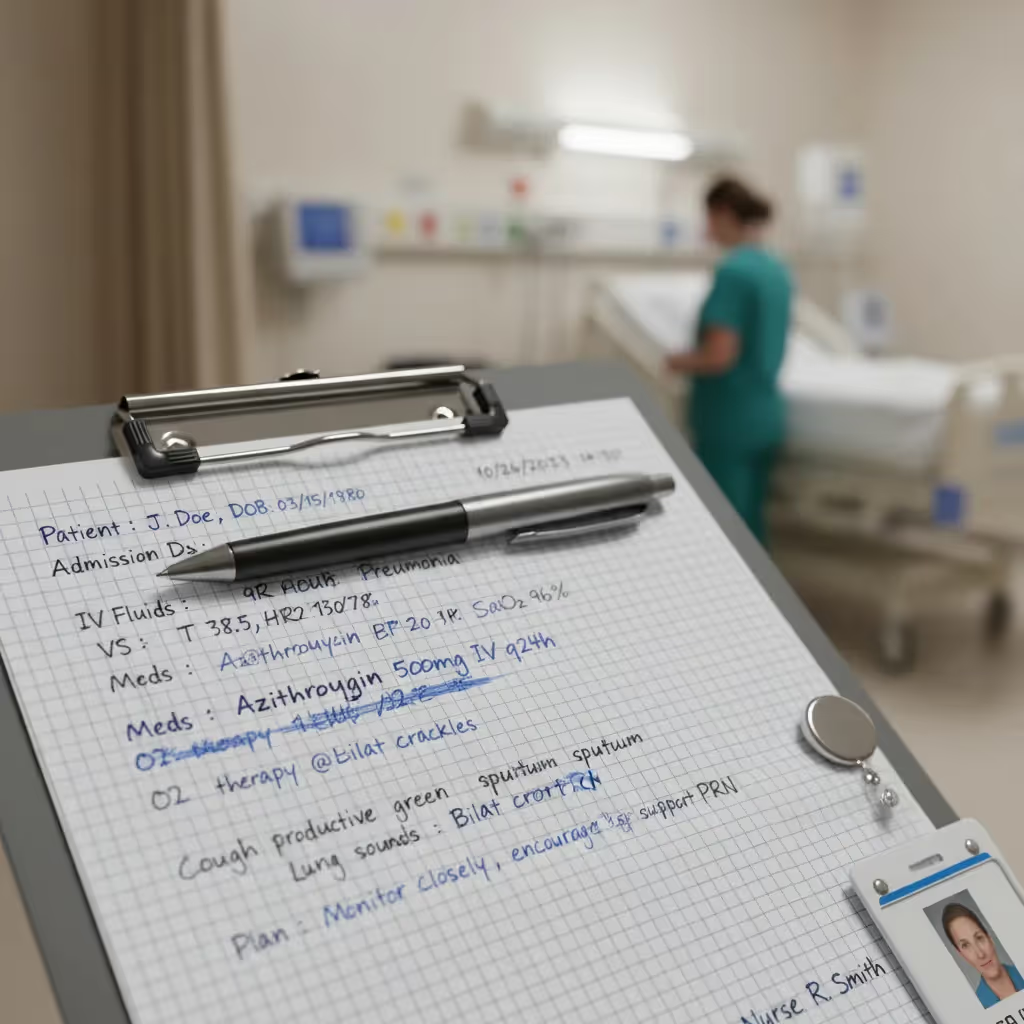
Je hebt net de vitale functies gecontroleerd, dossiers bijgewerkt, een patiënt gerustgesteld en medicatie toegediend — maar voordat je weg kunt, wacht er nog één taak: je verpleegkundige rapportage.
Als je ze goed aanpakt, maken ze je werk makkelijker, niet moeilijker.
In dit artikel leer je alles wat je moet weten om heldere, professionele verpleegkundige rapportages te schrijven.
Wat is een verpleegkundige rapportage en waarom is het essentieel?
Verpleegkundige rapportages zijn verslagen waarin je vastlegt wat je als verpleegkundige doet, wat je observeert, hoe patiënten reageren en welke vervolgstappen nodig zijn. Deze notities maken deel uit van het bredere patiëntendossier, maar richten zich specifiek op het verpleegkundig proces: observatie, interventie en evaluatie.
1. Continuïteit van zorg en communicatie
Patiënten krijgen te maken met verschillende verpleegkundigen, diensten of zorgteams. Heldere rapportages bieden de volgende collega inzicht in wat er is gebeurd, hoe de patiënt reageerde en waar op gelet moet worden. Documentatie ondersteunt de overdracht en zorgt voor naadloze zorgovergangen.
2. Juridische, professionele en wettelijke verplichtingen
Je rapportage is onderdeel van het juridisch medisch dossier. Het toont aan welke zorg is verleend, wanneer en door wie — essentieel voor audits, aansprakelijkheidskwesties en accreditaties. Fouten of hiaten in de verslaglegging zijn zelfs vaak de oorzaak van aansprakelijkheidsclaims.
3. Veranderingen monitoren en patiëntveiligheid waarborgen
In je rapportage leg je veranderingen in de toestand van de patiënt, reacties op behandelingen, vitale functies en incidenten vast. Goede verslaglegging helpt om achteruitgang sneller te signaleren en ondersteunt veilige, evidence-based besluitvorming.
4. Ondersteuning van kwaliteitsverbetering en zorgplanning
Goed geschreven rapportages vormen de basis voor zorgplannen, audits, onderzoek en kwaliteitsverbetering binnen de instelling. Ze bieden inzicht in wat werkt, wat niet werkt en hoe de zorg moet worden bijgestuurd.
5. Professionele bescherming
Voor jou als verpleegkundige zijn volledige, heldere rapportages een verdediging van je professionele handelen: ze tonen je observaties, je interventies en je klinische blik aan. Gebrekkige verslaglegging is niet alleen lastig voor het team, maar kan ook je licentie of aansprakelijkheid in gevaar brengen.
Structuur en voorbeeld van een verpleegkundige rapportage
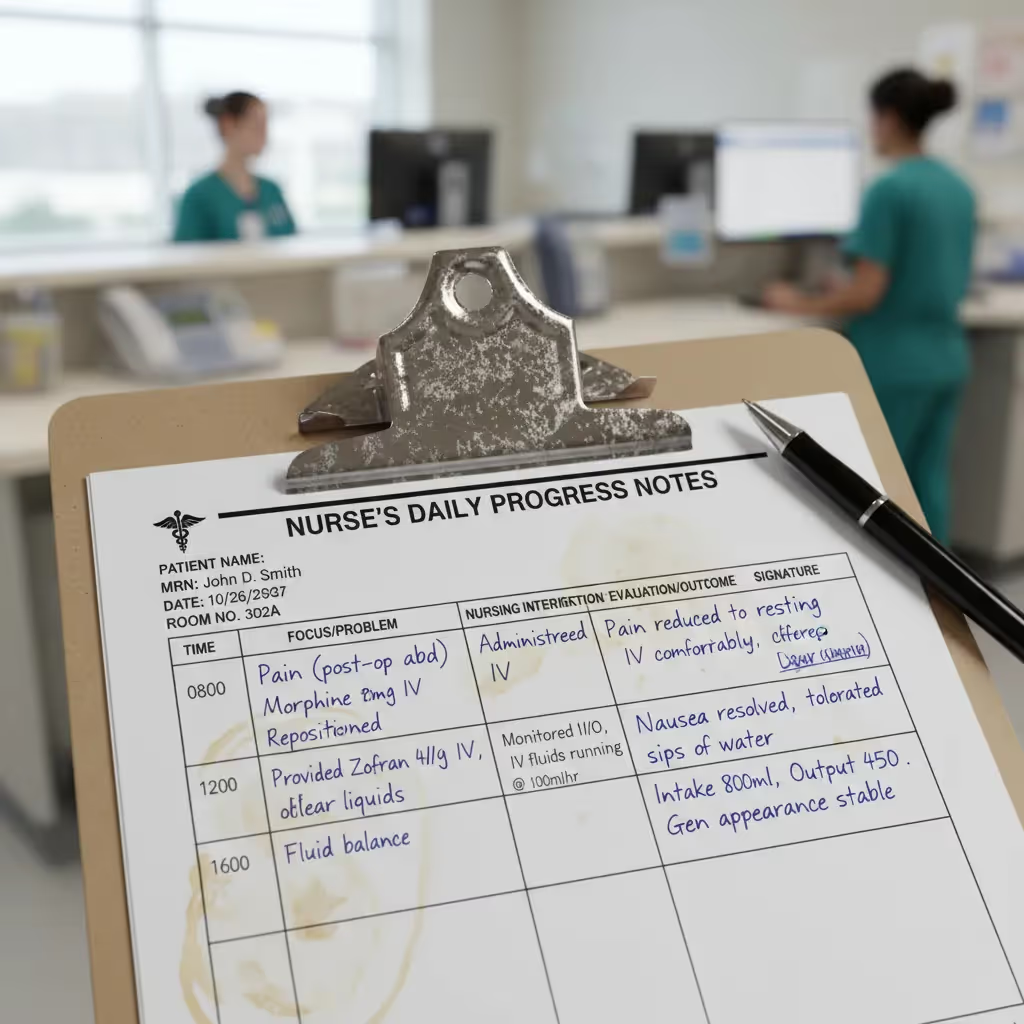
Elke rapportage die je schrijft, moet minimaal de volgende essentiële elementen bevatten:
- Datum en tijdstip, naam en ID van de patiënt, naam en kwalificaties van de verpleegkundige. Zonder deze gegevens is de notitie niet correct geïdentificeerd.
- Subjectieve gegevens – wat de patiënt zegt (bijv. "Ik heb last van pijn op de borst", "Ik kan niet slapen"). Als u de eigen woorden van de patiënt noteert, zet deze dan tussen aanhalingstekens.
- Objectieve gegevens – uw beoordeling, vitale functies, waarneembare bevindingen (bijv. BD 140/90, ademhalingsfrequentie 22, wondgrootte 4×6 cm).
- Beoordeling/Analyse – uw professionele interpretatie: wat het probleem is, veranderingen die u heeft opgemerkt, klinisch oordeel.
- Interventie/Actie – wat u heeft gedaan: medicatie toegediend, wond gereinigd, doorverwijzing gedaan, voorlichting aan de patiënt.
- Respons/Evaluatie – hoe de patiënt reageerde: nam de pijn af, veranderde de toestand, waren er complicaties?
- Plan/Vervolgstappen – wat u (of het team) hierna gaat doen: monitoren, opvolging, plan aanpassen, doorverwijzen.
Veel instellingen gebruiken standaardformats zoals SOAP (Subjectief, Objectief, Assessment, Plan) of DAR (Data, Actie, Respons) om consistentie en duidelijkheid te waarborgen.
Sterk voorbeeld:
26-10-2025 14:30 | Patiënt: Dhr. Brown (ID A1234) | Verpleegkundige: J. Smith RN
Subjectief: “Mijn borst voelt beklemd en ademen gaat moeilijker dan vanochtend.”
Objectief: RR 150/92, HF 98, AF 24, SpO₂ 92% in omgevingslucht. Auscultatie longen: bilateraal piepende ademhaling, licht gebruik van hulpademhalingsspieren. Geen nieuw oedeem.
Beoordeling: Vermoeden van exacerbatie van COPD, waarschijnlijk getriggerd door blootstelling aan stof gisteren.
Actie: Salbutamol-verneveling toegediend (2 doses) volgens protocol. Patiënt geïnstrueerd over inhalatietechniek en omgevingsfactoren. Arts ingelicht en bloedgasanalyse aangevraagd.
Respons: Na tweede verneveling steeg SpO₂ naar 95%, AF 20, patiënt gaf aan dat de “beklemming minder is”.
Plan: Respiratoire observaties elk uur voortzetten, verneveling elke 4 uur zo nodig toedienen, resultaten bloedgasanalyse beoordelen, respiratieteam waarschuwen bij uitblijven van verbetering voor de avonddienst.
Zwak voorbeeld:
26-10 14:30 Dhr. Brown heeft nog steeds moeite met ademhalen. Verneveling toegediend. Blijf monitoren.
Sjabloon verpleegkundige rapportage
Hier is een kant-en-klaar sjabloon dat je kunt kopiëren, plakken en personaliseren voor jouw werkomgeving (ziekenhuisafdeling, kliniek, thuiszorg of langdurige zorg). Gebruik het in je EPD, Word-document, Google Doc of je eigen systeem — en pas de velden aan volgens de richtlijnen van jouw instelling.
Verpleegkundige rapportage
Datum: _________ Tijd: _________
Naam patiënt: _________ Patiënt-ID/Kamer: _________
Naam verpleegkundige & kwalificaties: _________ Afdeling/Locatie: _________
Subjectief (S):
Patiënt rapporteert: “_____________________________________________”
Aanvullende opmerkingen: _______________________________________
Inbreng familie/mantelzorger: ___________________________________
Objectief (O):
Vitale functies: RR _____ / HR _____ / AF _____ / SpO₂ _____% / Temp _____°C
Lichamelijk onderzoek: _______________________________________
Relevante labuitslagen/beeldvorming: _____________________________________
Toegediende medicatie: _________________________________
Overige objectieve gegevens: _____________________________________
Analyse (A):
Analyse/klinisch oordeel verpleegkundige: ___________________________
Verpleegkundige diagnose of voornaamste probleem: _________________________
Interventie (I):
Ondernomen acties tijdens deze dienst/dit bezoek:
Voorlichting of ondersteuning aan patiënt/mantelzorger: ______________________
Samenwerkingen/verwijzingen: __________________________________
Evaluatie (E):
Reactie van de patiënt op de interventie: __________________________
Gewijzigde status / nieuwe bevindingen: ______________________________
Indien geen reactie of bijwerking: _________________________
Plan (P):
Vervolgstappen voor verpleging en zorgteam: _______________________
Vereiste monitoring (welke parameter, frequentie): _____________
Details follow-up/verwijzing: _________________________________
Handtekening: ___________ verpleegkundige Tijd: _______
Geautomatiseerde verpleegkundige rapportage: Noota

Wat als je in plaats daarvan automatiseert een groot deel van die documentatie, je kunt focussen op de persoon voor je, en toch notities overhoudt die aan jouw standaard voldoen? Noota is een tool die precies met dat doel is ontwikkeld.
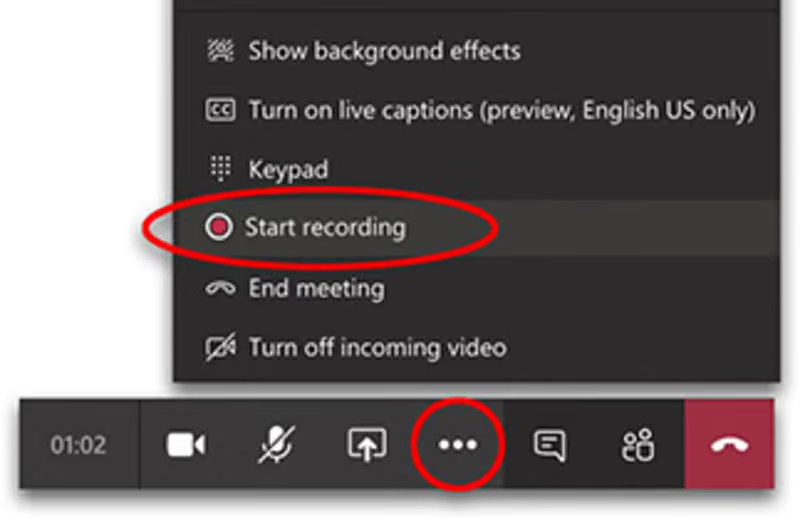
- Registreert interacties, of het nu gaat om een videogesprek of een fysieke afspraak, en transcribeert de audio in realtime.
- Genereert automatisch gestructureerde samenvattingen van die interacties—besluiten, vervolgstappen, reacties van patiënten, belangrijke observaties—zodat je nooit vanaf nul hoeft te beginnen.
- Maakt je notities doorzoekbaar en archiveerbaar. Je produceert niet zomaar tekst, maar bouwt aan een dossier dat jij (of je team) kunt raadplegen.
- Integreert in je workflow: je kunt de output koppelen aan je EPD, zorgplansysteem of overdrachtsproces.
WIL JE JE NOTITIEPROCES AUTOMATISEREN DOOR JE GESPREKKEN OP TE NEMEN? PROBEER NOOTA NU GRATIS.
Veelgestelde vragen
Nurse's notes moeten minimaal datum, tijd, patiëntgegevens en verpleegkundige identificatie bevatten.
- Subjectieve gegevens van de patiënt
- Objectieve bevindingen en vitale functies
- Professionele beoordeling en interventies
- Reactie patiënt en vervolgstappen
Nurse's notes vormen onderdeel van het officiële medische dossier en beschermen je professioneel.
- Bewijzen welke zorg je hebt verleend
- Documenteren je klinische oordeel en beslissingen
- Verdedigen je licentie bij claims
- Voldoen aan regelgeving en accreditatie
Noota bespaart 6,4 uur per week en reduceert administratie met 80% via AI-gestuurde notities.
- Automatische transcriptie van mondelinge verslagen
- Gestructureerde notities in seconden klaar
- 4,9/5 rating op G2 van 5000+ teams
- Beschikbaar in 80+ talen wereldwijd
Noota is ideaal voor verpleegkundigen die tijd willen besparen op documentatie zonder kwaliteit in te leveren.
- Spreek je notities in, Noota maakt ze af
- Minder administratieve last, meer patiëntenzorg
- Probeer gratis: Noota gratis testen — geen creditcard vereist