


Hiring & Talent Acquisition
8 min reading
Updated on:
Feb 11, 2026
Active Sourcing : a Complete Guide
You want to know how to source candidates actively and the best channels & tools ? Here's your guide.
Your best candidates are often not applying.
This is where active sourcing changes everything.
In this guide, you’ll learn proven best practices to get replies from passive candidates
Active sourcing vs passive sourcing
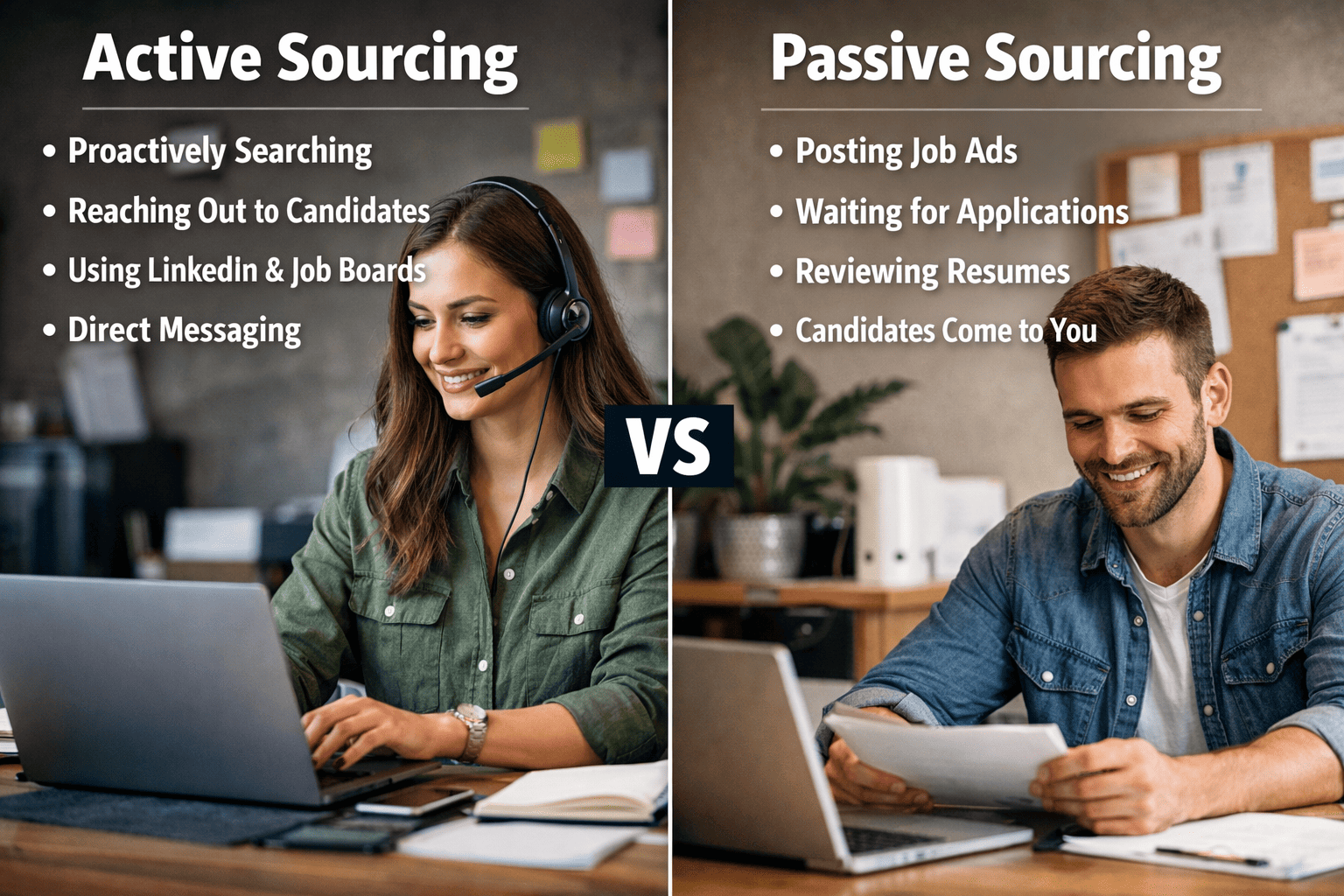
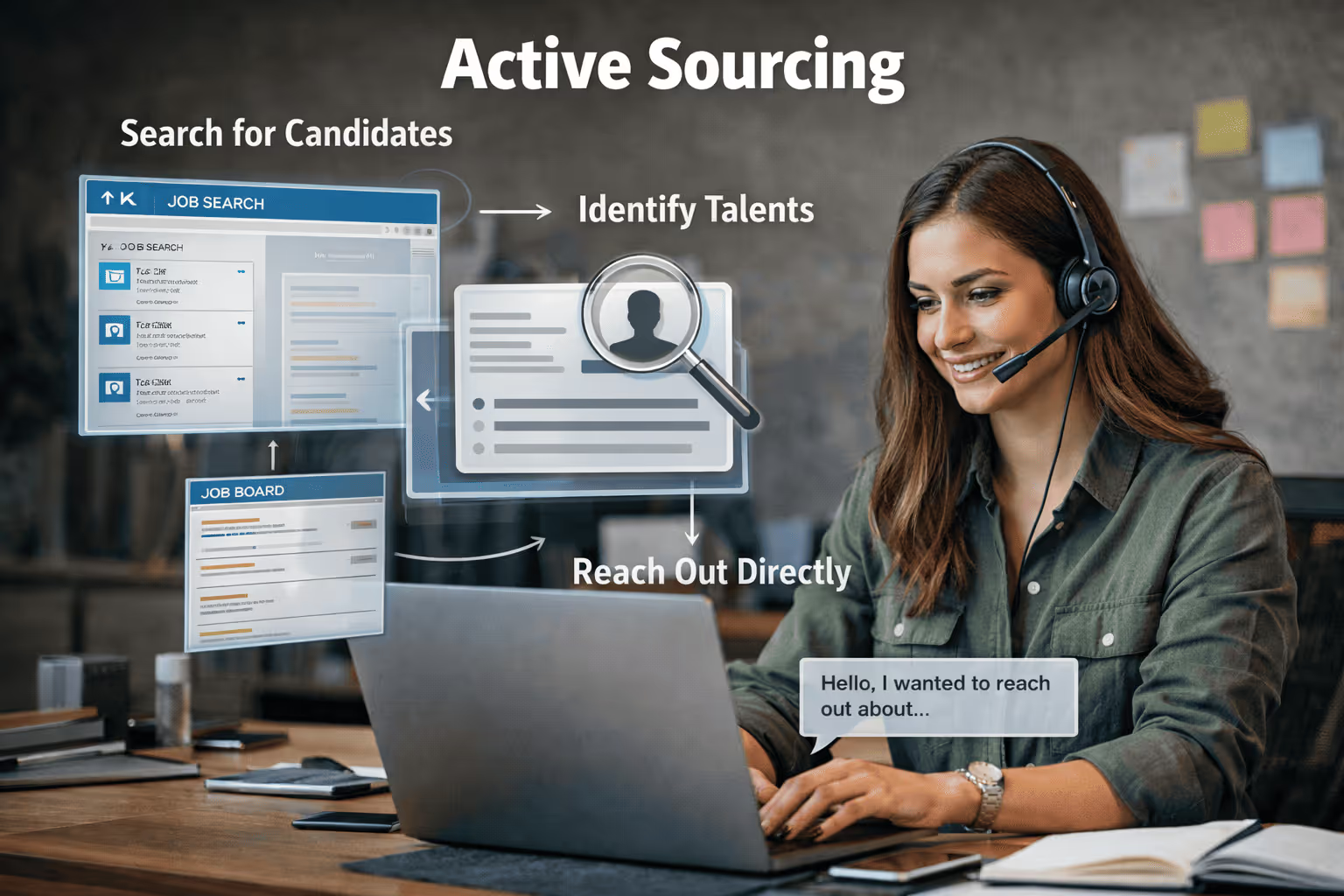
Active sourcing is a proactive recruitment approach where you don’t wait for applicants, you go find them.
Instead of posting an ad and hoping for inbound applications, your team actively searches for candidates who meet your role requirements, whether or not they’re currently job hunting.
You then reach out directly with personalized contact to gauge their interest in your opportunity.
By contrast, passive sourcing is the classic “post and wait” approach. You publish your open roles on job boards, your career site, or via advertising, and let candidates come to you.
Active sourcing best practices
To get it right, you need a structured process and thoughtful personalization :
Start with a deep understanding of the role
Before you even begin sourcing, take time with the hiring manager to clarify exactly who you’re looking for. Define must-have skills, nice-to-haves, role priorities, and where these candidates are most likely to be found online or offline. Collaborate early and often so your searches and outreach align with what the team truly needs.
Creating a candidate persona — a detailed description of the ideal hire — gives you a clear target. Include experience levels, keywords they might use on their profiles, likely platforms they visit, and even clues about what might motivate them to consider a new opportunity.
Use multi-channel search and diverse sourcing techniques
Don’t rely on a single source. Great candidates could be lurking on niche communities, social networks, forums, or even offline events. Mixing channels boosts your chances of finding the right fit. Experiment with:
- professional networks like LinkedIn/Xing and industry forums
- niche communities (tech hubs, creative platforms)
- resume databases and job portals
- offline events like conferences or meetups
- internal talent pools or referral programs
This multi-channel approach broadens your talent net and improves your odds of uncovering the candidates others miss.
Craft outreach that gets replies
The way you approach passive candidates matters as much as where you find them. Your outreach should be personalized, respectful, and concise. A generic pitch that looks like every other recruiter message won’t cut it. Instead:
- Mention something specific about their background
- Explain why their skills caught your eye
- Keep the message succinct and open-ended
- Start a conversation — don’t try to close a hire in the first message
Measure and refine with sourcing metrics
To know if your active sourcing is working, track the right numbers:
- Response rate: who replies to your outreach?
- Conversion rate: who moves from contact to screening?
- Time to engage: how long it takes to get a reply
- Quality of replies: who actually fits your ideal persona
These KPIs show where your process succeeds and where it needs improvement — rather than hoping that more sourcing equals better outcomes.
Build relationships, not one-off messages
Active sourcing works best when you think long-term. Even if a candidate isn’t interested now, a respectful conversation can lead to future opportunities. Stay in touch, share valuable content, and nurture your talent community so you’re top of mind when career moves happen.
Best tools & platforms for active sourcing
In 2026, top sourcing stacks combine deep search databases, engagement automation, CRM workflows, and AI-driven intelligence.
🤖 Next-generation sourcing: Noota Talent
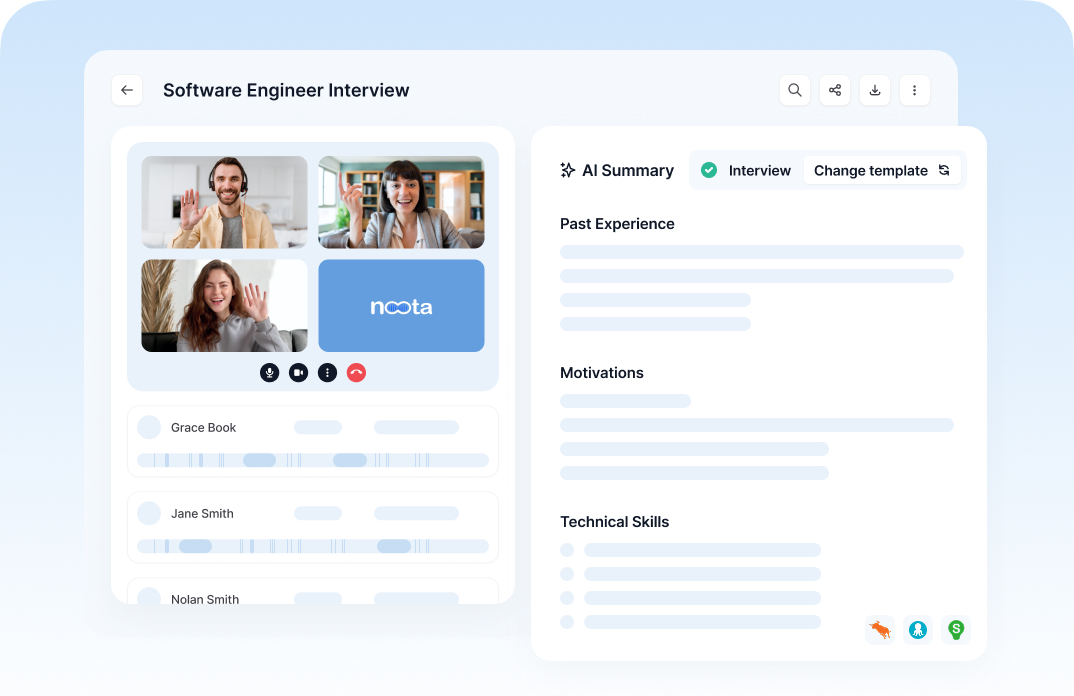
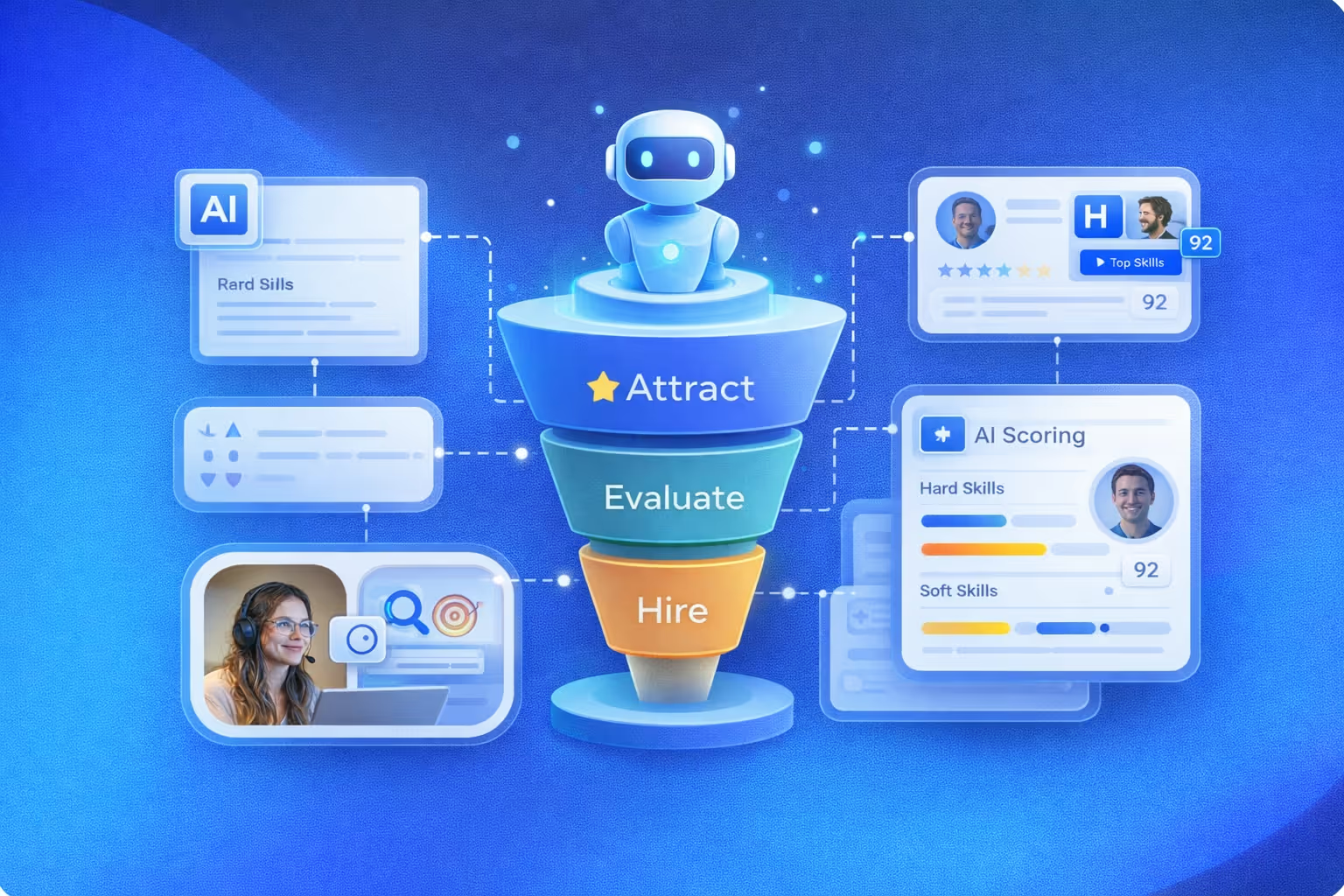
Noota Talent is a new class of sourcing + automation tool built to go beyond traditional discovery. With a single natural-language prompt, Noota can:
- Generate structured job definitions automatically
- Search large professional datasets for relevant candidates
- Attach profiles to roles inside recruitment workflows
- Launch automated voice-based screening and qualification
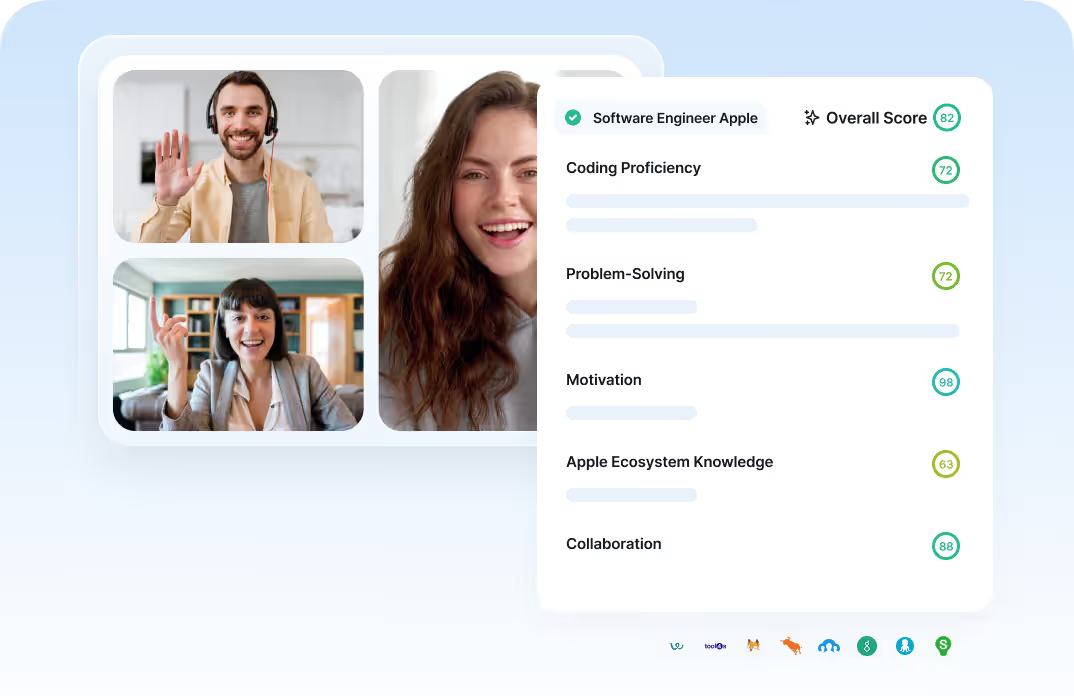
- Score candidates against job criteria instantly
🔍 Classic sourcing engines — broad reach + deep filters
LinkedIn Recruiter
The go-to sourcing platform for many recruiters thanks to access to one of the largest professional graphs in the world. It offers advanced filters and AI-assisted suggestions to help you surface profiles that match your criteria quickly.
hireEZ
An AI-powered sourcing and engagement platform that pulls candidate data from 40+ sources, including LinkedIn, GitHub, and Twitter, and centralizes it into one searchable universe. It helps teams discover wider talent pools and engage at scale.
SeekOut
A strong choice if you’re looking for diversity insights and niche talent discovery — especially for technical, specialized, or underrepresented candidate segments. Its AI filters and skill-based search go beyond simple keyword matching.
📬 Engagement & CRM tools — scale outreach and nurture candidates
Gem
Designed to help sourcers do more than just find names — Gem lets you build multi-touch email sequences, track response and interested rates, and manage long-term candidate pipelines. Its ATS integrations make it easier to push sourced profiles into your workflow.
Juicebox
An AI sourcing platform that goes beyond search by pairing multi-source discovery with automated candidate engagement workflows. It uses large talent graphs and AI signals to refine matches and help recruiters focus on conversations, not data entry.
Noon AI (emerging)
A newer AI talent sourcer that combines candidate discovery with evaluation and relationship building, aiming to automate both sourcing and engagement.
📈 Specialized & niche sourcing tools
AmazingHiring
Best for technical and developer talent, aggregating profiles from GitHub, Stack Overflow, and competition platforms to give a broader picture of a candidate’s work and skills.
Apollo (via general sourcing guides)
Helps with targeted outreach via email, SMS, and LinkedIn, often paired with sales-style workflows to scale personalized outreach.
SignalHire, Coresignal, and others
More focused tools that index unique databases or offer specialized global contact data and compliance features (useful for sourcing across markets).
Active Sourcing FAQ
1. What exactly is active sourcing?
Active sourcing is the proactive practice of identifying, researching, and engaging potential candidates — even if they’re not actively looking for a job.
Instead of waiting for applications to arrive, you go out into talent pools, search databases, networks, and social platforms to find the people you want and start the conversation.
The goal is to access the 70 % of the workforce that isn’t actively job hunting but might be open to the right opportunity.
2. How is active sourcing different from passive recruiting?
Active sourcing = you reach out to people directly.
Passive recruiting = you put a job out there and wait for candidates to apply.
Active sourcing lets you reach talent that never sees your job ad, while passive recruiting relies on inbound traffic and applications.
3. What’s the difference between sourcing and recruiting?
Sourcing focuses on the early stage — finding and engaging candidates.
Recruiting covers the entire process from sourcing through interviewing, evaluating, and hiring.
Some teams have dedicated sourcers who specialize in building pipelines, and others integrate sourcing tasks into general recruiter workflows.
4. What channels should I use for active sourcing?
There’s no single “best” channel — the right mix depends on the role.
Common places include:
- LinkedIn and professional networks for mid- and senior-level roles.
- Niche communities (GitHub, Behance, Dribbble, etc.) for specialized talent.
- Talent pools and internal candidate databases.
- Referrals from employees and professional networks.
The key is where your ideal candidates actually spend time and where you can reach them most authentically.
5. What’s a good response rate in active sourcing?
Response rates vary by industry and outreach quality, but a healthy benchmark for cold outreach is often 10–25 %.
Personalized, relevant messages with clear value tend to get higher replies.
If your response rate is very low, revisit your messaging, candidate targeting, or channel mix.
6. How many follow-ups should I send?
A single contact attempt rarely works.
Most effective sequences involve 2–4 touchpoints spaced over a couple of weeks — each message adding value rather than pressure.
The goal is to start a conversation, not push a hard sell.
7. How long should active sourcing take per role?
Time spent depends on complexity of the role and seniority level.
For typical professional positions, initial sourcing and engagement can take a few hours per qualified candidate, while pipeline building for senior or niche roles can span several weeks.
Dedicated sourcers often spend most of their week on active sourcing, while general recruiters split time between sourcing, screening, and interviewing.
8. How do I measure the success of my sourcing efforts?
Focus on impactful metrics rather than raw numbers:
- Response rate — how many candidates reply.
- Conversion to screening — replies that become phone screens.
- Time to shortlist — how long to get qualified candidates.
- Pipeline health — size and quality of your talent pool.
Tracking these helps you see where your process is strong and where it needs refinement.
9. Do I need a sourcing specialist on my team?
If you hire frequently or for competitive roles, yes.
Dedicated sourcers accelerate talent discovery, free up recruiters to focus on interviews, and help maintain a talent pipeline that fuels hiring consistently.
In smaller teams, sourcing tasks can be shared, but structured time and process still make a big difference.
10. How do I keep sourced candidates warm?
Relationships matter.
Stay in touch with regular updates, relevant content, and invitations to networking events. Passive talent responds best when you nurture the connection, not just pitch the job.
Meet the Writer
.avif)
Adesh explores how teams can better capture knowledge and collaborate more effectively with AI.
FAQ
Active sourcing means proactively searching for candidates and reaching out directly, while passive sourcing waits for applicants to apply through job postings.
- Active sourcing finds hidden talent not job hunting
- Passive sourcing relies on inbound applications only
- Active sourcing requires personalized outreach and strategy
A candidate persona combines role requirements with insights about where and how to find ideal candidates online and offline.
- Define must-have skills and experience levels needed
- Identify keywords they use on professional profiles
- Research platforms they visit and what motivates them
Noota automates sourcing workflows while manual approaches consume significant time. Teams using Noota save 6.4 hours weekly and reduce admin by 80%.
- Noota streamlines multi-channel candidate search instantly
- Automated personalization at scale beats generic outreach
- 5000+ teams trust Noota with 4.9/5 G2 rating
Noota enables teams to source faster across 80+ languages while maintaining personalization that gets replies from passive candidates.
- Supports multi-channel sourcing without manual effort
- Tracks response and conversion metrics automatically
- Try Noota free — no credit card needed