

AI Recruitment Automation
8 min reading
Updated on:
Feb 4, 2026
Will AI Replace Recruiters ? A Concrete Guide
Want to know if AI will automate all your recruiters ? Here's your guide.

The truth is, AI is already part of your recruiting workflow.
What’s unclear is where automation stops, and where your expertise still makes the difference.
In this article, you’ll get a clear, grounded answer.
The Current State of AI in Recruitment
When you look at recruitment today, it’s clear that artificial intelligence isn’t a distant idea. Across the world, organizations of all sizes are rapidly adopting AI tools to support recruiters, streamline hiring workflows, and tackle persistent challenges like volume, speed, and candidate engagement.
In 2025, surveys indicated that nearly half of all companies globally were already using AI in some part of their recruiting process, and projections suggest that number could climb substantially in the next few years. Recruiters aren’t just dabbling in automation — they’re embracing it as a force multiplier that helps them operate more efficiently in a competitive labor market.
But while adoption is expanding, the role AI plays in recruitment today is very different from the idea that robots might replace human recruiters entirely. Most current systems are designed to augment human work rather than supplant it. They take over repetitive, time-consuming tasks so recruiters can spend their time where human judgment and relationship skills matter most — evaluating fit, building rapport, and guiding strategic decisions.
For example, in France and other markets, a growing proportion of HR teams now use AI to help screen resumes, analyse candidate data, or automate parts of communication — yet recruiters and candidates alike still place a high value on human interaction in the hiring process. In fact, a majority of companies report that while AI improves efficiency and experience, it cannot detect things like motivation or long-term potential in the way a human can.
Recruitment Tasks that can Be Easily Automated

Today’s AI tools are mostly designed to automate repetitive and rule-based work :
🚀 Screening and Ranking Candidates Automatically
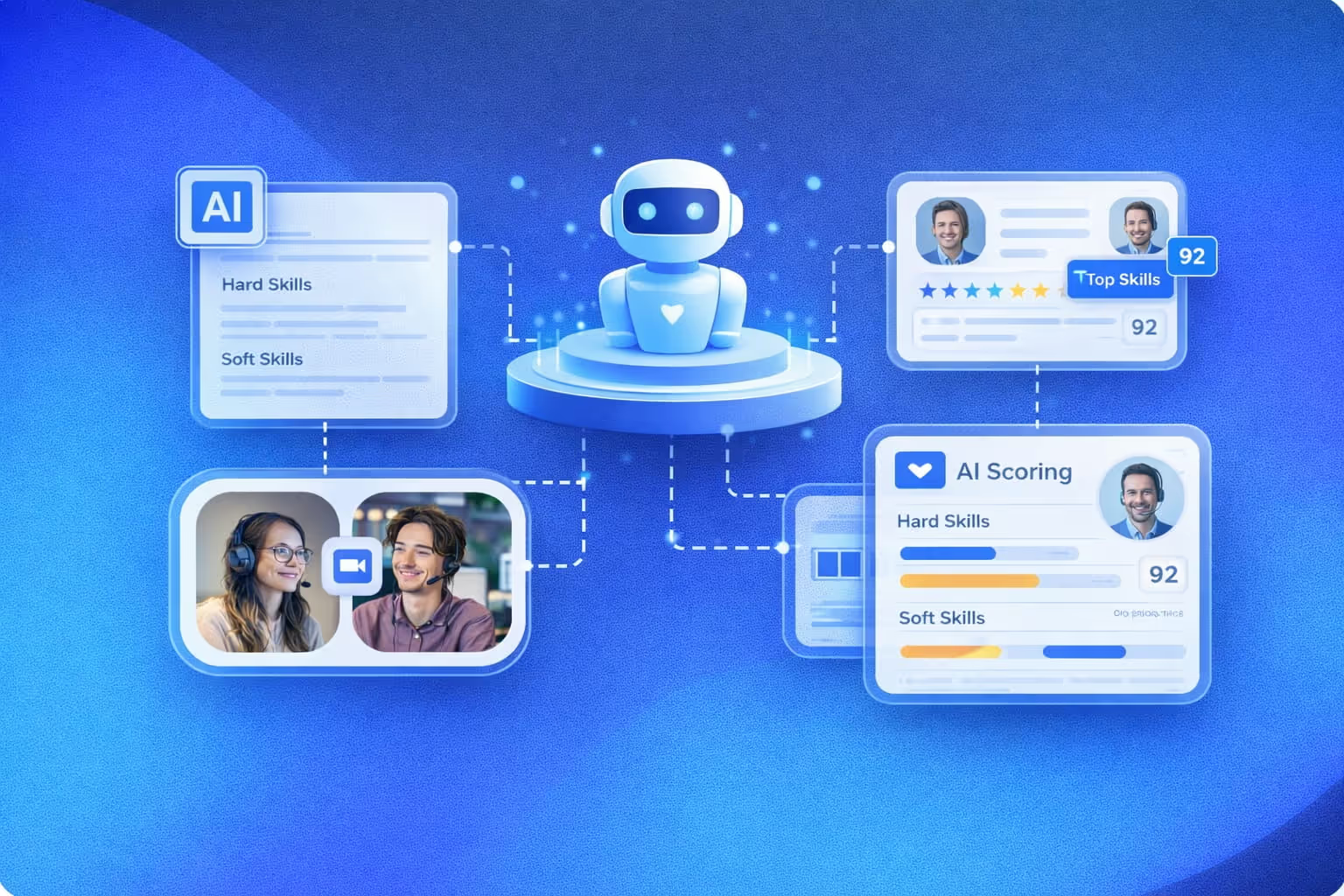
One of the biggest drains on recruiter time is sifting through resumes and identifying who’s a good fit. AI excels here: modern systems parse CVs to extract relevant information — skills, experience, education — and score or rank candidates based on your criteria. Instead of reading hundreds of applications manually, you get a shortlist of relevant profiles almost instantly.
Beyond simple keyword matching, these tools use natural language processing and machine learning to interpret context and relevance, meaning the AI can spot qualified candidates even if they use slightly different wording than your job description.
📅 Interview Scheduling & Candidate Communication
AI also handles a lot of the logistics that eat up recruiters’ days. Automated scheduling assistants can coordinate interviews with candidates and hiring managers based on availability — eliminating calendar ping-pong that slows down the process.
Beyond scheduling, AI-powered chatbots can engage candidates around the clock, answer common questions about roles or processes, and keep them updated on application status. These virtual assistants help maintain a positive candidate experience without you needing to be online 24/7.
🔍 Smart Candidate Matching & Predictive Analytics
AI isn’t just fast — it’s smart. It can compare candidate profiles against job requirements and recommend the best matches, saving you time on top of manual shortlisting. These systems can even use historical data to help predict which candidates are more likely to succeed or stay longer in a role.
In some setups, AI tools integrate with your ATS and CRM to continuously refine candidate recommendations based on past hires and engagement data, turning raw data into actionable insights.
🤖 Repetitive Communications and Process Triggers
From sending confirmation emails when someone applies to notifying candidates about next steps or even declining those who aren’t a fit, AI can automate communications at each stage of the hiring process. These automated responses reduce manual work and ensure candidates remain informed, enhancing your employer brand without extra effort.
Some systems can even personalise these messages based on candidate data, making automated outreach feel more human and tailored.
📊 Initial Assessments and Skill Evaluations
More advanced AI tools go further by conducting initial skills evaluations — such as automated assessments or structured scoring of candidate responses — before you ever conduct a human interview. While these don’t replace your judgment, they help narrow the pool so you spend your time on the most promising candidates.
Recruitments Tasks Hard to Automate
Most experts agree that while AI will continue to transform how recruiters work, it won’t fully replace the human side of the profession — especially where emotional intelligence, ethical judgment, and interpersonal insight matter most.
🧠 1. Assessing Cultural Fit and Soft Skills
AI tools are powerful at keyword matching, resume parsing, and even initial screening, but they struggle with the subtleties of human behaviour. Tasks that involve interpreting non-verbal cues, reading tone, or evaluating how a candidate might mesh with a team’s culture require empathy and personal judgment, something AI cannot authentically replicate. Human recruiters can ask follow-up questions, read reactions, and adapt based on context in ways AI systems aren’t designed to do.
🤝 2. Building Relationships and Trust
One of the most frequently cited limitations of AI is its inability to form real human connections. Recruitment is fundamentally about people : connecting with candidates, understanding motivations, addressing concerns, and building trust over time. Automated systems can send emails, schedule interviews, or even chat in limited ways, but the human touch is essential when it comes to motivation, reassurance, and relationship building.
🤔 3. Strategic Thinking and Judgement Calls
Determining whether a candidate’s long-term aspirations align with a company’s growth path, evaluating potential cross-functional value, and balancing team dynamics are all examples of decisions requiring human reasoning and foresight. According to industry surveys, while many recruiters believe AI will automate tasks, fewer think it will ever replace strategic hiring decisions.
Human recruiters are equipped to weigh complex factors like career trajectory, risk tolerance, and organizational politics — insights AI isn’t structured to intuitively grasp. These decisions often involve ethical considerations and contextual judgment that go beyond algorithmic output.
⚖️ 4. Ethical Oversight and Bias Management
Even the most advanced AI systems can inherit bias from the historical data they’re trained on — and unchecked automation can inadvertently perpetuate unfair patterns in hiring. This is where human oversight is critical. Recruiters must continuously monitor AI decisions, correct for bias, and ensure fairness across all candidate interactions.
Regulatory frameworks — like the EU’s requirements for transparency in AI decision-making — further emphasise the need for human accountability in recruitment. Ultimately, a recruiter’s judgment functions as the ethical anchor that AI tools cannot provide on their own.
AI Made to Assist Recruiters : Noota
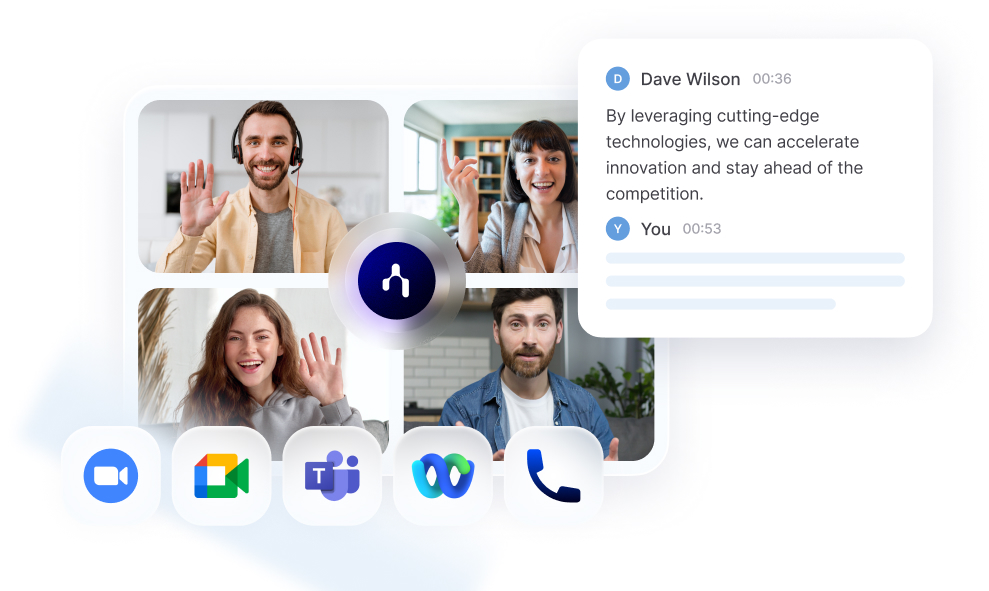
Real power comes when AI supports the decisions and conversations that matter most. One such tool built specifically to help recruiters work smarter is Noota :
Automatic Recording & Transcription
Noota listens, transcribes, and timestamps all your interview dialogues in real time, freeing you from manual note-taking. You get a written record that’s easy to search and reference later — even days after the call.
Structured, Ready-to-Use Summaries
Instead of raw text dumps, Noota produces structured summaries highlighting decisions, candidate responses, and action items — making it easier to compare candidates or brief hiring managers.
Context You Can Reuse
You can store these summaries and transcripts in folders, tag them by candidate or role, and even use conversational intelligence features (like asking the AI to extract insights or decide what was said about a skill).
ATS & CRM Sync
After each interview or candidate conversation, Noota can push structured reports directly into your ATS or CRM — such as Salesforce, HubSpot, BullHorn, and many others — without any manual copy-paste. This keeps candidate records up to date automatically.
One-Click ATS Integration
Whether you’re using a mainstream ATS like Greenhouse or a niche one like Flatchr or Recruitee, Noota can map interview data into your workflow quickly, helping you align hiring knowledge with candidate files.
TRY NOOTA FOR FREE NOW
Meet the Writer

Jean-marc is an AI expert helping recruiters & professionnals leverage these tools in the everyday.
FAQ
AI currently automates repetitive, rule-based tasks like resume screening, candidate ranking, and interview scheduling. However, human judgment remains essential for evaluating cultural fit, building relationships, and strategic hiring decisions that require nuanced assessment.
- Resume screening and candidate ranking using NLP
- Calendar coordination and interview scheduling automation
- Initial candidate communication via AI chatbots
Nearly half of all companies globally were already using AI in some part of their recruiting process in 2025, with projections showing substantial growth in coming years. Organizations across all sizes are adopting AI tools to improve efficiency, speed, and candidate engagement in competitive labor markets.
- 50% of global companies using AI in recruitment
- Growth expected to accelerate significantly
- Adoption spans all organization sizes and industries
Noota delivers measurable results: 6.4 hours saved per week, 80% reduction in admin work, and 4.9/5 rating on G2 from 5000+ teams across 80+ languages. Unlike generic AI tools, Noota is purpose-built for recruiters who need both automation and human-quality insights without the complexity.
- 6.4 hours weekly time savings vs competitors
- 80% admin reduction with proven G2 ratings
- Trusted by 5000+ teams globally
For candidate screening automation that actually works, Noota combines AI efficiency with recruiter-friendly design. It saves 6.4 hours weekly while maintaining the human judgment needed for fit assessment. Start free today to see how much time you'll reclaim from manual screening tasks.
- Automates screening while preserving quality judgment
- Saves 6.4 hours weekly on average
- Try Noota free — no credit card needed