


Data Privacy & Compliance
8 min reading
Updated on:
Dec 2, 2025
The 9 Best European AI Companies Right Now
You want to know what are the best European sovereign AI companies ? Here's your guide.

Most of the “best” AI solutions aren’t built in Europe, don’t host data in Europe, and don’t give you the guarantees you need to stay fully compliant with EU privacy laws.
The good news? New sovereign-first AI providers are emerging across the EU.
In this article, you’ll discover the best EU-only, GDPR-aligned, data-sovereign AI tools available right now.
1. Mistral AI — A Flagship of European-Built AI
What is Mistral AI?
Mistral AI is a French startup founded in 2023 and headquartered in Paris. The company was launched by former researchers from leading AI labs, bringing deep experience in large language models (LLMs).
The core of its offering is open-weight large language models — meaning that unlike many proprietary AIs, Mistral lets organizations download, host, customize, and fine-tune the models themselves instead of relying on black-box APIs.
Key Features
- Open-weight, open-license models: Mistral releases models under open licences (e.g. Apache 2.0), allowing full transparency, custom hosting, and adaptation to your data law and infrastructure.
- High-performance reasoning and multilingual capabilities: Their “Large” models support complex reasoning and are multilingual — useful for European teams working across languages and contexts.
- Flexible deployment & sovereignty-friendly: Because the models can be self-hosted (on-premise or private cloud), companies concerned about privacy, compliance, and data control don’t need to rely on overseas cloud-based services.
- Cost and resource efficiency: Compared to many large proprietary AIs, Mistral’s models tend to be more efficient — enabling powerful performance without extreme computing costs.
- Wide applicability: From code generation to content creation, translation, automated analysis, and more — Mistral’s models suit a variety of uses.
Mistral Sovereignty, Trust & Flexibility
Using a Europe-based AI like Mistral means you may avoid many of the concerns associated with using foreign-hosted proprietary models — such as data residency, cloud compliance, or vendor lock-in. Mistral explicitly positions itself as a “sovereign” AI provider, offering cloud, private-VPC, or on-premise deployment paths for sensitive workloads.
2. Black Forest Labs : Frontier Open-source Image model
What is Black Forest Labs?
Black Forest Labs is a Germany-based AI startup, headquartered in Freiburg-im-Breisgau. Founded in 2024 by researchers previously working on foundational image-generation models, the company builds generative AI models focused on visual content: images, edits, creative outputs.
Their goal is to deliver “frontier AI for visual intelligence,” combining cutting-edge quality with flexibility — both for creators and for enterprises needing scalable, production-ready tools.
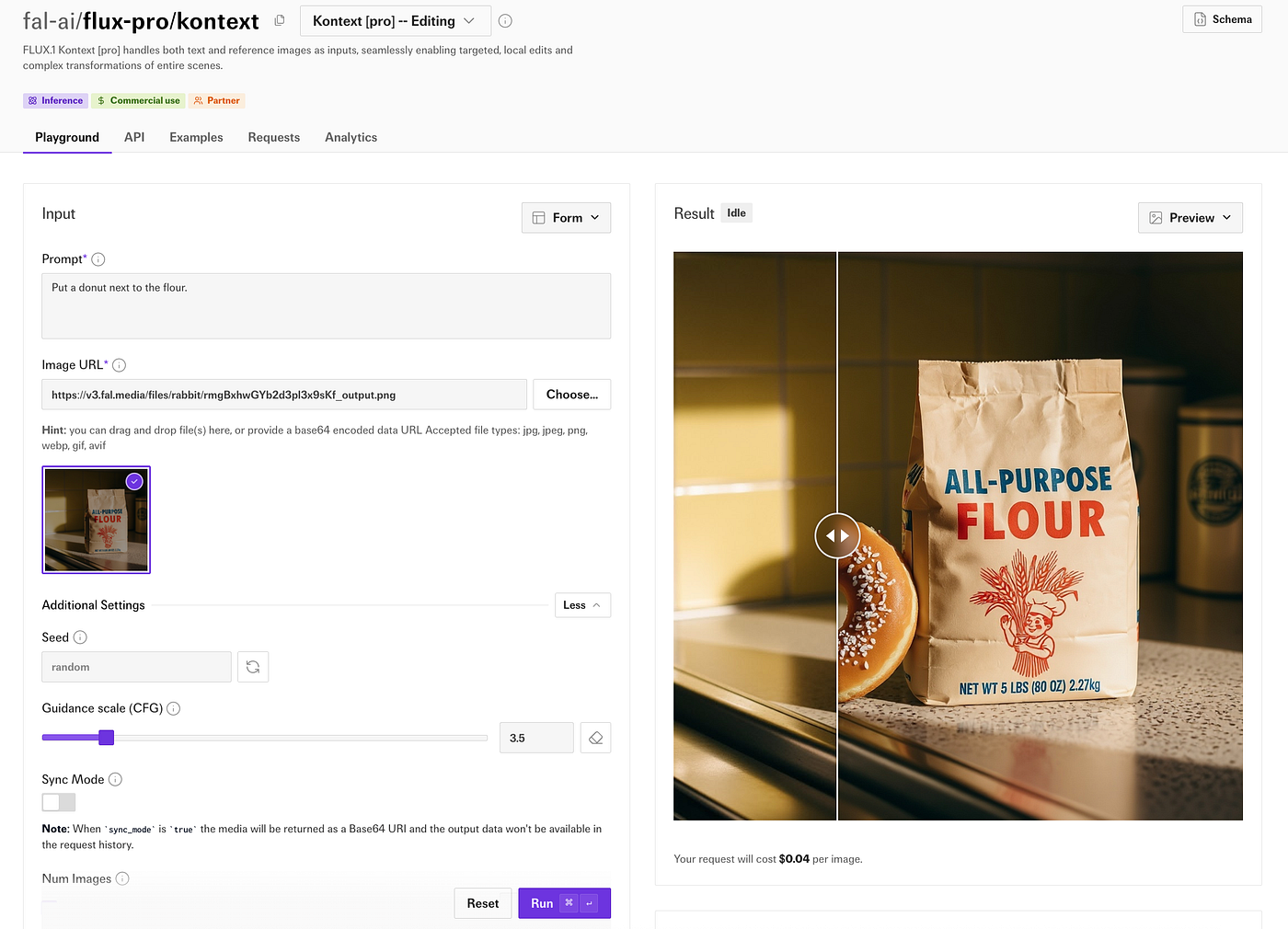
Their main product line is the FLUX family: models that turn text prompts (and optionally reference images) into visuals, or that let you edit images via prompts. FLUX is meant for professionals, creatives, and developers alike.
What FLUX offers — main features & strengths
State-of-the-art image generation & editing
FLUX — now in its second major iteration, FLUX.2 — delivers photorealistic output, high fidelity, and strong adherence to prompts. Output quality, detail, and creative flexibility are among the best in the field.
With FLUX.2, you can generate or edit images up to 4 megapixels (4 MP), which is a significant step up for production-level work: good enough for web graphics, presentation assets, mockups, marketing visuals, or even print-ready drafts.
Multi-reference control & editing capabilities
One of FLUX.2’s differentiators: it supports multi-reference conditioning — meaning you can supply several reference images (style, lighting, subject, pose, etc.) and ask the model to generate or edit accordingly while preserving consistency. That’s a big advantage for creative workflows, brand-aligned assets, or projects requiring style control.
On top of generation, FLUX models offer image-to-image editing, inpainting/outpainting, fill and expand features, style transformations — so the tool isn’t limited to new creations, but supports real-world editing work too.
Open-weight & flexible licensing for developers & researchers
BFL follows an “open-core / hybrid” model: some versions of FLUX are open-weight (i.e., model weights released under open licence), others are hosted/proprietary but accessible via API or services. This mix allows both experimentation (on-premise or local deployment) and scalable production use.
For example, the FLUX.1 [dev] model (12 B parameters) was offered under non-commercial licence for many uses. With FLUX.2, BFL continues the open-core path: some variants remain open-weight, while others serve as hosted, optimized commercial offerings.
Production-ready performance, scale & speed
FLUX.2 adds performance and optimization improvements — including for GPU-based workflows (with optimizations for RTX GPUs, FP8 quantization to reduce VRAM, etc.) — aiming at real-world, production-grade use, not just experiments or demos.
In benchmark comparisons, FLUX.1 (and by extension FLUX family) has outperformed many well-known generative-image models in terms of prompt adherence, visual quality, style diversity, and image fidelity.
Versatility — from creative to enterprise needs
Because of its mix of quality, flexibility, and licensing options, FLUX is suitable for a wide range of use-cases: individual creators, design agencies, marketing teams, studios, enterprises needing branded visuals, or developers integrating generative visuals into apps.
Black Forest Labs Sovereignty
European roots & independence
Being based in Germany, BFL offers a European-founded alternative to US-dominated AI giants. For European teams, agencies or businesses, that can matter in terms of data regulation, privacy, and sovereignty. European AI companies like BFL and its peers provide an interesting proposition for companies concerned with compliance or data residency.
Combination of open research and commercial readiness
Unlike some labs that remain purely research-oriented or purely proprietary, BFL spans both: it publishes open-weight models (for experimentation, local deployment, research), but also offers robust commercial options. That gives you flexibility depending on project size, sensitivity, or resource constraints.
High-quality output at competitive cost & performance
FLUX’s balance of price, performance and fidelity makes it very competitive. Whether you’re generating marketing assets, mock-ups, or visual content for clients — or doing creative work for yourself — FLUX offers a quality/price ratio that makes sense.
Support for diverse workflows: generation, editing, multi-reference, high resolution
FLUX isn’t a one-trick tool. It works for idea exploration (quick prompt-to-image), for refined editing, for style-consistent asset production, for high-res output. That flexibility is rare and valuable.
Strong backing and active evolution
Since its launch in 2024, BFL has rapidly gained traction. Its founders come from leading research in generative AI (they worked previously on foundational tools).
FLUX.2’s recent release further shows the lab is pushing innovation — not just riding a trend. For users, that means access to updated, evolving technology with support and optimization.
3. Noota : Your European AI Meeting Assistant

What it is
Noota is a French-founded AI meeting assistant designed to automatically record, transcribe, summarize and index your meetings — whether they take place on video-conferencing platforms, by phone, or in person.
Founded in 2020 (with a pivot toward enterprise-ready AI meeting tools in 2023) and headquartered in Toulouse, Noota serves thousands of companies across Europe and beyond.
Instead of relying on manual note-taking, Noota aims to let you focus on the conversation — while it captures full transcripts, extracts action items, produces structured summaries, and archives everything for easy retrieval and follow-up.
Features
Here’s what Noota brings to the table — a suite built around making meetings more productive and traceable:
- Real-time transcription & recordings: Noota records audio (or screen / call) and transcribes in real time. It supports multiple contexts — video calls, phone calls, in-person meetings, or VoIP — giving flexibility for hybrid or remote teams.
- AI-generated meeting summaries & structured minutes: After the meeting, Noota doesn’t just give raw text — it turns the transcript into clean, organized summaries that highlight decisions, next steps, key takeaways, and actionable items.
- Action-item extraction, tasks & follow-up support: Noota identifies tasks, commitments, or decisions made during the conversation, making it easier to assign responsibilities and follow up.
- Searchable archive and “ask-anything” history retrieval: All past meetings are stored in a searchable database. You can quickly retrieve previous meeting notes, decisions, or key details — without digging through long recordings or messy notes.
- Wide integraton & compatibility: Noota integrates with major video-meeting tools (Zoom, Google Meet, Microsoft Teams), ATS/CRM systems, and offers a browser extension for smooth recording. That makes it easy to plug into existing workflows.
- Multilingual support & broad transcription coverage: It handles many languages and dialects — useful for international teams or companies across Europe.
- Custom note templates & versatility for different meeting types: Whether it’s a team sync, sales call, interview, or strategic workshop — you can choose or customize templates so the summary fits the context.
- Security, privacy & compliance: Noota stores data on European servers, uses encryption (data at rest and in transit), offers configurable data retention, and claims compliance with major data-protection standards (e.g. GDPR, with ongoing SOC 2 / ISO-level compliance).
Noota Sovereignty
- European data-hosting & GDPR compliance: Noota stores data in datacenters located in the EU (France, Belgium, Netherlands), and data is encrypted at rest and in transit. That helps meet regulatory requirements for many European businesses.
- Privacy-first approach — no external training on your data: Noota explicitly states that user data (recordings, transcripts) is not used to train external models. All data stays within the user’s control — a key point when confidentiality matters (for HR, legal, sales, sensitive projects).
- Consent and transparency in recordings: When using the bot (for example on Teams), Noota shows a banner notifying participants that the meeting is recorded — ensuring compliance with consent requirements and transparency.
- Enterprise-grade security standards: Encryption, secure infrastructure, data-access controls, and optional data-retention policies — Noota aims for compliance and security levels acceptable to enterprises and regulated sectors.
4. DeepL : Europe’s go-to AI for translation and multilingual communication
What it is
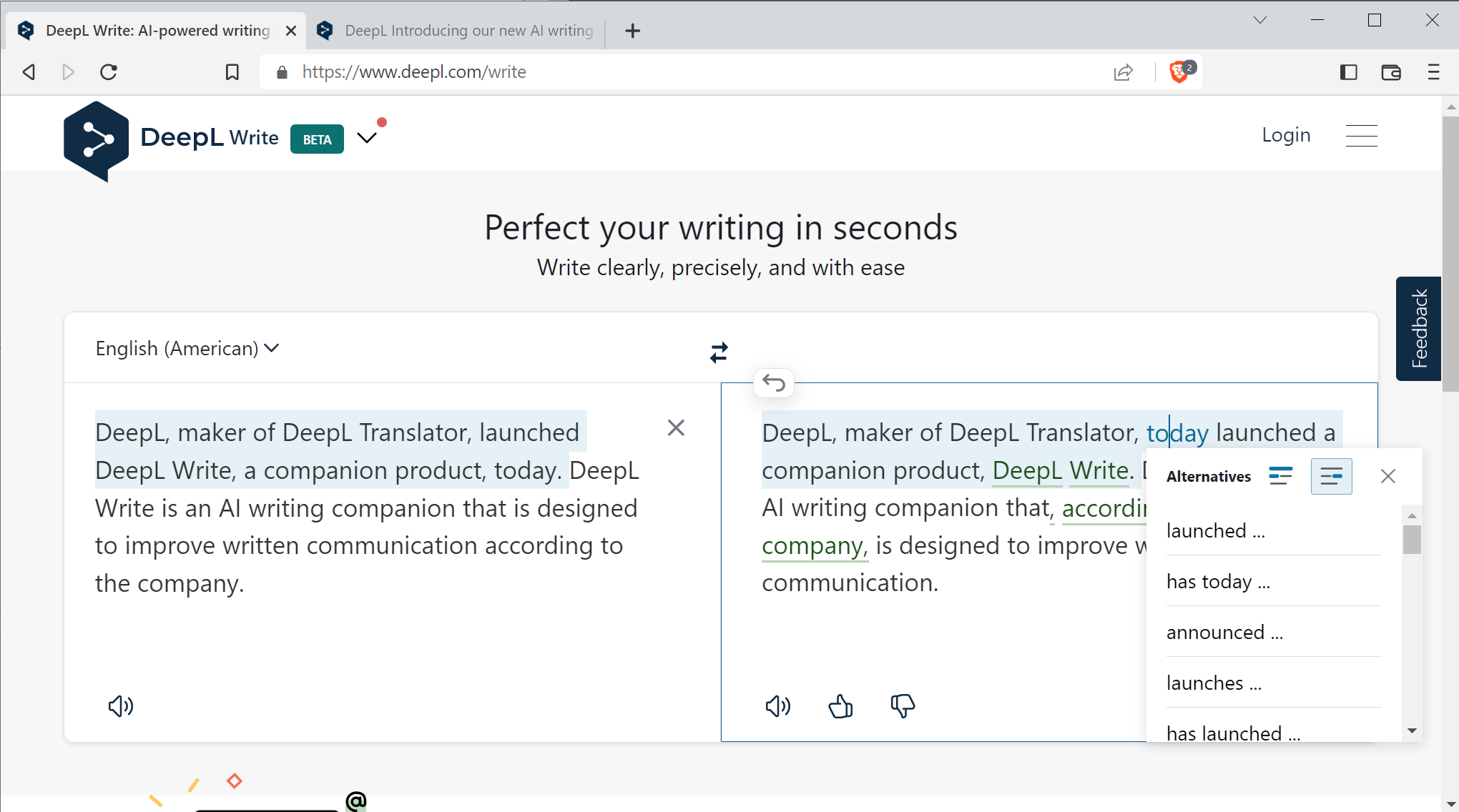
DeepL is a neural machine-translation and Language-AI platform founded and based in Cologne, Germany. Launched in 2017, it quickly became known for its translation quality — often praised as more accurate and natural than many major alternatives.
It’s more than just a translator: DeepL supports translation of text, documents (PDFs, Word, PowerPoint), websites/apps via API, and offers advanced features like glossaries, style-rules enforcement, and “writing-assistant” tools alongside translation — making it a comprehensive language-AI solution for individuals, teams, and businesses.
With DeepL, you can translate simple sentences, entire documents, or integrate translation directly into websites, apps, internal tools — making it useful for international teams, content publishers, agencies, multinational companies, or any multilingual workflow.
Features
DeepL offers a robust set of capabilities that make it stand out for translation, multilingual content, and data-sensitive environments:
- High-quality neural translation across many languages: DeepL supports dozens of languages (covering major European languages and more), with accurate, context-aware translations that preserve meaning, tone and nuance better than literal word-by-word tools.
- Document and file translation: You can translate full documents — PDFs, Word docs, PowerPoint decks — while preserving formatting and layout. That saves time and reduces manual copy-and-paste mistakes for business reports, marketing assets, or regulatory documents.
- API & Integration capabilities: DeepL offers an API (DeepL API Pro) for seamless integration with websites, internal tools, and apps. This allows businesses to embed translation in workflows or products — useful for SaaS, global teams, e-commerce, or content platforms.
- Glossaries & style customization: For teams needing consistent terminology (legal, technical, marketing), DeepL lets you define glossaries and style rules — ensuring translations stay aligned with brand voice and regulatory or domain-specific jargon.
- Enterprise-grade security and compliance: DeepL is built with strong data protection measures — encryption, compliance with EU data-protection laws (GDPR), and enterprise-ready standards (ISO 27001, SOC 2 Type II, HIPAA for relevant cases).
- Privacy control for sensitive content: For paid users (DeepL Pro), DeepL guarantees that translated texts are not stored for other purposes (e.g. model training), and that data is processed under strict privacy frameworks — a critical point for legal, regulatory, or confidential use.
- Speed & efficiency at scale: For organizations operating in multiple languages — marketing agencies, multinational teams, regulatory bodies, content publishers — DeepL significantly reduces translation time while maintaining high quality. Tons of companies and governments trust DeepL for multilingual communication.
Deepl Sovereignty
One of DeepL’s major strengths is its European foundation and compliance with EU data-protection laws. Because DeepL is based in Germany and handles data under GDPR, using DeepL gives you strong guarantees regarding data privacy, residency, and regulatory compliance.
For businesses or industries handling sensitive data — legal firms, regulated sectors, medical, finance — DeepL offers genuine peace of mind: personal or confidential texts won’t be stored or reused outside the service, and with enterprise-grade encryption, data-access controls, and compliance certifications (ISO 27001, SOC 2, etc.), you get a solid compliance-ready translation tool.
5. Aleph Alpha : European Large-Language Model Player for Entreprises

What it is
Aleph Alpha is a European AI company (based in Germany) that develops large-language models and AI systems tailored for European users, languages, and data-sovereignty standards. Their focus is to combine cutting-edge AI capabilities with a design mindful of European regulations, privacy expectations, and multilingual diversity.
Their mission centers on offering an alternative to non-European, big-tech AI models — giving companies and organizations in the EU a locally rooted, regulation-aware AI partner.
Features
Aleph Alpha delivers a set of AI capabilities and tools that make it a strong candidate when you care about quality, versatility, and European compliance. Main features include:
- State-of-the-art large-language models — Aleph Alpha builds LLMs capable of understanding and generating text (and in some cases code or structured content), suitable for complex tasks like summarization, translation, content generation, research support, chatbots, and more.
- Multilingual and European-language support — Because it’s Europe-based, their models are built with a good understanding of major European languages, cultural context, and cross-language sensitivity — which helps for teams working across countries or needing high quality output in languages other than English.
- Flexible deployment / hosting options compatible with privacy needs — For organizations concerned about data residency or sensitive information, Aleph Alpha emphasizes compliance with European data standards, offering infrastructure and terms that align with GDPR and EU-centric data governance practices.
- Enterprise-focused features — For companies, especially those in regulated sectors or with internal data constraints, Aleph Alpha provides enterprise-ready AI: data protection, contract terms, and configurability that help integrate AI in a compliant, controlled environment.
- Versatility across use cases — From content creation, summarization, research assistance, translation and multilingual content, to internal tools (e.g. knowledge-base assistants, document parsing, customer support) — their LLMs are built to support a variety of applications for European businesses.
Aleph Alpha Sovereignty
- Based in Germany / EU jurisdiction — As a European-headquartered company, Aleph Alpha operates under EU law and regulation, which simplifies compliance with GDPR and data-protection requirements for European customers.
- Data protection and privacy-centered design — Their enterprise offerings are designed to handle data sensitively: ensuring data residency, secure hosting, and contractual protections. This reduces risk for companies handling sensitive client data, internal docs, or any regulated content.
6. Photoroom :AI Photo Studio for E-commerce, Creators and Visual Content
What it is
Photoroom is a generative-AI powered photo-editing and content-creation platform designed to make professional-quality visuals accessible without deep design skills. It started as a simple background-removal tool and has grown into a full “AI photo studio” used by creators, sellers, social-media managers, brands and small businesses.
Originating in Europe (with roots in France), Photoroom is widely adopted globally: its mobile app and web version count hundreds of millions of users/downloads worldwide and support both individual creators and teams.
Features
Photoroom offers a broad set of AI-powered tools, each aimed at simplifying different visual tasks. Key features include:
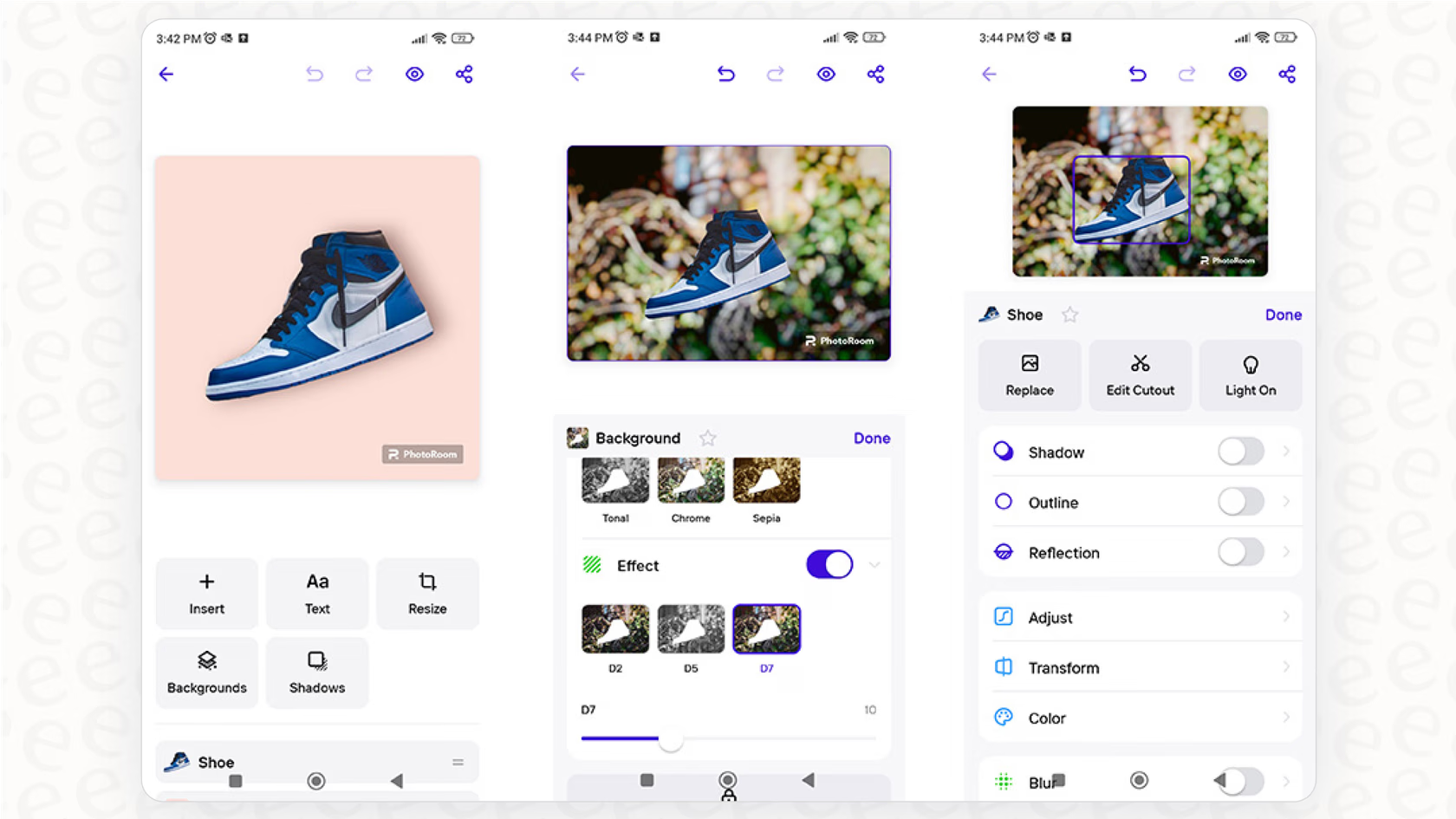
- Background removal & replacement — Instantly erase backgrounds from product or portrait photos while preserving detail and sharpness. You can keep transparency, set a solid color, or replace it with a custom or AI-generated background.
- AI Background generator & scene creation — Beyond removal, Photoroom can generate new backgrounds or full scenes (studio-style, lifestyle, contextual) to make images more engaging and suited for their purpose (e.g. product in a living room, apparel on a model, etc.).
- Product staging & virtual models — For e-commerce and apparel sellers: Photoroom lets you place items on virtual models or stage products into realistic or stylized environments — without needing a photoshoot or studio.
- Batch editing & scalability — Instead of editing images one by one, you can process many at once: background removals, resizing, retouching, applying brand styles, etc. Great when you have large catalogs (e.g. marketplaces, e-commerce stores).
- AI image generation (text-to-image or concept creation) — On top of editing existing pictures, Photoroom also brings generative capabilities: from a text prompt you can generate new images for marketing, social media, design mockups, backgrounds, even logo or poster-style visuals.
- Retouching and smart edits — Tools like “Magic Retouch” help you remove unwanted objects, smooth imperfections, fix lighting or color, enhance product photos, clean up backgrounds, or reframe photos — without needing advanced editing skills.
- Brand kit, templates & designs across formats — Photoroom supports a “brand kit” (colors, fonts, logos, style presets) and offers templates optimized for different channels (social media, marketplaces, ads), enabling you to maintain consistent branding across images.
- Cross-device accessibility & easy use — Available as web app, mobile apps (iOS & Android), and offers integrations and API access for companies. You don’t need a heavy photo-editing tool or high-end hardware — just upload your photo or prompt, and let Photoroom run the AI.
Photoroom Sovereignty
- European origin and founding — Photoroom was co-founded in France. Its European roots give it credibility for users sensitive to data regulations and regional compliance.
- Enterprise-grade capabilities and scalable infrastructure — Photoroom offers “Enterprise” plans with integrations, team workflows, and stronger support.
7. Lovable — AI “vibe-coding” to build apps by prompt

What it is
Lovable is a Swedish-born AI platform that lets you build full-stack web applications and sites just by describing what you want — using natural language. No manual coding required (unless you want to tweak).
Launched in December 2023 and headquartered in Stockholm, it quickly gained traction. In 2025, Lovable raised a large funding round and reached unicorn status — a clear sign of rapid growth and strong ambition.
Features
Lovable brings together a rich, AI-powered toolkit for app and web creation. Key features that stand out:
- Prompt-to-app generation: You simply describe your app or website in plain English. Lovable generates a working full-stack codebase: frontend, backend, database, authentication logic. That means you go from idea → working prototype fast.
- Built-in backend & hosting infrastructure (“Lovable Cloud”): Beyond code scaffolding, Lovable supplies backend services — data storage, file uploads, user management, authentication — so you don’t need to configure servers or databases manually.
- Editable, developer-friendly code: The generated code isn’t locked. You own it, export it to GitHub, and tweak or extend it as needed. That’s a big difference from many “no-code” tools: Lovable produces real, extensible code.
- Rapid MVP and prototype building: For startups, agencies, or entrepreneurs, Lovable allows building Minimum Viable Products (MVPs), landing pages, dashboards or internal tools quickly — minimizing time and cost before validation.
- Scalability & frequent use: According to Lovable, tens of thousands of new products are created daily by users worldwide. The scale shows the platform isn’t just a novelty — it’s being actively used.
- Accessible to non-technical users: Because of its natural-language interface and backend automation, even non-developers (small business owners, entrepreneurs, project leads) can prototype or launch apps without learning to code.
Lovable Sovereignty
Since you’re evaluating “European AI” tools, it’s worth looking at how Lovable fares in terms of origin, hosting, and control:
- European roots — Swedish startup: Lovable is headquartered in Stockholm, Sweden. That gives it a European identity and makes it part of the growing European “vibe-coding / AI-software” ecosystem.
- Rapid growth and investment within Europe: Its major funding rounds, user base growth, and positioning as a European unicorn show that it’s scaling under European regulation and business environment.
- Flexibility & control over code and deployment: Because Lovable produces real, editable code (not black-box proprietary art), you retain control. That means if you host the output yourself or choose compliant infrastructure, you avoid “locked-in SaaS” pitfalls.
8. Langdock – EU‑hosted AI platform & API

- True EU hosting and enterprise‑grade controls
Langdock explicitly builds around EU hosting, GDPR compliance, and ISO / SOC audits. The platform is hosted in Europe, offering governance features and compliance assurances that many global tools don’t. - A single platform for chat, assistants, workflows, and API
It’s not just a chat app. You can use it for multi‑model chat, document upload, data analysis, prompt libraries, plus workflow automation—directly helping day‑to‑day productivity. The Business plan supports many workflows per month and unlimited users under one workspace, letting you scale to whole departments. - Fits preference for EU‑only residency, GDPR, and limited data exposure
Langdock’s EU‑focused infrastructure and clear compliance posture are especially practical if your organization needs to guarantee where data lives, keep logs, or manage retention strictly. That matches the priorities you indicated: EU‑only residency, GDPR, no unwitting external exposure.
Best use cases
- Teams or departments in EU orgs who want a single, compliant AI layer for notes, drafts, research, internal Q&A, or light automation without sending data outside Europe.
- Organizations that want an EU‑hosted alternative to US‑dominated AI tool stacks, with clear auditability, governance, and room to expand from basic chat to workflow automation.
9. Framer : AI-powered website & design builder
What it is
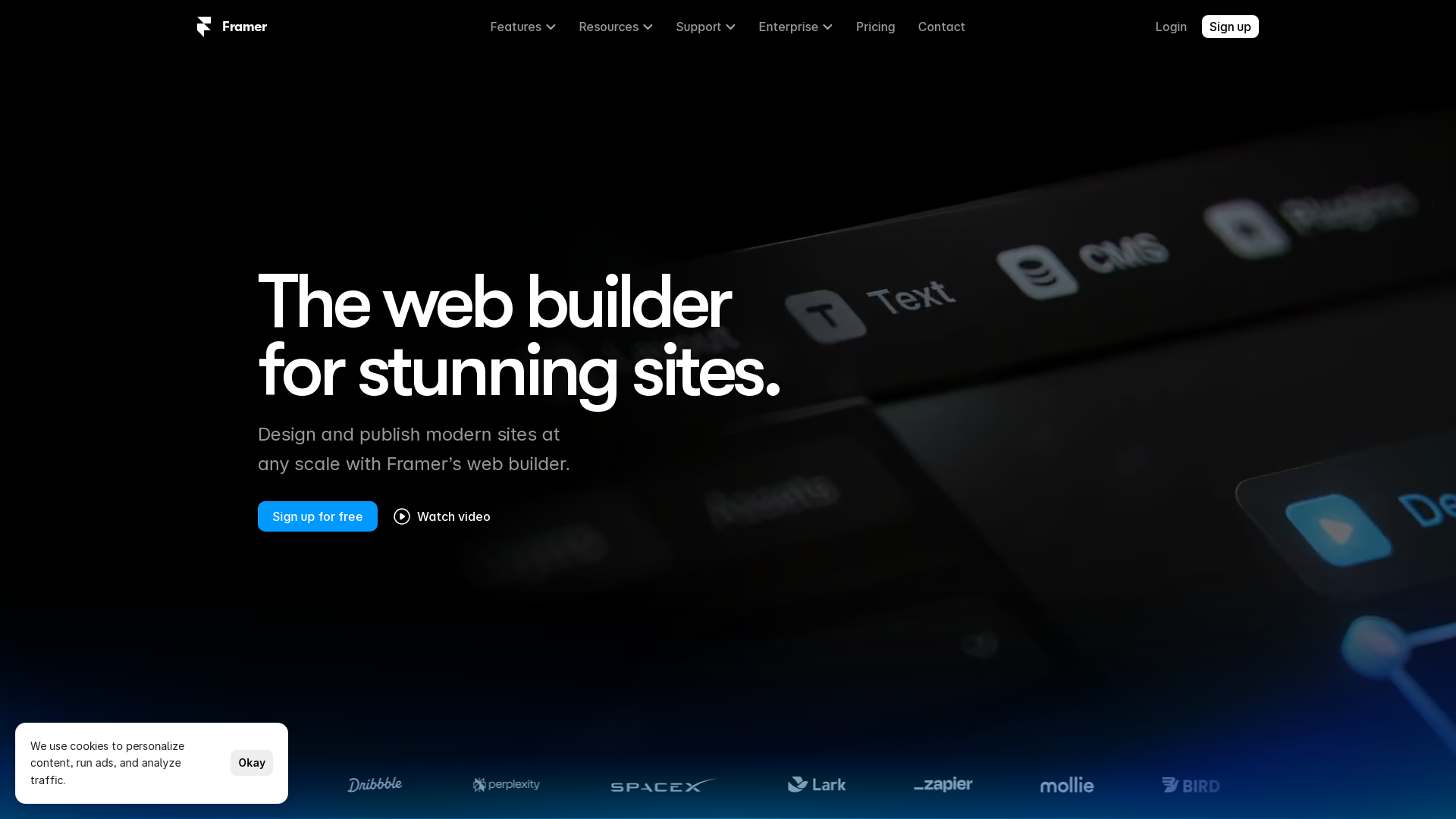
Framer is a dutch company that started as a design and prototyping tool and has evolved into a website builder and design-to-web platform. It lets you design interfaces, prototypes, and full websites in one environment — with an emphasis on speed and ease, especially for teams without deep coding resources.
More recently, Framer has integrated AI-assisted features to streamline content creation, layout adaptations, and rapid building of web pages or prototypes. This makes it a go-to for startups, small teams, designers, freelancers and marketers who need to go from idea or design to published site quickly.
Features
- Visual design + real web output — You design visually (drag-and-drop, layout tools) and Framer outputs clean code or a live website. No need for separate design and dev phases for many standard sites.
- Built-in hosting and deployment pipeline — Framer handles hosting and deployment internally (or via its managed pipeline), simplifying the often complex process of building, deploying, and maintaining a site — especially useful for small teams or non-dev founders.
- AI-assisted content & layout tools — With AI features, you can speed up tasks like generating copy, adjusting layout, creating variations, or auto-adapting design for responsiveness. This reduces the manual effort to produce landing pages, marketing sites, or MVP-level web apps.
- Speed and ease for non-developers — For users without coding skills, Framer lowers the barrier to building a site: you don’t need deep HTML/CSS/JS knowledge — design + configuration + deploy. That makes it attractive for marketing teams, small businesses, freelancers, or side-projects.
- Flexibility and customization — For users who do know code, Framer allows custom embedding, custom scripts, advanced configurations — so you’re not locked into a rigid “site builder only” sandbox. This mix of ease + flexibility is a strong advantage.
- Fast prototyping to launch workflows — Because design and deployment live in the same tool, you can iterate quickly: test designs, modify layout or content, and publish updates — ideal for agile teams, startups, or frequent redesign cycles.
Framer Sovereignty
Whether Framer counts as “sovereign-friendly” depends on how strictly you define data-sovereignty, hosting, and compliance needs for your use case. Here’s a breakdown:
- Company origin & infrastructure transparency — Framer is a Dutch SaaS product. As such, hosting, data center location, and data-residency is within EU jurisdictions by default.
- If compliance and data-residency are mission-critical (GDPR, sensitive data, regulated content) — backups are retained, privacy and processing agreements exist
Meet the Writer

Jean-marc is an AI expert helping recruiters & professionnals leverage these tools in the everyday.
FAQ
EU AI providers offer GDPR compliance, data sovereignty, and privacy guarantees that foreign-hosted solutions often can't match.
- Data stays within EU borders for regulatory compliance
- Transparent, open-weight models reduce vendor lock-in risks
- On-premise deployment options give you full control
Mistral offers open-weight models you can download, host, and customize yourself—unlike proprietary black-box APIs from overseas providers.
- Apache 2.0 licensed for full transparency and adaptation
- Multilingual reasoning capabilities across European languages
- Self-hosted deployment keeps data sovereign and compliant
Noota specializes in meeting transcription and automation, saving teams 6.4 hours weekly with 80% less admin work—proven by 5000+ teams and 4.9/5 G2 rating.
- Purpose-built for meetings, not generic AI tasks
- GDPR-aligned with 80+ language support globally
- Measurable ROI: 6.4h/week saved per team member
Noota is purpose-built for meeting transcription and automated documentation, saving 6.4 hours weekly across 5000+ teams.
- Transcribes and summarizes meetings in 80+ languages
- Reduces admin work by 80% with automated notes
- Try Noota free—no credit card needed