
Talent Acquisition: The Ultimate Guide for Modern Recruiters
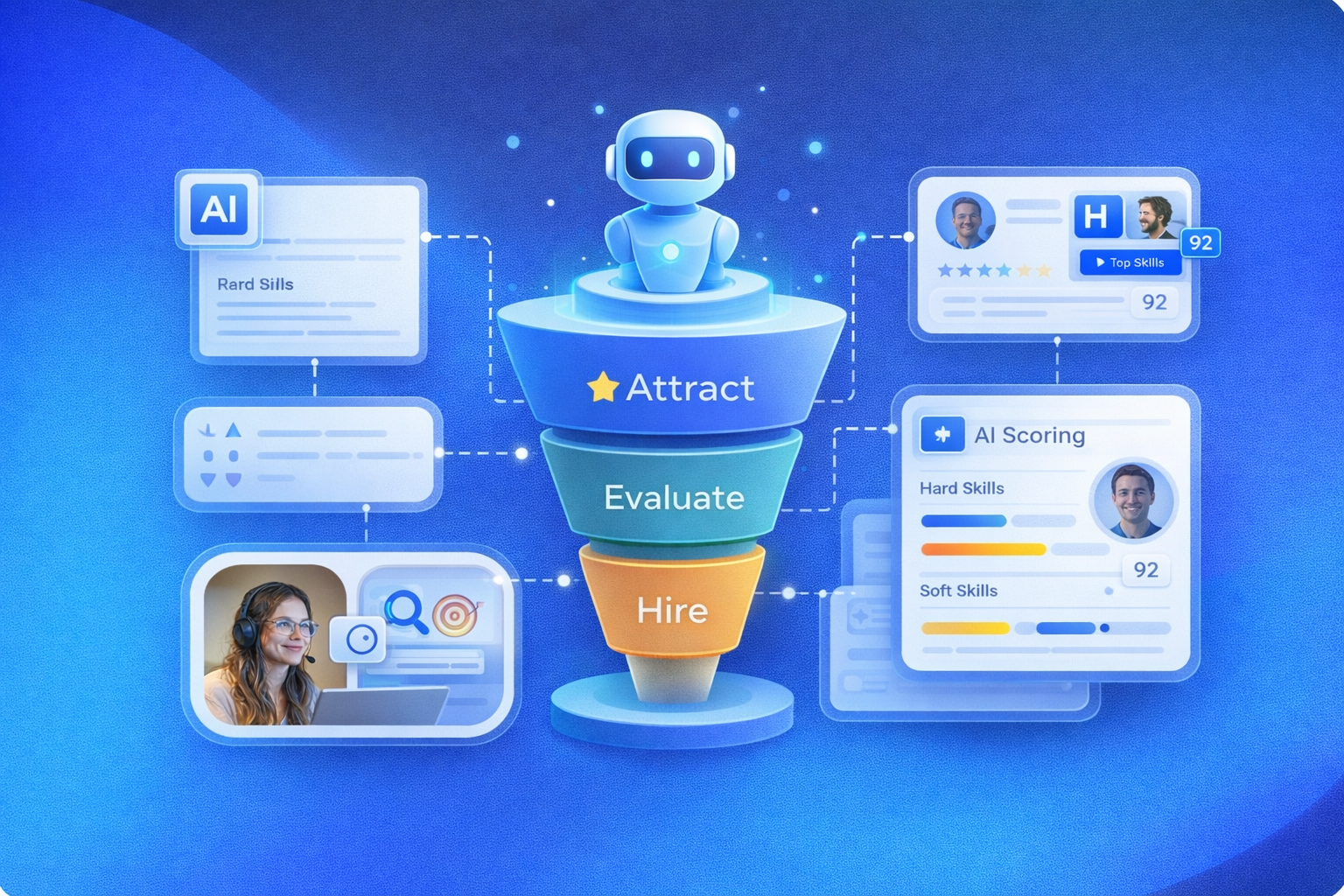
Leverage your Interview Data
AI interview notes, scorecard, follow-up, ATS integration, and more...
.svg)
.svg)
Talent Acquisition: The Ultimate Guide for Recruiters
Want to stay ahead in modern hiring? This guide explains what talent acquisition is and how AI is transforming the way companies hire.
Hiring has become a critical competitive advantage for modern companies. In fast-moving industries, the ability to attract and hire the right people often determines whether a company grows quickly or falls behind.
This is where talent acquisition comes in.
Unlike traditional recruiting, talent acquisition focuses on long-term hiring strategy. Instead of simply filling open roles, companies build structured processes to attract, evaluate, and hire the best candidates.
In this guide, we’ll break down the modern talent acquisition process, the strategies used by recruiters today, and how AI recruiting tools are transforming hiring.
Key takeaways about talent acquisition
- Talent acquisition focuses on long-term hiring strategy rather than filling immediate roles
- A structured talent acquisition process improves hiring quality and reduces time to hire
- Candidate sourcing has become one of the most critical steps in modern recruiting
- AI recruiting tools help automate screening, sourcing and interview analysis
- Companies that adopt AI-driven hiring gain a competitive advantage in talent acquisition
What Is Talent Acquisition?
Talent acquisition refers to the strategic process companies use to attract, identify, and hire qualified candidates. Unlike traditional recruiting, which focuses on filling open roles quickly, talent acquisition takes a long-term approach to hiring and workforce planning.
A modern talent acquisition strategy usually includes:
- workforce planning and hiring strategy
- candidate sourcing and talent pipelines
- candidate screening and interviews
- hiring and onboarding new employees
Companies that invest in strong talent acquisition processes are better positioned to attract top talent and scale their teams efficiently.
Talent Acquisition vs Recruiting: What’s the Difference?
Many people use the terms talent acquisition and recruiting interchangeably, but they refer to slightly different approaches to hiring.
Recruiting usually focuses on filling open positions as quickly as possible. It is often reactive and tied to immediate hiring needs.
Talent acquisition, on the other hand, is more strategic and long-term. The goal is to build talent pipelines and anticipate future hiring needs rather than simply reacting to vacancies.
The Talent Acquisition Process Step by Step
Most companies follow a similar talent acquisition process to identify, evaluate and hire candidates. While each organization adapts the workflow to its needs, the core hiring stages remain largely the same.
Workforce Planning
The first step is understanding future hiring needs. Companies analyze business goals, team growth and upcoming projects to determine which roles will be needed.
This allows organizations to anticipate hiring demand rather than reacting to urgent recruitment needs.
Candidate Sourcing Strategies for Recruiters
Once hiring needs are defined, recruiters start sourcing candidates. Instead of waiting for applications, they actively search for qualified profiles across multiple channels. Many teams now rely on active sourcing strategies to identify candidates before they even apply.
Common sourcing channels include:
- LinkedIn and professional networks
- job boards
- employee referrals
- online communities and talent platforms
Many companies now use AI recruiting tools to automate candidate sourcing and identify relevant profiles faster.
Candidate Screening
After sourcing candidates, recruiters must evaluate which applicants match the role requirements.
Typical screening methods include:
- resume review
- screening calls
- skill or technical assessments
- portfolio evaluation
This step allows recruiters to identify the most relevant candidates before moving to the interview stage.
Job Interviews
Interviews allow hiring teams to evaluate candidates in more depth. Many recruiters rely on structured interview frameworks such as the STAR interview method to assess candidates more objectively.
Recruiters typically evaluate:
- technical skills
- professional experience
- problem-solving abilities
- team and culture fit
Hiring and Onboarding
The final step is selecting the best candidate and integrating them into the company. A smooth onboarding process helps new hires become productive faster and improves long-term retention.
Companies that invest in structured onboarding programs significantly improve employee engagement and performance.
Common Talent Acquisition Challenges
Recruiting teams face several challenges when trying to attract and hire top talent. As competition for skilled candidates increases, hiring processes can become slower and more complex.
Some of the most common talent acquisition challenges include:
- finding qualified candidates in competitive markets
- managing large volumes of applications
- long hiring cycles and slow interview processes
- ensuring a consistent candidate experience
- reducing bias in hiring decisions
Many companies are now turning to automation and AI recruiting tools to help address these challenges and streamline hiring workflows.
How AI Is Transforming Talent Acquisition
Artificial intelligence is reshaping how companies approach hiring.
For many recruiting teams, the hiring process still involves a lot of manual work — reviewing resumes, sourcing candidates and taking notes during interviews. AI recruiting tools and AI hiring tools help automate these repetitive steps so recruiters can focus on what matters most: evaluating candidates and building relationships.
Today, AI can support several stages of the talent acquisition process.
Common uses of AI in recruiting include:
- automated resume screening
- AI-powered candidate sourcing
- interview transcription and summaries
- candidate scoring and evaluation
- recruitment analytics and hiring insights
By automating time-consuming tasks, AI recruiting software helps hiring teams move faster and make more informed decisions.
For many companies, AI recruiting is becoming a core part of modern talent acquisition strategies. According to a survey by the Society for Human Resource Management (SHRM), 51% of organizations already use AI in their recruiting processes, making it the most widely adopted AI application in HR.
Best Talent Acquisition Tools for Recruiters
Modern hiring teams rely on specialized tools to streamline their recruitment workflows. From sourcing candidates to analyzing interviews, the right technology helps recruiters move faster and make better hiring decisions.
Here are the main categories of tools used in modern talent acquisition.
Applicant Tracking Systems (ATS)
Applicant tracking systems help recruiters manage candidates throughout the hiring process. They centralize applications, organize candidate profiles and make it easier for hiring teams to collaborate.
ATS platforms help recruiters:
- track candidates across the hiring pipeline
- manage job applications and candidate profiles
- collect interview feedback and collaborate with hiring managers
Candidate Sourcing Tools
Sourcing tools help recruiters find qualified candidates across professional networks and talent databases. Instead of waiting for applications, recruiters can proactively identify potential hires.
Common sourcing channels include:
- LinkedIn and professional networks
- developer communities
- talent databases
- employee referrals
AI Recruiting Tools
AI recruiting tools help automate some of the most time-consuming parts of the hiring process. Instead of manually reviewing resumes or taking notes during interviews, recruiters can use AI to generate interview summaries, evaluate candidates, create scorecards and analyze hiring data.
This allows recruiting teams to spend more time on conversations with candidates, improving both the candidate experience and hiring decisions.
Talent Acquisition Best Practices
Building an effective talent acquisition strategy requires more than simply posting job openings. High-performing recruiting teams focus on structured processes and continuous improvement.
Some best practices include:
- building long-term candidate pipelines
- using structured interviews to evaluate candidates
- tracking key recruitment metrics
- improving candidate experience throughout the hiring process
- using AI tools to automate repetitive recruiting tasks
Companies that adopt these best practices are better positioned to hire faster and attract stronger candidates.
Key Talent Acquisition Metrics Every Recruiter Should Track
Tracking the right metrics helps recruiting teams understand whether their hiring strategy is actually working. Talent acquisition metrics provide visibility into how efficient your hiring process is and where improvements can be made.
Some of the most important metrics include:
- Time to hire — the average time it takes to move a candidate from application to offer.
- Cost per hire — the total cost associated with recruiting and onboarding a new employee.
- Quality of hire — a measure of how successful new hires are once they join the company.
- Candidate experience — how candidates perceive the hiring process, from first contact to final decision.
Companies that monitor these metrics consistently can identify bottlenecks in their recruitment pipeline and improve hiring performance over time.
The Future of Talent Acquisition
Talent acquisition is evolving quickly as new technologies reshape the way companies hire. Recruiting teams are increasingly relying on automation, data and AI to improve hiring efficiency and candidate experience, a shift already highlighted in recent recruitment trends in 2026.
Several major shifts are already transforming how organizations approach hiring.
- AI-powered recruiting automation — AI tools can now assist with sourcing candidates, screening applications and analyzing interviews.
- Skills-based hiring — companies are focusing more on real skills and practical assessments rather than relying only on degrees or job titles.
- Global and remote hiring — remote work has expanded access to talent pools worldwide, allowing companies to recruit beyond local markets.
- Data-driven hiring decisions — recruiting teams are using analytics and hiring metrics to improve candidate evaluation and reduce bias.
Talent acquisition has become a strategic function for modern organizations. Instead of simply filling open roles, companies now focus on building structured hiring processes that help them attract, evaluate and hire the right candidates.
From candidate sourcing to interviews and hiring decisions, each stage of the talent acquisition process can now be improved with the right tools and automation.
As competition for talent continues to grow, organizations that adopt modern recruiting strategies and AI recruiting tools will be better positioned to hire faster and build stronger teams.
Talent Acquisition FAQ
What is talent acquisition?
Talent acquisition refers to the long-term strategy companies use to attract, evaluate and hire qualified candidates. Unlike traditional recruiting, talent acquisition focuses on building candidate pipelines and planning future hiring needs.
What is the difference between talent acquisition and recruiting?
Recruiting focuses on filling open roles quickly, while talent acquisition takes a broader and more strategic approach. Talent acquisition includes workforce planning, employer branding and long-term talent pipeline development.
How is AI used in talent acquisition?
AI is increasingly used to automate tasks such as candidate sourcing, resume screening and interview transcription. AI recruiting tools can also generate summaries, scorecards and hiring insights to support recruiter decision-making.
What are the most important talent acquisition metrics?
Key talent acquisition metrics include time to hire, cost per hire, quality of hire and candidate experience. These metrics help companies evaluate the efficiency of their hiring process and improve recruitment strategies.
What tools are used for talent acquisition?
Recruiters typically use a combination of applicant tracking systems (ATS), sourcing tools and AI recruiting platforms to manage candidate pipelines, evaluate applicants and streamline the hiring process.
Leverage your Interview Data
AI interview notes, scorecard, follow-up, ATS integration, and more...

Jean-marc is an AI expert helping recruiters & professionnals leverage these tools in their everyday work.
Related articles
.webp)
.png)


Forget note-taking and
try Noota now
FAQ
In the first case, you can directly activate recording as soon as you join a videoconference.
In the second case, you can add a bot to your videoconference, which will record everything.
Noota also enables you to translate your files into over 30 languages.
.svg)