


Gegevensbescherming & Compliance
8 min leestijd
Bijgewerkt op:
Dec 2, 2025
AVG & AI: Wat u moet weten
Wilt u weten of uw AI-gebruik moet voldoen aan de AVG? Hier is uw gids.
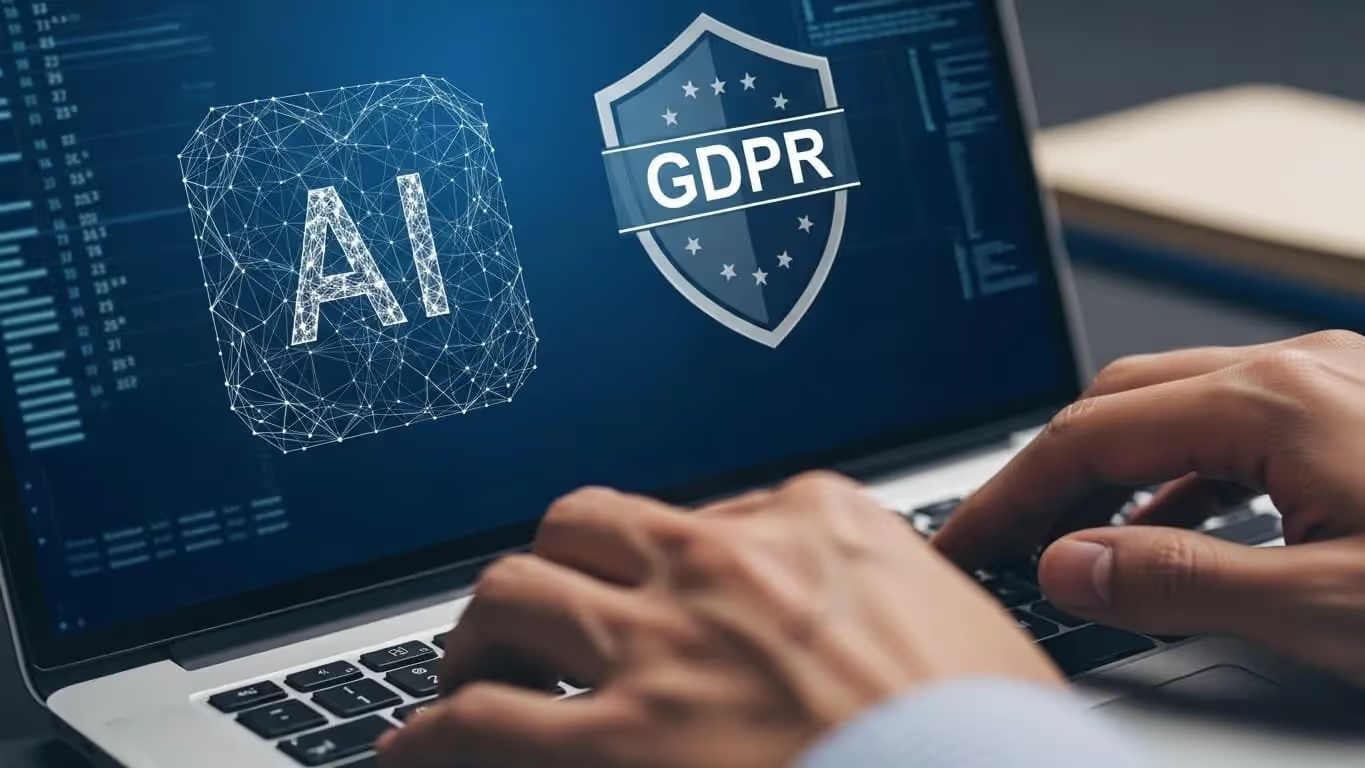
Als je AI verkent binnen de EU, is er één cruciale vraag:
Hoe profiteer je van AI zonder de AVG-regels te overtreden?
Dit artikel helpt je begrijpen wanneer de AVG van toepassing is op AI, wat de grootste compliancerisico's zijn en hoe je je AI-workflows zo inricht dat ze zowel krachtig als privacyvriendelijk zijn.
Valt AI onder de AVG?
Ja — in vrijwel alle realistische situaties waarin je AI gebruikt om persoonsgegevens te verwerken, is de Algemene Verordening Gegevensbescherming (AVG) van toepassing.
De AVG reguleert de "verwerking" van persoonsgegevens. Onder "verwerking" vallen verzameling, opslag, analyse, profilering en geautomatiseerde besluitvorming — en ja, dat is precies wat veel AI-systemen doen. Zelfs als je AI alleen een naam en e-mailadres verwerkt, of gedragsgegevens (IP-adres, gebruikspatronen) logt, zijn dat persoonsgegevens volgens de brede definitie van de AVG.
Belangrijke AVG-bepalingen bij het gebruik van AI
Als je AI integreert in je workflows, zijn de volgende AVG-regels van belang:
- Rechtmatige grondslag voor verwerking: Je moet beschikken over een rechtmatige grondslag — toestemming, overeenkomst, gerechtvaardigd belang of een andere geldige basis — voordat je persoonsgegevens verwerkt met AI.
- Transparantie en informatieplicht: Je moet betrokkenen informeren over hoe hun gegevens worden gebruikt, inclusief of deze worden ingevoerd in AI, welke vorm van profilering of geautomatiseerde besluitvorming kan plaatsvinden en welke rechten zij hebben.
- Rechten van betrokkenen: Mensen hebben het recht op inzage in gegevens, en het recht om correctie, verwijdering of beperking van verwerking te verzoeken — ook wanneer gegevens door een AI zijn verwerkt.
- Specifieke regels voor profilering en geautomatiseerde besluitvorming: Als AI beslissingen neemt over een persoon (zoals bij werving, kredietwaardigheid, beoordelingen of risicoscores), vereist de AVG specifieke waarborgen: zinvolle informatie, het recht op menselijke tussenkomst, het recht om bezwaar te maken of om uitleg te vragen.
- Dataminimalisatie en doelbinding: Verzamel alleen gegevens die strikt noodzakelijk zijn voor het doel van de AI en gebruik gegevens later niet voor andere doeleinden zonder duidelijke kennisgeving of nieuwe toestemming.
- Beveiligings- en verantwoordingsplicht: Verwerkingsverantwoordelijken moeten zorgen voor adequate beveiliging (versleuteling, toegangscontrole), verwerkingsactiviteiten documenteren en in staat zijn om aan te tonen dat zij aan de regels voldoen.
AVG & AI — Welke uitdagingen en risico's zijn er
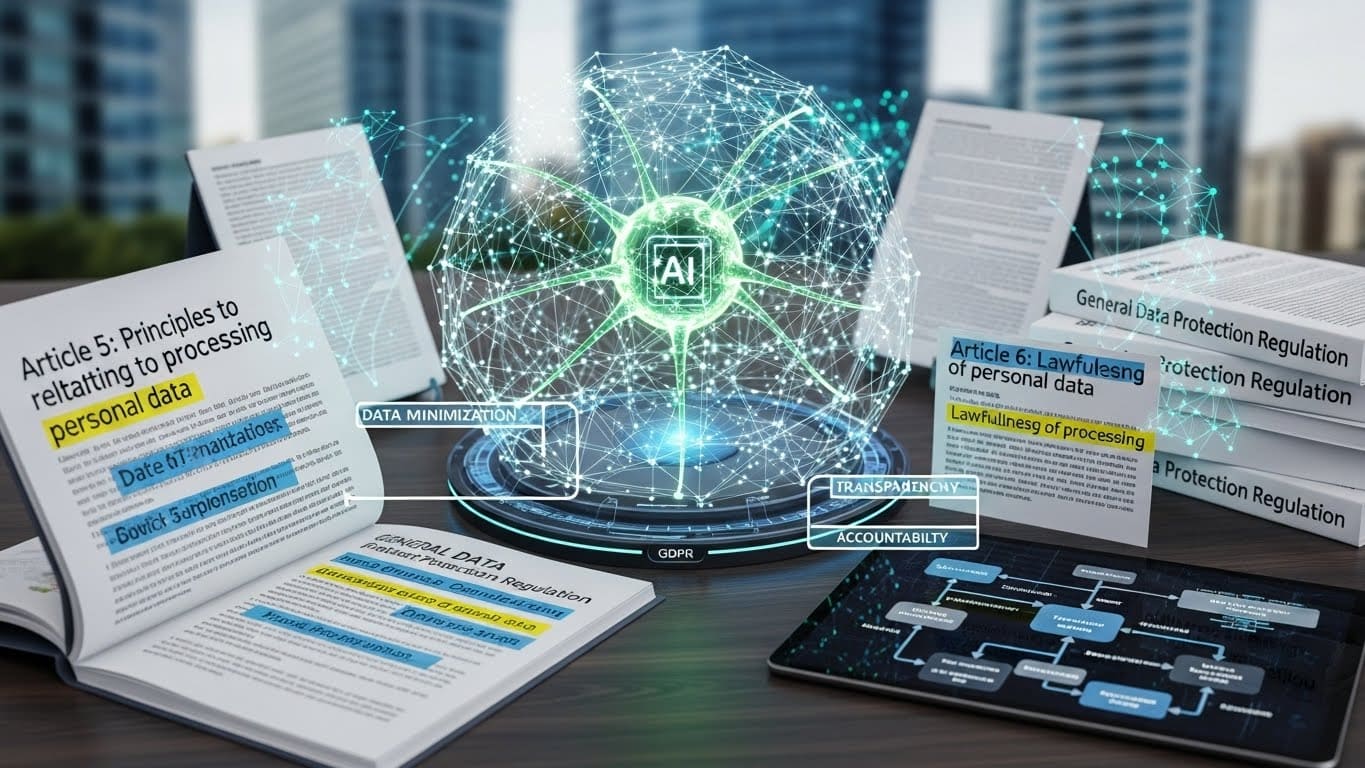
Het implementeren van AI volgens de AVG-regels biedt grote voordelen, maar brengt ook specifieke compliancerisico's met zich mee.
⚠️ Risico 1: Verwerking van persoonsgegevens — ook als je dat niet van plan bent
AI-systemen verwerken zelden alleen anonieme gegevens. In veel gevallen worden namen, e-mailadressen, gedragslogs, IP-adressen, gebruikers-ID's en metadata ingevoerd, of worden er nieuwe kenmerken afgeleid (gebruikersvoorkeuren, voorspellingen, scores). Onder de AVG valt dit alles onder "persoonsgegevens". Het toepassen van AI-algoritmen op dergelijke gegevens activeert de standaardverplichtingen voor verwerkingsverantwoordelijken.
Zelfs als de gegevens "onschadelijk" lijken, kan het vermogen van AI om gegevens te combineren, conclusies te trekken of personen opnieuw te identificeren betekenen dat de dataset plotseling persoonsgegevens bevat — en de AVG volledig van toepassing is.
⚠️ Risico 2: Gebrek aan transparantie en uitlegbaarheid (“black box” AI vs. AVG-rechten)
AI is vaak ondoorzichtig. Machine-learningmodellen, grote taalmodellen en generatieve systemen werken met een complexe interne logica die moeilijk in mensentaal uit te leggen is.
Die ondoorzichtigheid botst met de transparantie-eisen van de AVG: je moet gebruikers informeren over hoe hun persoonsgegevens worden verwerkt, hoe profilering of geautomatiseerde besluitvorming plaatsvindt en op basis van welke logica. Wanneer de output van je AI een aanbeveling, besluit of profileringsresultaat is dat invloed heeft op individuen, kan een gebrek aan uitlegbaarheid in strijd zijn met de regels voor eerlijkheid en transparantie van de AVG.
⚠️ Risico 3: Toestemming & een geldige rechtsgrond worden ingewikkeld
De AVG vereist een wettelijke grondslag voor het verwerken van persoonsgegevens. In veel AI-contexten is het verkrijgen van geldige toestemming lastig: je moet garanderen dat deze geïnformeerd, specifiek, vrijelijk gegeven en intrekbaar is. Maar als je later modellen opnieuw traint, gegevens hergebruikt of deze in nieuwe AI-pipelines invoert, is de oorspronkelijke toestemming dan nog wel geldig?
Als alternatief kun je je beroepen op een gerechtvaardigd belang, maar dat vereist een strikte belangenafweging: jouw belangen versus de rechten van het individu. Bij profilering, scoring of voorspellende AI is het juridisch en ethisch complex om die balans aan te tonen.
⚠️ Risico 4: Dataminimalisatie en doelbinding vs. de honger van AI naar data
De AVG verankert twee cruciale waarborgen:
- Dataminimalisatie — verzamel alleen gegevens die echt noodzakelijk zijn voor je doel.
- Doelbinding — gebruik gegevens niet voor nieuwe, ongerelateerde doeleinden zonder nieuwe toestemming of wettelijke grondslag.
Maar AI gedijt bij data: meer input verbetert de nauwkeurigheid, modellering, gevolgtrekkingen en toekomstige aanpasbaarheid. Er is een natuurlijke spanning: als je een AI voedt met grote datasets "voor het geval dat", loop je het risico op overmatige gegevensverzameling. Als je later gegevens wilt hergebruiken voor nieuwe AI-experimenten, loop je het risico de doelbinding te schenden.
⚠️ Risico 5: Bewaartermijnen, opslag en ongecontroleerde dataduplicatie
AI-training, logging, modelbouw en back-ups kunnen allemaal leiden tot onbeperkte opslag of replicatie van persoonsgegevens. Tenzij je gegevens strikt anonimiseert of pseudonimiseert, bestaat het risico dat data langer in archieven blijven staan dan gerechtvaardigd, of zich verspreiden over verschillende omgevingen (cloudback-ups, laptops van ontwikkelaars, logbestanden).
Dat is in strijd met het beginsel van opslagbeperking van de AVG en vergroot de blootstelling, zeker in het geval van een datalek of ongeautoriseerde toegang.
⚠️ Risico 6: Geautomatiseerde besluitvorming / profilering en individuele rechten
Wanneer AI beoordelingen, scores, voorspellingen of besluiten over individuen genereert (geschiktheid voor een baan, kredietrisico, gepersonaliseerde aanbiedingen, gebruikersprofilering), stelt de AVG extra verplichtingen. Individuen moeten beschikken over:
- Transparante informatie over de besluitvormingslogica
- Het recht op menselijke tussenkomst of het recht om het besluit aan te vechten
- Het recht om bezwaar te maken of om tussenkomst te verzoeken
Het niet bieden van deze rechten — bijvoorbeeld door AI-logica te verbergen of geen beoordelingsproces aan te bieden — brengt je in juridische problemen en ondermijnt het vertrouwen van gebruikers.
⚠️ Risico 7: Werken met externe AI-dienstverleners en subverwerkers
Veel teams vertrouwen op externe AI-leveranciers, cloudgebaseerde AI-API's of SaaS-tools. Maar wanneer je AI-verwerking uitbesteedt, verdwijnt de AVG niet; jij blijft de verwerkingsverantwoordelijke en je leverancier wordt de verwerker.
Dat vereist:
- Een deugdelijke verwerkersovereenkomst (DPA) waarin datastromen, opslaglocatie, bewaartermijnen, meldplicht bij datalekken en beperkingen op gegevensoverdracht worden gespecificeerd.
- Garanties dat gegevens in rechtsgebieden blijven die aan de regels voldoen (bijv. de EU) en dat subverwerkers dezelfde standaarden hanteren.
- Controleerbaarheid, logbestanden en grip op wat er met de gegevens gebeurt.
Hoe je jouw AI-systeem AVG-proof maakt
Met een doordachte aanpak kun je AI-systemen bouwen of implementeren die de privacy respecteren, gebruikersgegevens beschermen en voldoen aan de AVG-vereisten
🔍 Stap 1: Breng je datastromen in kaart — weet welke gegevens je gebruikt en waarom
Voordat je een AI-project start, moet je alles documenteren: welke gegevens je verzamelt, waar ze vandaan komen, hoe ze door je systemen stromen, hoe ze worden verwerkt en waar ze worden opgeslagen. Dit omvat ruwe invoer, metadata, logbestanden, modeluitvoer, back-ups en het delen van gegevens met derden.
Deze "datastroom-mapping" helpt je te identificeren waar persoonsgegevens of gevoelige informatie je systeem binnenkomen of verlaten. Hiermee kun je risico's vroegtijdig inschatten en waar nodig beschermingsmaatregelen treffen, in plaats van problemen pas te ontdekken wanneer het wellicht te laat is.
📄 Stap 2: Kies een rechtsgrondslag en definieer een duidelijk doel
De AVG vereist een wettelijke grondslag voor het verwerken van persoonsgegevens. Voor AI-toepassingen zijn de meest voorkomende grondslagen:
- Toestemming — wanneer gebruikers expliciet akkoord gaan met het verwerken van hun gegevens door AI (bijvoorbeeld voor profilering of personalisatie). Toestemming moet geïnformeerd, ondubbelzinnig en intrekbaar zijn.
- Uitvoering van een overeenkomst / gerechtvaardigd belang — voor interne processen, dienstverlening of noodzakelijke bedrijfsactiviteiten, mits je kunt aantonen dat het datagebruik proportioneel is en de rechten van betrokkenen worden gewaarborgd.
Je moet ook het doelbindingsbeginseldefiniëren en documenteren: wees expliciet over waarvoor gegevens worden gebruikt en verbind je eraan om gegevens niet voor ongerelateerde taken te hergebruiken, tenzij je opnieuw toestemming vraagt of een wettelijke grondslag hebt. Dit verkleint het risico op misbruik en helpt het vertrouwen te behouden.
🧹 Stap 3: Minimaliseer en anonimiseer / pseudonimiseer gegevens waar mogelijk
Hanteer het principe van dataminimalisatie — verzamel en verwerk alleen wat strikt noodzakelijk is. Vermijd het verzamelen van gegevens "voor het geval dat". Hoe minder persoonsgegevens je verwerkt, hoe lager het risico op non-compliance.
Wanneer mogelijk, anonimiseer of pseudonimiseer gegevens voordat je ze invoert in AI. Bij anonimisering — waarbij individuen niet langer identificeerbaar zijn — vervallen veel AVG-verplichtingen. Pseudonimisering verkleint het risico en helpt je, in combinatie met goede beveiliging, veiliger te werken terwijl je toch profiteert van AI-verwerking.
📢 Stap 4: Transparantie — informeer individuen over AI-verwerking
Wanneer persoonsgegevens door AI worden verwerkt (vooral bij profilering, geautomatiseerde besluitvorming of personalisatie), vereist de AVG dat je betrokkenen informeert. Dit betekent dat je het volgende moet verstrekken:
- Welke gegevens worden verzameld
- Waarom en hoe de AI dit verwerkt
- Welke besluiten of profilering kunnen plaatsvinden
- Hun rechten (inzage, correctie, verwijdering, bezwaar)
Gebruik duidelijke, toegankelijke privacyverklaringen. Vermijd jargon. Als uitkomsten invloed hebben op individuen (bijv. scoring, rangschikking, aanbevelingen), leg dit dan uit in begrijpelijke taal. Transparantie schept vertrouwen — en helpt om aan wettelijke vereisten te voldoen.
🛡 Stap 5: Bied rechten & menselijk toezicht — vooral bij geautomatiseerde besluiten
Als uw AI-systeem besluiten of voorspellingen doet die invloed hebben op individuen (bijv. kredietwaardigheid, geschiktheid voor een baan, personalisatie, risicoanalyses), geeft de AVG hen rechten:
- Recht op inzage in gegevens en de logica achter besluiten
- Recht om een menselijke beoordeling of herziening aan te vragen
- Recht om bezwaar te maken tegen of uitgesloten te worden van profilering of geautomatiseerde besluitvorming
Plan voor een beoordelings- of beroepsprocedure: zorg er bij elke beslissing die door AI wordt beïnvloed voor dat een mens kan meekijken en ingrijpen. Documenteer besluiten, maak logs beschikbaar en sta correcties toe als gegevens of uitkomsten onjuist zijn.
🔒 Stap 6: Gebruik conforme infrastructuur & veilige gegevensverwerking
Waar uw gegevens worden gehost, hoe ze worden opgeslagen en versleuteld, en wie er toegang toe heeft — het is allemaal van belang. Voor organisaties in de EU: geef de voorkeur aan tools en platforms die gegevens opslaan in EU-datacenters, de AVG ondersteunen en zich committeren aan standaarden voor gegevensbescherming.
Als u AI- of clouddiensten van derden gebruikt, onderteken dan een verwerkersovereenkomst (DPA), zorg dat subverwerkers voldoen aan de regels en controleer of gegevens de EU niet verlaten zonder passende waarborgen.
Overweeg voor gevoelige gegevens self-hosted of on-premise AI, of lokale implementatie van open-source modellen — dit geeft maximale controle over waar gegevens verblijven en hoe ze worden verwerkt.
✅ Stap 7: Documenteer alles en voer regelmatig audits uit
Compliance is geen eenmalige taak, maar een continu proces. Houd logboeken bij van gegevensverwerking, beslissingen van AI, toestemmingsregistraties, datastroomdiagrammen en alle gebeurtenissen rondom gegevenstoegang of -deling.
Regelmatige audits helpen je om problemen vroegtijdig op te sporen: verouderde toestemmingen, datalekken, onverwachte datastromen of niet-goedgekeurde subverwerkers. Proactief zijn bespaart je later veel gedoe als toezichthouders om bewijs van compliance vragen.
De beste AVG-conforme (of EU-soevereine / privacyvriendelijke) AI-tools en -platforms
Niet alle AI-tools zijn gelijk als het gaat om AVG-compliance, gegevenssoevereiniteit en privacy.
🔹 Noota — tool voor vergadertranscriptie en documentatie, opgericht in de EU en gericht op privacy

Waarom het opvalt
Noota — een van oorsprong Europese AI-assistent voor het transcriberen van vergaderingen en het maken van notities — ontwerpt zijn aanbod met privacy en compliance in het achterhoofd. Voor teams die vergaderingen moeten opnemen, transcriberen of archiveren (waarbij persoonsgegevens betrokken kunnen zijn), biedt Noota een AVG-bewust alternatief. Je vermijdt hiermee afhankelijkheid van ondoorzichtige transcriptiediensten die in het buitenland worden gehost.
Wanneer is het een goede keuze
Hybride of externe teams die door heel Europa werken, HR-afdelingen die sollicitatiegesprekken voeren, klantvergaderingen, interne samenvattingen — overal waar gevoelige informatie wordt besproken. Het gebruik van Noota helpt om gegevensopslag, transcripties en archieven onder compliant beheer te houden.
PROBEER HIER GRATIS DE SOEVEREINE AI-ASSISTENT NOOTA
🔹 Mistral AI — LLM met open gewichten en soevereine opties
Waarom het opvalt
Mistral AI is een Europese (Franse) LLM-aanbieder die de nadruk legt op openheid, transparantie en — belangrijk — de mogelijkheid tot zelfhosting of implementatie binnen een gecontroleerde infrastructuur. Hun modellen zitten niet opgesloten achter propriëtaire, ondoorzichtige API's die alleen toegankelijk zijn vanuit onbekende rechtsgebieden. Dat geeft je controle over waar gegevens worden opgeslagen en hoe ze worden verwerkt.
Wanneer is het een goede keuze
Als je interne tools bouwt, gevoelige of gereguleerde gegevens verwerkt, of gegevensexport buiten je eigen controle wilt vermijden — Mistral stelt je in staat om compliant te blijven. Je kunt tekst door hun model sturen, het on-premises of in je eigen EU-gehoste cloud draaien en de datastroom beheren volgens de AVG-regels.
🔹 DeepL — vertaal- en taal-AI met sterke Europese wortels en een goede staat van dienst op het gebied van compliance
Waarom het opvalt
DeepL is gevestigd in Duitsland en wordt algemeen beschouwd als een van de beste vertaal- en taal-AI-tools. Voor bedrijven die meertalige communicatie, documentvertaling of internationale samenwerking binnen Europa nodig hebben, biedt DeepL een hoge kwaliteit en compliance-certificaten.
Wanneer het een goede match is
Als u in verschillende talen werkt — marketing, documentatie, klantenservice, internationale teams — en u een vertaaltool nodig heeft die voldoet aan de AVG, datalocatie en privacy by design.
Maak kennis met de auteur
.webp)
Alexandre schrijft over AI-vergaderassistenten, MCP en AI-integraties, gegevensbescherming en compliance, en productiviteit, als ingenieur, oprichter en CEO van Noota.
Veelgestelde vragen
GDPR geldt zodra je AI persoonlijke gegevens verwerkt—namen, e-mailadressen, gedragslogboeken, IP-adressen of afgeleide attributen.
- AI verwerkt bijna altijd persoonlijke data
- Zelfs 'onschuldige' data kan worden herkend
- Combinatie en inferentie activeren GDPR-verplichtingen
- Documenteer je rechtmatige verwerkingsbasis
- Transparantie over AI-gebruik is verplicht
De twee kritieke risico's zijn onbedoelde persoonlijke-dataverwerkingen en gebrek aan transparantie over hoe AI besluiten neemt.
- Black-box AI-modellen schenden transparantierechten
- Geen uitlegbaarheid voor geautomatiseerde beslissingen
- Onvoldoende beveiligingsmaatregelen en documentatie
- Dataminimalisatie en doelbinding niet nageleefd
- Geen mensentoetsing bij kritieke AI-besluiten
Noota automatiseert gegevensverwerkingsdocumentatie en audit-trails, waardoor GDPR-compliance voor AI-systemen aantoonbaar en traceerbaar wordt.
- Noota bespaard 6,4 uur/week administratie
- Reduceert admin met 80% versus handmatige tracking
- 4,9/5 rating op G2 van 5000+ teams
- Ondersteunt 80+ talen voor globale compliance
- Volledige verwerkingsverantwoording voor audits
Voor gespreksanalyse met AI moet je toestemming vastleggen, transparantie bieden en audit-trails bijhouden—Noota automatiseert dit volledig.
- Registreer rechtmatige basis voor gegevensverwerking
- Documenteer welke persoonlijke data AI verwerkt
- Bewaar bewijzen van gebruikerstoestemming en transparantie
- Noota genereert automatisch compliance-rapporten
- Probeer Noota gratis—geen creditcard vereist