


Interview Questions & Techniques
8 min reading
Updated on:
Jan 26, 2026
+50 Best Cultural Fit Interview Questions
You want to know the best way to conduct a cultural fit interviews ? Here are some examples of questions.
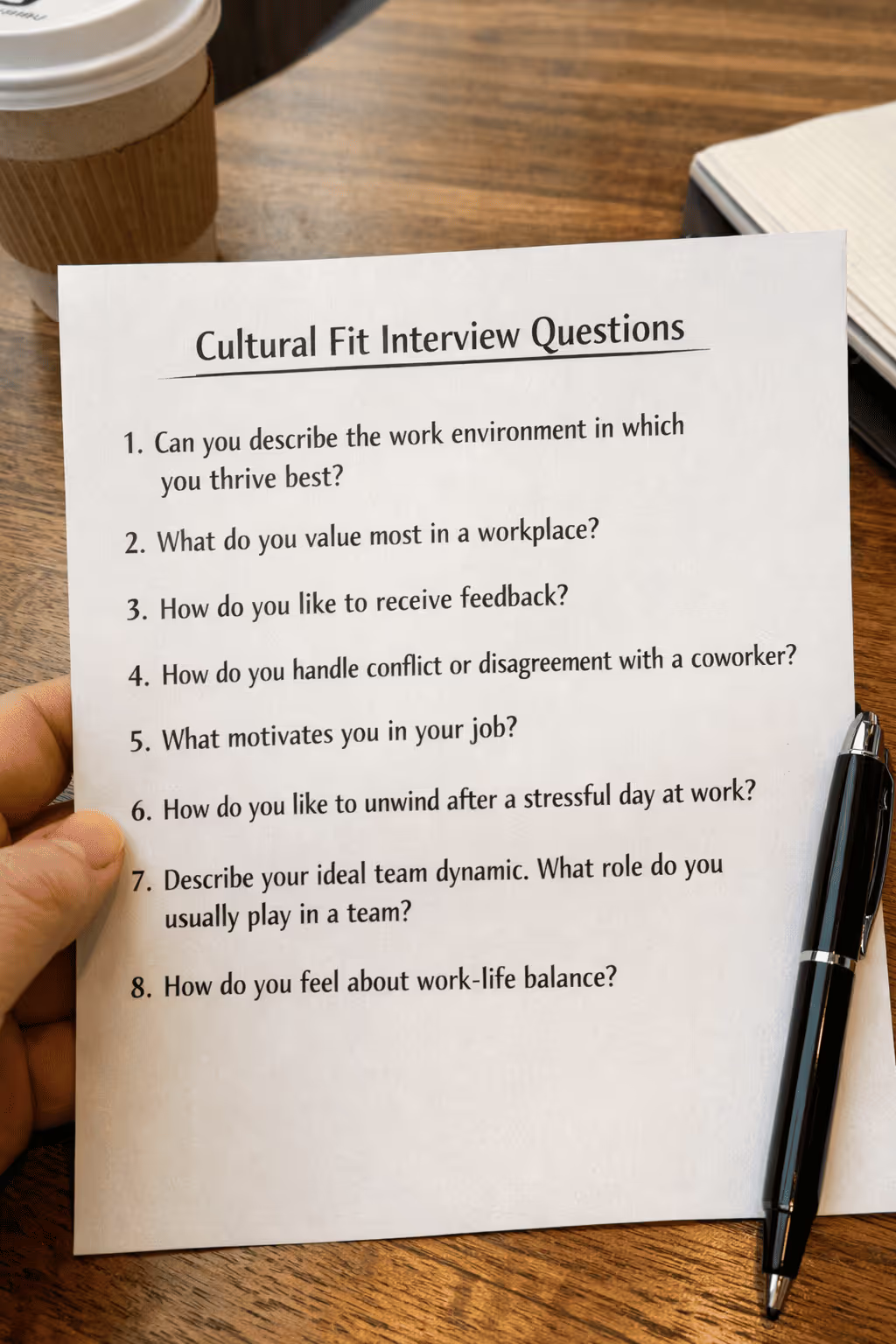
Cultural fit questions allow you to understand how a candidate behaves in real situations.
Used well, they reduce bad hires and improve retention.
In this guide, you’ll find the best cultural fit interview questions, organised by theme, with concrete guidance on what to listen for in candidates’ answers.
What “Cultural Fit” Really Means
Cultural fit refers to how well a candidate’s behaviors, values, and preferred ways of working align with your organisation’s existing culture and norms. It goes beyond technical skills to assess whether someone will operate comfortably and effectively within your unique environment. A strong cultural fit often predicts better teamwork, improved job satisfaction, and stronger retention over time because the new hire feels supported and integrated.
However, the traditional idea of cultural fit carries a key risk: hiring sameness. When interviewers prioritize candidates who remind them of themselves or closely resemble the existing team’s style, it can unintentionally reinforce bias and reduce diversity of thought.
That’s why many organisations today are shifting toward a culture add mindset. Instead of only asking “Does this person fit in?”, you also ask “What unique contribution could they bring?”
Values and Principles Interview Questions

The first thing you want to know is whether the candidate’s core values and principles align with what matters most in your company.
1. What values are most important to you in a workplace, and why?
2. Which of our core values resonates with you most, and how have you demonstrated it in your work?
3. Describe a time you had to make a difficult decision at work. What values guided that choice?
4. Tell me about a time when you had to compromise your values. How did you handle it?
5. What would you do if you were asked to complete a task that conflicted with your personal values?
6. How do you define success in your work — beyond metrics and deliverables?
7. Which one of a previous company’s core values did you least identify with, and why?
Collaboration and Communication Interview Questions
How a candidate interacts with others, resolves conflict, and shares information says a lot about how well they’ll fit into your team’s dynamic.
1. Describe your communication style. How do you adapt it when working with different colleagues?
2. Tell me about a successful collaboration you were part of. What made it work well?
3. How do you handle disagreements with colleagues?
4. What role do you typically play in team projects?
5. Share an example of a time when you had to explain a complex idea to someone with less context. How did you approach it?
6. How do you build relationships with new team members, especially when joining a new team or organisation?
7. What’s your approach to giving and receiving feedback?
8. Describe a time you had trouble communicating with someone. What did you do to resolve it?
Ownership and Accountability Interview Questions
Ownership and accountability help you see whether a person will follow through, own up to mistakes, and contribute to a culture where people support each other while taking responsibility for outcomes.
1. Tell me about a time you were responsible for a project that didn’t go as planned. What happened and what did you do next?
2. Describe a mistake you made at work. How did you own it and what did you learn?
3. Can you give an example of when you took initiative without being asked? What motivated you?
4. How do you prioritize your work when everything feels urgent?
5. Describe a time when you had to follow through on a difficult task that others avoided. What kept you going?
6. What does accountability mean to you in a team setting?
7. How do you handle a situation where a team member isn’t meeting expectations?
8. Tell me about a time you had to change your approach after receiving feedback. What happened?
Adaptability and Change Interview Questions
AA candidate who embraces change with curiosity and resilience is more likely to thrive within a growing organisation and contribute positively when the unexpected occurs.
1. Tell me about a time you had to adapt to a significant change at work. What was challenging, and how did you handle it?
2. Describe a situation where priorities changed mid-project. How did you adjust and keep things on track?
3. How do you stay motivated and productive when you’re asked to learn something new quickly?
4. What strategies do you use when you’re working with incomplete information or ambiguous goals?
5. Tell me about a time you were given feedback that required you to change your approach. What did you do?
6. Share an example of when you had to step outside your comfort zone at work. What happened?
7. How do you typically approach workflows or tools that are new to you?
8. Describe a time when your team’s plan changed suddenly. How did you support others during the transition?
Customer Mindset Interview Questions

Whether your role is customer-facing or not, understanding how someone approaches customer needs — external customers, internal stakeholders, or colleagues who depend on them — reveals a lot about their cultural fit.
1. Tell me about a time you went above and beyond to help a customer — internal or external. What did you do, and why?
2. What does “excellent customer experience” mean to you?
3. Describe a time you had to balance customer needs with internal constraints. How did you handle it?
4. Can you share an example of a situation where a customer (or colleague depending on you) was dissatisfied? What steps did you take to resolve it?
5. How do you quickly assess and adapt to different customer communication preferences?
6. What’s one thing you would change in our customer experience based on what you know so far?
7. When have you used technology or tools to enhance the customer experience? What happened?
8. How do you measure the success of your interactions with customers or internal partners?
Inclusion and Culture Add Interview Questions
You want people who not only align with your company’s values but also enhance your culture with new perspectives, skills, and experiences. That’s called culture add, and it’s a smarter way to build teams that are both cohesive and innovative.
1. How do your colleagues benefit from working with you specifically — not just compared to others?
2. Tell me about a time when understanding someone else’s perspective helped you solve a problem. What did you learn?
3. What unique experiences or insights do you bring that could help our team or company grow?
4. Describe a time you helped make your workplace more inclusive or welcoming for others. What did you do?
5. In your view, what makes a team truly diverse and effective?
6. Tell me about a time you challenged the status quo or proposed a new approach. How was it received?
7. What is your impression of our company’s culture and how might we improve it?
8. How do you work with people who think very differently from you?
Track & Assess Candidate Responses with AI : Noota
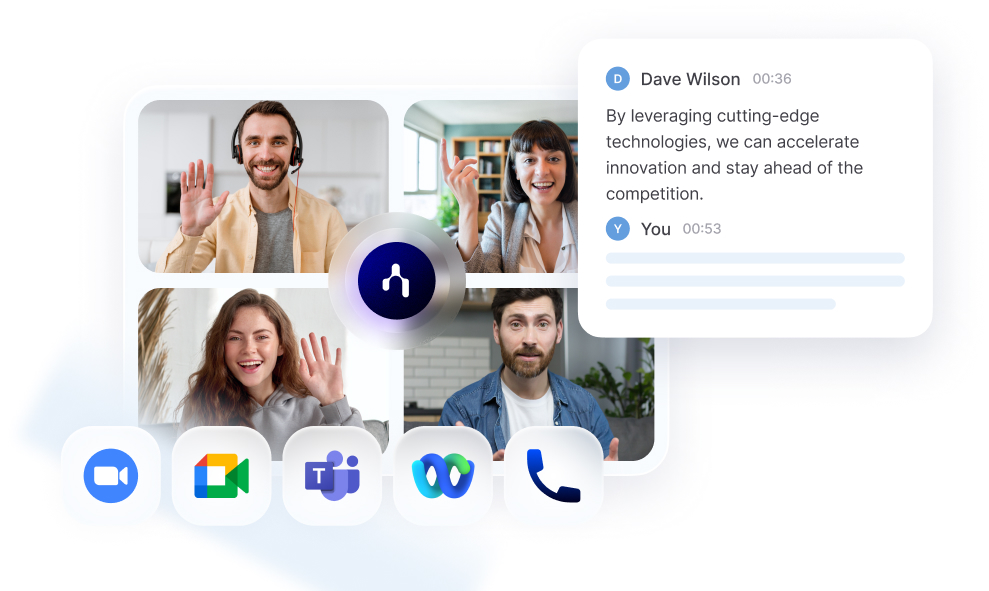
With Noota, you no longer have to split your attention between listening and note-taking.
Here’s how Noota helps you track and assess candidate responses in a structured way :
1. Automated Recording and Transcription
Noota records every interview — whether it’s on Zoom, Microsoft Teams, Google Meet, or even an in-person call — and creates accurate text transcripts in real time. This eliminates the risk of missing key candidate responses or misremembering what was said later on. You’ll have a full, searchable transcript of every conversation at your fingertips.
2. Structured Candidate Reports
Once the interview is done, Noota doesn’t just give you raw text — it turns that transcript into a clean, structured report summarising key points, competencies, and candidate highlights. This report makes it easier to extract insights and compare candidates objectively.
3. Smart Scorecards and Evaluation Grids
Noota can generate interview scorecards tailored to your evaluation criteria. Instead of manually filling in an assessment sheet after each interview, AI builds it for you based on what was actually said. You get a consistent rating structure that aligns with your hiring framework and reduces subjectivity.
4. Collaboration and Sharing Tools
Interview insights become far more powerful when your whole team can access them. Noota lets you share summaries, transcripts, and scorecards with stakeholders or hiring managers seamlessly — and even integrates them directly into your ATS so candidate information stays centralised.
5. Conversational Intelligence Insights
Noota’s conversational intelligence goes a step beyond transcription by highlighting behaviours, speaking patterns, and engagement levels. These metrics give you deeper insight into how a candidate communicated — not just what they said — helping you make richer, more nuanced assessments.
FAQ: Cultural Fit Interview Questions — Your Top Recruiter Questions Answered
Whether you’re new to cultural fit interviews or refining your process, you probably have questions about why these questions matter, how to use them effectively, and what pitfalls to avoid. This FAQ gives you clear, actionable answers to the most common concerns recruiters face — written in a way that helps you apply the advice directly to your interviews.
❓ Why should I ask cultural fit interview questions?
Cultural fit questions help you understand whether a candidate’s values, work style, and behaviours align with your organisation’s way of working. It’s not just about skills; it’s about how someone will collaborate, communicate, and adapt within your team. Companies that assess cultural fit objectively often see stronger retention and smoother onboarding because hires feel both effective and comfortable in their environment.
❓ What makes a good cultural fit question?
A strong cultural fit question is open-ended and encourages candidates to give examples from real experience rather than hypotheticals. Questions that start with “tell me about a time…” help you see actual behaviours that reflect values, teamwork, adaptability, or decision-making. Open-ended phrasing lets you compare answers consistently across candidates.
❓ How many cultural fit questions should I ask in an interview?
Aim for 4–8 questions focused on key themes like values, collaboration, adaptability, and growth mindset. You don’t need to ask every possible question — pick ones that align with your core culture dimensions and use them consistently across candidates. This gives you structured data to compare later.
❓ Can cultural fit questions be biased?
Yes — if interviews rely on gut feeling or vague criteria like “we seem similar.” To avoid bias, define the specific behaviours and values you’re assessing (e.g., teamwork, problem-solving, feedback orientation) and tie questions to those criteria. Structured interviews — where every candidate gets the same questions and scoring scale — reduce subjective influence.
❓ Should I combine cultural fit with skills interviews?
Absolutely. Cultural fit complements skills assessments. While your technical interview evaluates what someone can do, cultural fit questions show how they’ll operate within your team’s dynamics. Candidates who score well in both areas are more likely to succeed long-term.
❓ What’s a common mistake when asking culture questions?
A big mistake is asking generic or yes/no questions that don’t reveal depth, like “Do you like teamwork?” Instead, ask for specific stories (“Tell me about a time you resolved conflict on a team”) so you can hear evidence of real behaviour and thought process.
❓ How do I evaluate cultural fit without eliminating diversity?
Focus on behaviours and values, not personality match. Cultural fit should be about shared ways of working and contributing — not “people like us” similarity. You can do this by asking questions about collaboration, learning, conflict resolution, and adaptability, and then scoring responses against agreed-upon criteria.
❓ Should candidates ask culture questions too?
Yes — candidate questions about your culture can be revealing. Strong candidates often ask about development opportunities, management style, communication rhythms, or team rituals. Their curiosity shows engagement with your organisation — and gives you insight into what they value most.
Meet the Writer
.webp)
FAQ
Cultural fit asks if a candidate matches your existing team, risking bias and sameness. Culture add asks what unique perspectives they bring while sharing core values. Modern teams use both to build diverse, aligned organizations.
- Cultural fit focuses on alignment with current norms and behaviors.
- Culture add emphasizes unique contributions and fresh thinking.
- Best practice combines both for diversity without compromising values.
Listen for specific examples, self-awareness, and alignment with your values rather than personality similarity. Strong answers show how candidates handled real situations and what they learned from challenges.
- Ask follow-ups to understand their reasoning and decision-making process.
- Look for concrete stories, not generic statements about teamwork.
- Assess whether their values genuinely match yours, not just surface-level fit.
Noota records, transcribes, and summarizes interviews automatically, saving 6.4 hours weekly while eliminating manual admin. Teams using Noota reduce hiring bias by reviewing complete transcripts instead of fragmented notes, improving cultural fit assessments.
- Noota captures every detail; manual notes miss critical context and nuance.
- -80% admin time means interviewers focus on candidates, not documentation.
- 4.9/5 G2 rating proves teams hire better with complete, accurate records.
Noota automates interview recording, transcription, and analysis across 80+ languages, helping 5000+ teams assess cultural fit objectively. With complete transcripts and AI summaries, you catch alignment signals manual notes miss. Try Noota free — no credit card needed.
- Automatic transcription ensures no candidate insights are lost or forgotten.
- Review exact words candidates used to evaluate values alignment accurately.
- Share complete records with hiring teams to reduce individual bias in decisions.