


Hiring & Talent Acquisition
8 min reading
Updated on:
Jan 12, 2026
Interview Experience : How to Do It Right
You want to know what a good interview experience looks like ? Here's your guide.
.avif)
While you’re evaluating candidates, they’re also evaluating you.
If your interviews feel rushed, opaque, or inconsistent, you risk losing excellent candidates before you even make an offer.
In this article, we walk you through what makes a great interview experience, how you can improve it at each stage.
What Makes a Good Interview Experience?
At its core, candidate experience is about how job seekers feel at every step of their journey, especially during interviews where impressions are formed and expectations are set.
Good Experience Starts Before the First Question
The interview itself is just one part of the experience. What candidates encounter before the interview ( from job descriptions to application acknowledgment ) also matters. Clear, transparent communication about the role and process reduces anxiety and sets accurate expectations. Candidates want to know what the interview will look like, how many steps are involved, and when they can expect updates.
During the Interview, Respect and Structure Matter
A good interview experience is structured but human. Candidates should feel that the questions are relevant to the role and that interviewers are truly listening. Preparation on your side — such as reviewing resumes in advance, keeping to scheduled times, and following a consistent question set — shows professionalism and helps candidates perform their best.
Communication Makes a Big Difference
Communication is the backbone of candidate experience. Simple, timely updates - like confirming interview details or providing prompt feedback after the interview - make candidates feel valued. Silence or long delays, on the other hand, lead to frustration and sometimes lost interest in your offer.
How to Improve Your Candidate Experience in Interviews

Start Before the Interview: Clear Communication & Preparation
Improving candidate experience begins long before the interview itself.
First, make your job descriptions clear, concise, and engaging. Tell candidates what the role really involves and what success looks like. This sets realistic expectations early and reduces confusion later.
Next, simplify your entire application process. Avoid unnecessary steps that waste time — long forms and confusing submission processes frustrate candidates and increase abandonment rates.
Be transparent about your hiring steps. Share a roadmap of what candidates can expect, how long each stage might take, and who they’ll meet. Transparency builds trust and helps candidates prepare confidently.
During the Interview: Respect, Structure & Engagement
Once you’re in the interview itself, your goal is to make candidates feel comfortable and valued.
Train your interviewers to be present and attentive, listen actively, and avoid interrupting candidates. Genuine engagement shows respect and encourages honest answers.
Structure matters here. Use a consistent set of job-relevant questions for all candidates so each person has an equal opportunity to demonstrate their fit for the role. Structured questions improve fairness and your ability to compare responses objectively.
Avoid generic or irrelevant questions that make the interview feel disjointed. Instead, focus on behavioral and situational prompts that let candidates demonstrate real skills and problem-solving ability. This approach deepens conversation and shows candidates you’re serious about understanding their potential.
After the Interview: Feedback, Follow-Up & Feedback Loops
Your communication after the interview matters just as much as what happens during it.
Candidates often rank waiting to hear back as the most frustrating part of the process, especially when silence lasts days or weeks. Quick follow-ups keep candidates engaged and reinforce respect for their effort.
Where possible, provide constructive feedback. Even for rejected candidates, thoughtful feedback delivers closure and helps them grow — and it drastically improves their impression of your company.
Don’t stop there: ask candidates for their feedback too. A short survey after the process gives you real insights into what worked and what didn’t. This data helps you refine your hiring flow and continuously improve candidate experience over time.
Fair & Structured Interviews: Noota
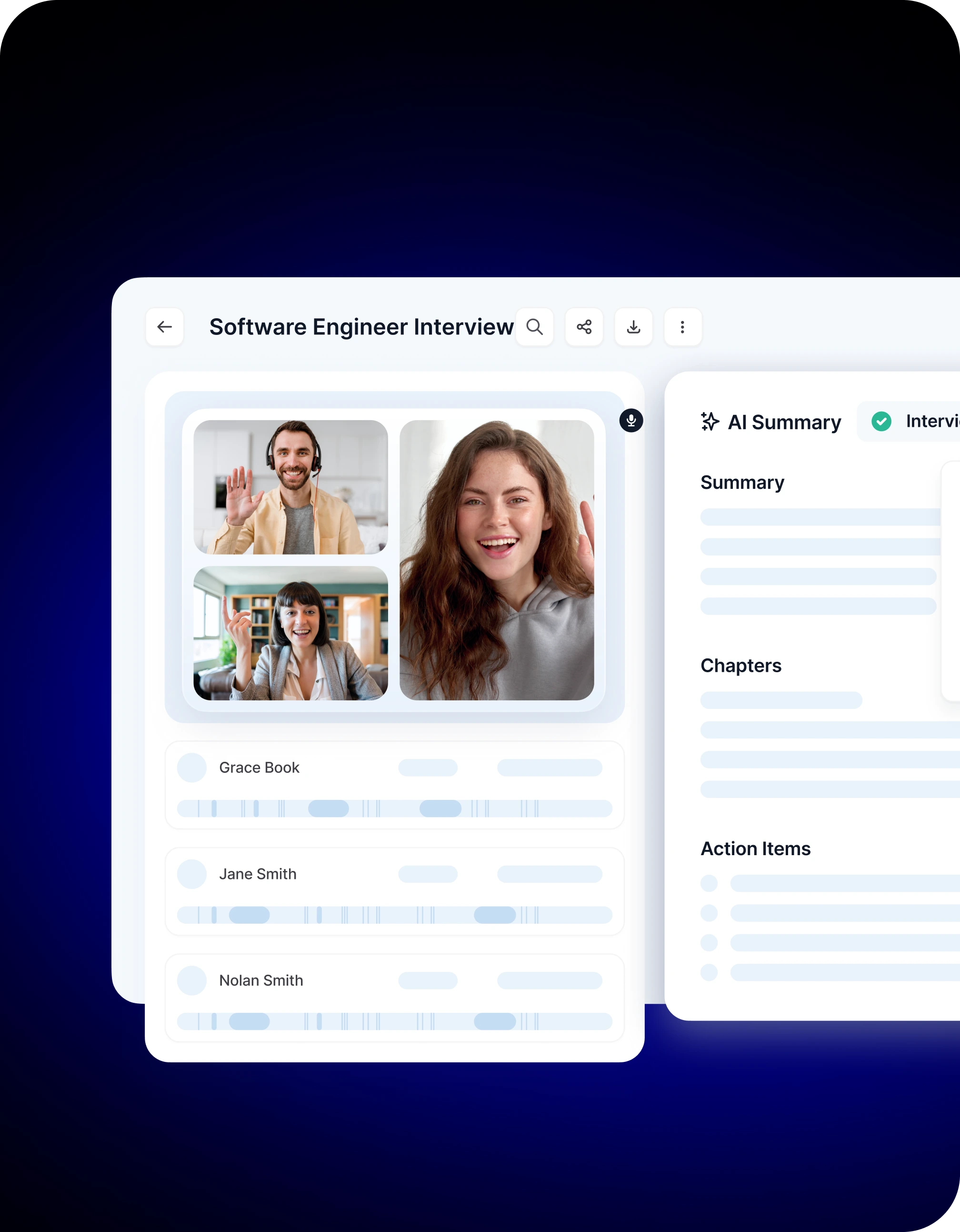
Structured interviews are powerful — but they become even stronger with the right tools. That’s where Noota comes in.
- Accurate transcripts: Every interview is automatically transcribed so you never miss what was said, and nothing gets lost in the shuffle.
- Structured reporting: Noota generates reports that align with your interview questions and evaluation criteria, so your team reviews the same data in the same format.
- Consistent comparisons: When you compare candidates later, you’re looking at consistent summaries, not handwritten notes or memory.
Try Noota for free here
Meet the Writer
.avif)
Adesh explores how teams can better capture knowledge and collaborate more effectively with AI.
FAQ
A good interview experience combines clear communication, structured questions, and genuine engagement. Candidates need transparency about the role and process before the interview, respectful listening during it, and timely feedback after.
- Clear job descriptions set realistic expectations early
- Consistent, relevant questions show professionalism and fairness
- Active listening and prompt updates make candidates feel valued
Start by simplifying your application process and creating clear job descriptions that explain what success looks like. Share a transparent roadmap of your hiring stages, timelines, and who candidates will meet to build trust and reduce anxiety.
- Write engaging, concise job descriptions with realistic role expectations
- Remove unnecessary application steps that frustrate candidates
- Provide a clear hiring timeline and process overview upfront
Noota automates interview documentation, saving teams 6.4 hours weekly while eliminating manual admin work by 80%. This means interviewers stay fully present and engaged with candidates instead of juggling notes, creating better impressions and more consistent feedback across 5000+ teams globally.
- Saves 6.4h/week on interview admin and documentation tasks
- Enables interviewers to focus entirely on candidate engagement
- Ensures consistent, accurate feedback across all interviews
Noota is the ideal solution for teams prioritizing interview consistency and candidate experience. With 4.9/5 G2 rating and support for 80+ languages, it ensures every candidate receives fair, structured interviews with prompt, professional feedback. Try Noota free — no credit card needed.
- Rated 4.9/5 on G2 by 5000+ teams worldwide
- Supports 80+ languages for global hiring teams
- Automates feedback so candidates hear back faster