



Meeting Management
8 min reading
Updated on:
Dec 2, 2025
Kick-off Meetings : an Actionable Guide
You want to know what a kick off meeting is and how to run one efficiently ? Here's your guide.
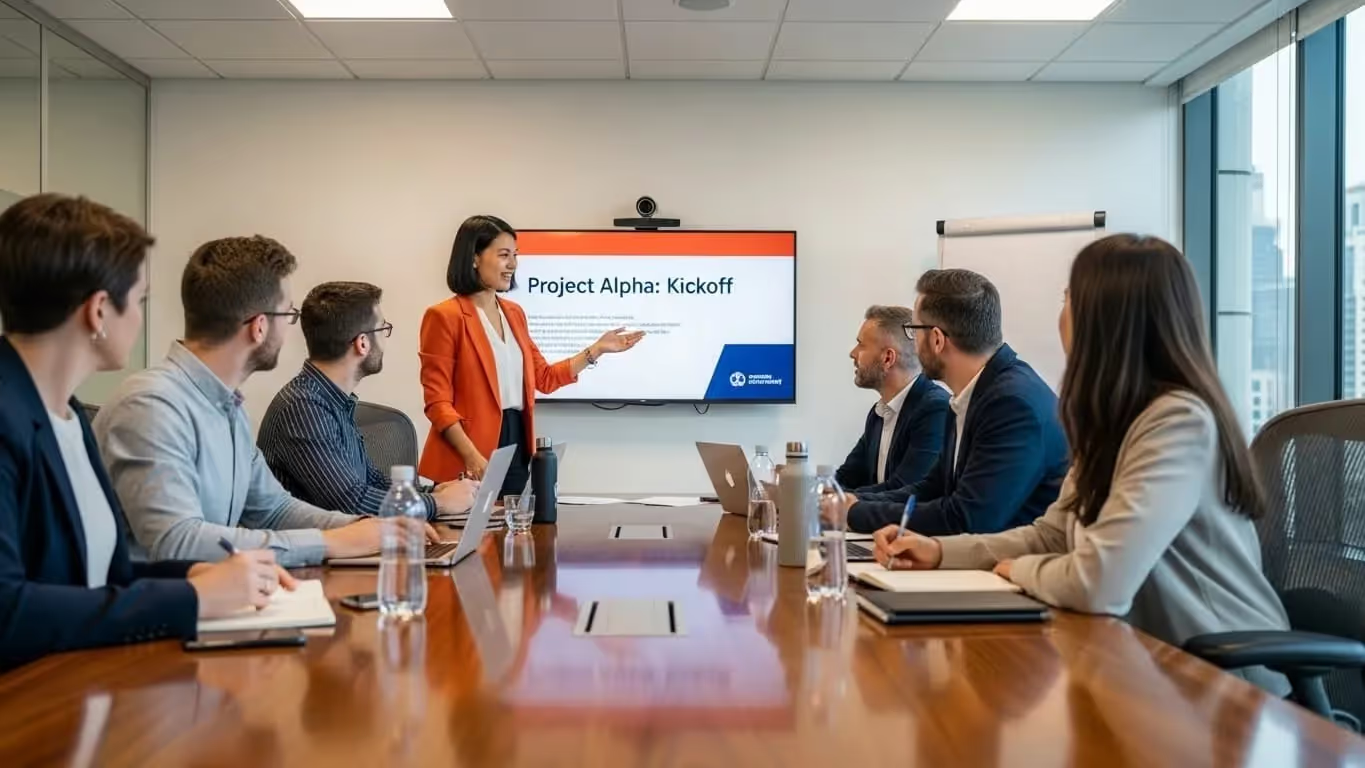
A strong kick-off meeting gives your team clarity and confidence.
But here's the thing: you don’t need a longer kick-off - you need a more structured one.
In this article, you’ll learn exactly how to run a kick-off meeting that sets your project up for success.
What are kick-off meetings?
A kick-off meeting is the first official meeting for a new project. It brings together the project team, and often stakeholders or clients , at the moment you’re about to move from planning into execution.
It’s where you present the project’s purpose, scope, timeline, and roles. It creates a shared understanding so everyone starts from the same page.
🎯 The core purpose of a kick-off meeting
- Align the team and stakeholders on vision and goals. The kick-off clarifies why the project exists and what success looks like. It defines expected outcomes and ensures everyone understands what you’re working toward.
- Clarify scope, deliverables, and how you’ll work together. The meeting spells out what’s included — and what isn’t — so there are no misconceptions. You also define who does what, and how collaboration will happen (communication channels, responsibility, decision-making, etc.).
- Establish roles, responsibilities and decision-making clarity. Everyone involved (team members, sponsors, clients, partners) gets to know who’s responsible for what. That reduces confusion and speeds up coordination once the project runs.
- Create engagement, motivation and shared ownership. A kick-off isn’t just informational — it’s motivational. When people understand the why, the vision, and their part in it, they are more invested from the start.
- Provide clarity and a common reference point for the project’s life. From timeline and milestones, to risks and governance, the kick-off lays down the initial contract — what’s expected, by when, and who’s involved.
What to talk about in a kick-off meeting
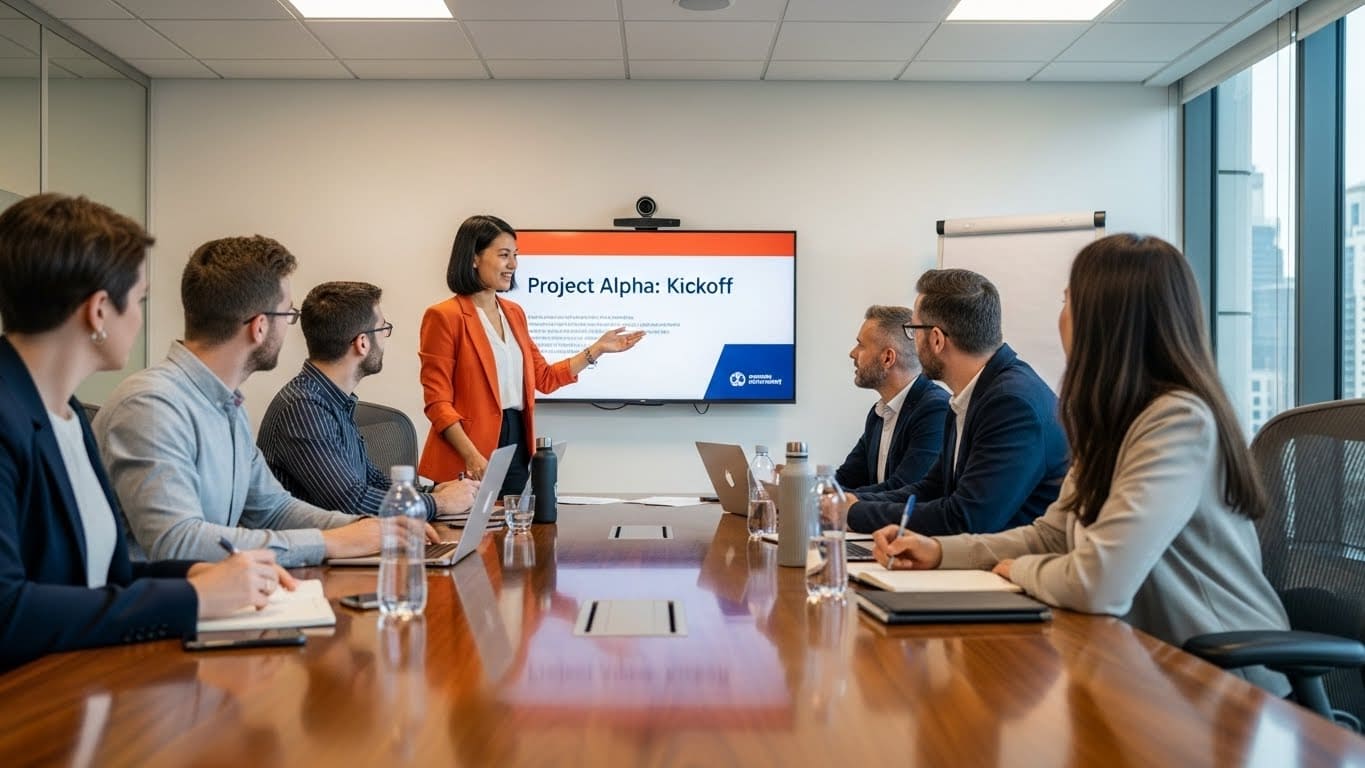
A good kick-off meeting lays the foundation of your whole project. Here’s what you want to cover
🎯 Core topics to cover
Project vision, purpose & objectives
Start by clearly explaining why this project exists. What problem are you solving, or what opportunity are you seizing? What does success look like once you deliver? This shared vision brings alignment and motivation — when everyone understands the “why,” they’re more invested.
Scope, deliverables & expected outcomes
Define precisely what is included in the project — and, just as importantly, what is out of scope. Which outputs, features, deliverables, or results are expected? What boundaries or limitations does the project have? Being explicit here prevents misunderstandings later and keeps expectations realistic.
Timeline, milestones, major phases & deadlines
Share the overall schedule: key deadlines, milestone dates, major phases. When should major deliverables or reviews happen? Having a timeline — even a high-level one — gives everyone clarity on pacing and helps coordinate work across different contributors.
Roles & responsibilities
Make sure everyone understands who does what. Clarify who owns which tasks, who validates decisions, who’s responsible for deliverables, and who’s keeping track of progress. Use (if needed) a simple responsibility matrix (e.g. RACI) to document this — it avoids duplication, confusion, or gaps.
Communication and collaboration plan
Decide how you will work together: what tools you’ll use (chat, project management software, documents), how often you’ll meet or check in, how you’ll share updates or reports, and how you’ll handle approvals or feedback. Having those rules clear from the start helps avoid friction later.
Risks, assumptions, constraints & dependencies
Every project carries uncertainties. Use the kick-off to surface known risks (technical, human, resource, timing…), constraints (budget, availability, tools…), and dependencies (other teams, external partners, deliverables). Discuss how you plan to monitor and handle risks. This upfront transparency builds trust and resilience.
Stakeholders, decision-makers & governance (if relevant)
If the project involves external clients, sponsors, or multiple teams, clarify who’s involved, who needs to approve deliverables, and how decisions will be made or escalated. This ensures accountability and keeps communication channels clear.
Questions, clarifications & expectations from everyone
Leave room for participants to ask questions, express concerns, clarify assumptions, or highlight missing information. This discussion helps surface misunderstandings early and ensures everyone starts with the same clarity.
Kick-off meeting biggest mistakes and what to do instead
When you skip care at the start of a project — in the kick-off meeting — you're risking misalignment, confusion, and wasted effort.
🚩 Mistake: Lack of preparation or unclear objectives
One of the most frequent errors is entering the kick-off without a clear agenda or defined objectives. That turns the meeting into an unfocused discussion and leaves participants unclear on why they’re gathered.
What to do instead: Before the meeting, set a concrete purpose. Define what needs to be decided, presented or aligned on. Share the agenda in advance. When everyone knows why they’re there — and what’s expected — you start the project with clarity, not assumptions.
🚩 Mistake: Inviting too many people — or including people not necessary
Some kick-offs get bloated with attendees — stakeholders, distant contributors, observers — and meetings lose momentum. With too many voices or too many uninterested participants, discussions become diffuse and decisions difficult.
What to do instead: Keep the invite list lean. Gather only the people who really need to align at launch: core project team, decision-makers, stakeholders with stakes or responsibilities. Others can receive a summary afterwards. This preserves focus and makes the meeting more efficient.
🚩 Mistake: Treating the kick-off as an information dump
It’s tempting to use kick-off to overload everyone with documentation, context, history, and details. But dumping all information at once overwhelms participants, dilutes attention, and reduces engagement.
What to do instead: Share background materials ahead of time (pre-reads, documents, briefs) so people can absorb context before the meeting. Use the kick-off for alignment, clarifications, decisions, and shared understanding — not for reading slides together.
🚩 Mistake: Skipping role clarification and team introductions
When participants don’t really know who does what, or don’t understand roles & responsibilities, collaboration gets messy. Teams may assume tasks, cross responsibilities or hesitate — which kills momentum.
What to do instead: Start with a quick round of introductions or role-explanation. Clarify who’s responsible for what, who makes decisions, who’s accountable. Set up governance and decision-making clarity from the start.
🚩 Mistake: Ignoring risks, assumptions and constraints at the start
A project kickoff that focuses only on deliverables, deadlines and “what to do” — without addressing risks, constraints, dependencies — often sets you up for surprises and rework.
What to do instead: Make time during your kick-off to surface known risks, assumptions, constraints, dependencies. Discuss how to monitor or mitigate them. This early transparency helps build trust, readiness, and reduces surprises down the line.
🚩 Mistake: Presenting a rigid plan without room for questions or feedback
When you treat the kick-off as a one-way presentation — “here’s the plan, this is how it is” — you often leave out doubts, concerns or misunderstandings. People leave with questions or silent objections, which later slow progress or kill commitment.
What to do instead: Encourage questions, invite feedback, open space for clarifications. Make the kick-off interactive — not just a slide show. That ensures everyone understands fully, feels involved, and commits to the project with clarity and buy-in.
Kick-off meeting Best agenda & structure
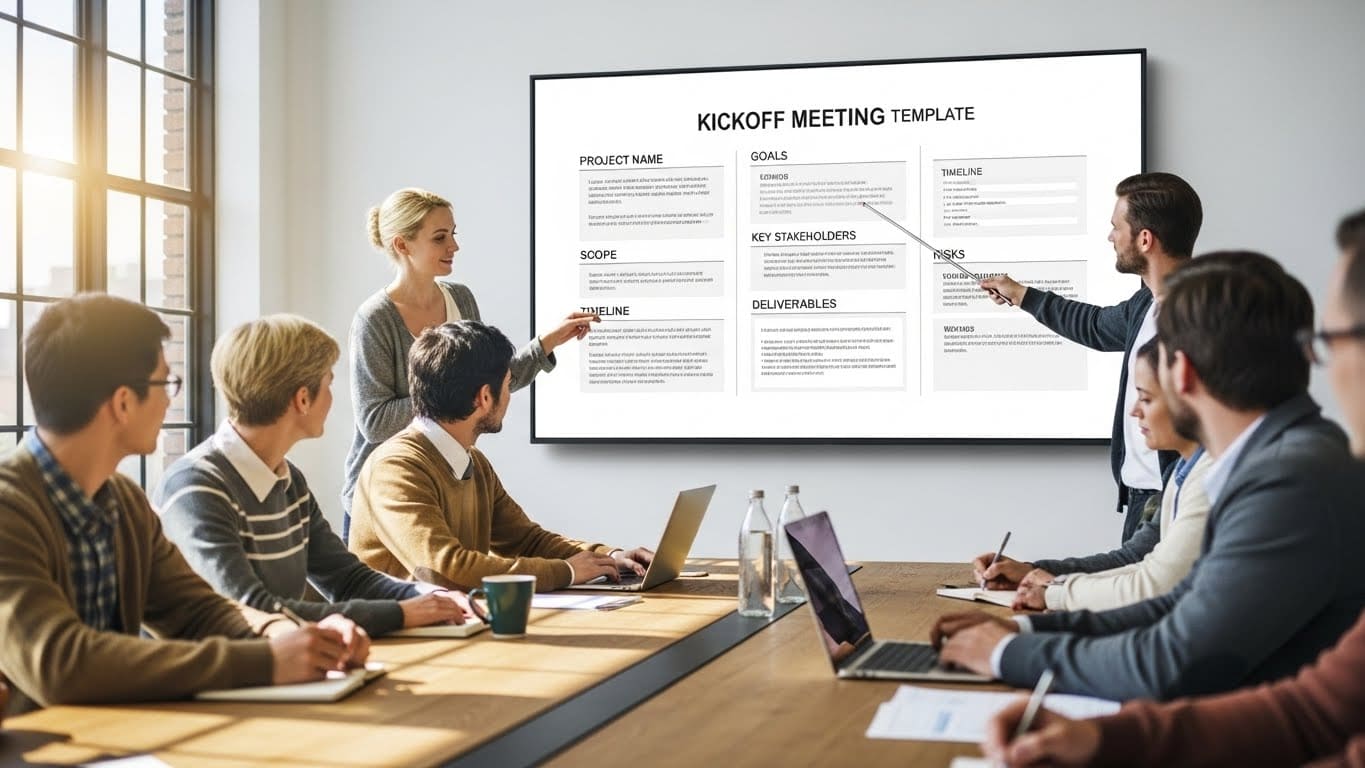
Meeting Details
- Meeting name / Purpose: Project Kick-Off / Initiative Launch
- Date: [] — Time: [] — Expected duration: ~ 60–90 min (adjust if simpler or longer)
- Participants: [List names and roles — core team, stakeholders, decision-makers, possibly clients or external partners]
- Pre-work / Pre-reads (sent ahead): project brief or charter; high-level project plan or timeline; any background or contextual documentation.
Agenda & Flow
1. Welcome & Introductions (5–10 min)
- Quick round-table: each participant states name, role / department, and main expertise or responsibility. If some people don’t know each other — it helps break the ice.
- Brief explanation of the meeting’s purpose and what you expect to achieve by the end. Set the tone.
2. Overview: Project Background & Purpose (10–15 min)
- Present what triggered the project: context, why it matters, key opportunities or problems addressed.
- Share high-level objectives and what success looks like. What are the main goals or outcomes?
3. Scope & Deliverables (10 min)
- Clearly define what’s in scope: expected deliverables, outputs, functionalities, or results.
- Clarify what’s out-of-scope or what will not be addressed — to avoid misunderstandings.
4. Timeline & Milestones (10 min)
- Present the overall project timeline: start date, phases, key milestones, deadlines or major delivery dates.
- If applicable, explain the project management methodology (e.g. agile, waterfall, hybrid) and how it will structure the flow.
5. Roles & Responsibilities (5–8 min)
- Explain who does what: main roles, who’s responsible/ accountable for what deliverable or decision, stakeholder assignments. A simple RACI-style breakdown can help.
- Indicate who’s the main point of contact, who handles approvals, who’s involved in decision-making, etc.
6. Communication & Collaboration Plan (5–8 min)
- Agree on tools and channels (project management tool, shared docs, chat, meeting rhythm).
- Define how and how often updates, feedback, reviews or check-ins will happen. Who informs whom and when.
7. Risks, Assumptions, Constraints & Dependencies (8–10 min)
- List known risks, assumptions made, constraints (budget, timing, resources).
- Identify dependencies — other teams, external factors, approval points — and how they might affect timeline or delivery.
- Decide how to monitor risks, and set basic mitigation or contingency plans.
8. Questions, Clarifications & Open Discussion (10 min)
- Invite participants to ask questions, raise doubts, clarify unclear points. Important for alignment and buy-in.
- Encourage feedback — perhaps note down items that need deeper discussion later (parking lot).
9. Next Steps & Action Plan (5 min)
- Recap key decisions from the kick-off: confirmed scope, deliverables, roles, initial actions.
- Assign immediate action items with responsible persons and rough deadlines.
- Agree on follow-up rhythm: when and how the project will be tracked (status updates, next check-in, stakeholder reviews).
10. Close & Summary
- Thank participants for their time and engagement.
- “Share” the meeting summary / minutes quickly after the meeting (document deliverables, assignments, next steps, decisions). This step ensures clarity and accountability.
Kick-off meetings AI notes & follow up: Noota

A kick-off meeting packs a lot. Trying to capture all of that manually can lead to fuzzy memory, scattered notes, or missed decisions.
That’s where Noota really shines.
- Automatic recording & transcription — Noota listens and transcribes everything, whether the meeting is remote or in-person. Every word, idea, decision, and question is captured.
- Instant, structured summaries and actionable reports — As soon as the meeting ends, Noota delivers a clean summary: project objectives, deliverables, responsibilities, risks flagged, next steps. No more scribbling minutes or piecing together fragmented notes.
- Clear action-item extraction & assignment — Noota identifies decisions and action items with owners (who’s responsible) and context (what needs to be done). This ensures nothing discussed in the kick-off slips through the cracks.
- Searchable and shareable meeting archive — All past kick-offs (and subsequent meetings) are stored and searchable. New team members, stakeholders, or anyone who missed the meeting can catch up — or check what was decided, when, by whom.
You want to automate your kick off and project meetings follow up ? Try Noota for free now
Meet the Writer

Jean-marc is an AI expert helping recruiters & professionnals leverage these tools in the everyday.
FAQ
A kick-off meeting aligns your team and stakeholders on vision, scope, and roles before execution begins.
- Clarifies project purpose and what success looks like
- Defines scope, deliverables, and collaboration methods
- Establishes roles and decision-making accountability
A structured kick-off ensures clarity and engagement without wasting time on unfocused discussions.
- Covers essential topics: vision, scope, timeline, roles systematically
- Prevents misunderstandings and scope creep later
- Creates shared ownership and motivation from day one
Noota automatically captures and organizes meeting insights, saving 6.4 hours weekly while ensuring nothing gets missed.
- Reduces admin work by 80% with AI-powered transcription across 80+ languages
- Creates instant, searchable meeting records for team alignment
- Trusted by 5000+ teams with 4.9/5 G2 rating for reliability
Noota transforms kick-off meetings into structured, actionable records your team actually uses.
- Automatically transcribes and summarizes key decisions and action items
- Eliminates manual note-taking so facilitators stay engaged
- Provides searchable reference point throughout project lifecycle
Try Noota free — no credit card needed.