


Hiring & Talent Acquisition
8 min reading
Updated on:
Jan 13, 2026
How to Assess The Soft Skills of Your Candidates
You want to know how to detect and spot soft skills in candidates ? Here's your guide.

You already know that soft skills separates a great candidate from an average one.
But here’s the challenge: soft skills aren’t easy to measure. You can’t quantify them the way you do technical abilities.
In this article, you’ll discover what soft skills you should be looking for, and the most effective ways to assess them.
What Are the Soft Skills You Should Be Looking For?
Soft skills — sometimes called people skills or interpersonal competencies — refer to non-technical attributes like communication, adaptability, problem-solving, and teamwork.
They differ from hard skills, which are technical, job-specific abilities you can learn through training or certification. Soft skills are rooted in personality, behavior, and emotional intelligence, and they help candidates navigate work environments successfully.
Here are the key soft skills you should be evaluating in candidates because they often determine long-term success regardless of the role:
- Communication: Clear expression of ideas and active listening — essential for collaboration, conflict resolution, and productive meetings.
- Teamwork & Collaboration: Ability to work well with others, share feedback, and contribute to group goals.
- Adaptability & Flexibility: Comfort with change and new situations, especially in fast-moving or cross-functional environments.
- Problem-Solving & Critical Thinking: The capacity to assess situations, identify solutions, and make thoughtful decisions.
- Emotional Intelligence: Understanding and managing one’s own emotions and responding thoughtfully to others — crucial in team dynamics and leadership.
- Leadership & Initiative: Taking responsibility, motivating others, and guiding solutions even without formal authority.
- Resilience & Stress Management: Persisting through setbacks with a positive and constructive mindset.
- Time Management: Organizing tasks efficiently, prioritizing effectively, and meeting deadlines.
Best Soft Skill Assessment Techniques

Since soft skills don’t always stand out on paper, you need reliable techniques that reveal how someone actually behaves — not just how they present themselves.
Structured, Behavioral Interviews
Structured interviews are your foundation for fair and meaningful evaluation. Instead of asking random questions, prepare a set of behavioral questions that prompt candidates to explain how they acted in real situations. Behavioral interviewing assumes past behavior predicts future performance, and it gives candidates room to show how they communicate, solve problems, and collaborate.
For example, a behavioral prompt might be:
“Tell me about a time you had to resolve a conflict with a colleague.”
Their answer reveals communication style, empathy, and conflict management in action — far more than a generic question ever could.
This method also helps you standardize your evaluations, making it easier to compare candidates objectively.
Situational Judgement Tests (SJTs)
Situational Judgement Tests present candidates with realistic workplace scenarios and ask them to choose or rank possible responses. These tests simulate the decision-making and soft skills you care about — like teamwork, ethical judgment, prioritization, and adaptability.
Because you base these scenarios on situations they’d likely face on the job, SJTs offer a practical window into how candidates think and behave under pressure. It’s a powerful complement to interview conversations, especially when you need to screen many applicants consistently.
Simulations and Role-Plays
Mises en situation (role-plays) go a step further by immersing candidates in a task or problem similar to what they’ll encounter if hired. This could be anything from handling a customer complaint to leading a brief team discussion.
Simulations let you observe soft skills in real time — how someone communicates, manages stress, and interacts with others. They’re particularly useful when hiring for roles where interpersonal or client-facing skills are critical.
Psychometric and Personality Assessments
Psychometric tests measure traits like emotional stability, empathy, communication preference, and teamwork orientation. These assessments provide standardized insight into a candidate’s tendencies, giving you objective data to support your interview impressions.
Used responsibly, personality assessments help you understand whether a candidate’s behavioral style aligns with team dynamics or company culture — without relying only on subjective interview impressions.
Structured Scorecards and Rubrics
No matter which assessment technique you use, structure your evaluation with scorecards that define what success looks like for each soft skill. A clear rubric helps your team rate communication, problem-solving, adaptability, and other traits consistently across candidates.
Scorecards reduce bias and make it easier to compare candidates fairly — especially when multiple interviewers participate. They also anchor your feedback in observable behavior rather than gut feelings.
Combining Techniques for a Fuller Picture
The strongest evaluation processes don’t rely on a single method. When you combine structured behavioral questions, SJTs, simulations, and standardized assessments, you get a multi-angle view of a candidate’s soft skills. Using different tools helps you confirm patterns in behavior rather than guessing based on one interaction.
Examples of Soft Skills Interview Questions
Knowing which questions to ask is one of the best ways you can assess a candidate’s soft skills during an interview.
Below are practical soft skills interview questions you can use to guide your conversations and uncover meaningful insights.
Communication Skills
- “Tell me about a time you had to explain a complex idea to someone with less technical knowledge.”
This shows how clearly a candidate communicates and adjusts their style for different audiences. - “Describe a situation where you had to deliver difficult feedback. What was your approach and the result?”
You learn how they balance honesty with empathy — a key part of effective communication.
Teamwork & Collaboration
- “Can you give an example of a project where teamwork was essential for success?”
Ask them to explain their role and how they supported others. Their answer shows collaboration and reliability. - “Tell me about a time you worked with someone very different from you. How did you handle it?”
Good teamwork isn’t just about harmony — it’s about productively working with diverse personalities.
Adaptability & Problem-Solving
- “Describe a time when priorities changed suddenly. How did you adjust?”
Adaptability is about staying composed under change and finding solutions that keep progress moving forward. - “What was the biggest problem you solved at work, and how did you approach it?”
This shows how they diagnose issues, think critically, and take initiative.
Time Management & Organization
- “How do you prioritize tasks when multiple deadlines are approaching?”
Prioritization reveals planning skills, discipline, and the ability to make trade-offs. - “Tell us about a time you had to balance competing projects. What did you do to stay on track?”
Their answer gives you insight into focus, organization, and consistency.
Leadership & Initiative
- “Describe a time you took the lead during a challenging project.”
Leadership isn’t only formal authority — it’s stepping up when it matters. - “Tell me about a time you motivated a team member who was struggling.”
This question shows both empathy and influence — essential leadership traits.
Emotional Intelligence & Conflict Resolution
- “Tell me about a time you had to work with a difficult team member.”
How they frame challenges and their approach to conflict says a lot about emotional maturity and professionalism. - “How do you react to criticism, and can you share a specific example?”
Openness to feedback and personal growth are core signs of emotional intelligence.
Tips to Use These Questions Effectively
- Ask follow-ups like “What was your thought process?” or “What did you learn?” to dig deeper into how they reflect on their behavior.
- Use the STAR method (Situation, Task, Action, Result) as a guide so candidates provide clear, narrative answers. This structure helps you compare responses objectively.
- Mix these questions with role-specific scenarios to make evaluations relevant to the job you’re hiring for
AI Soft Skill Evaluation in Interviews: Noota
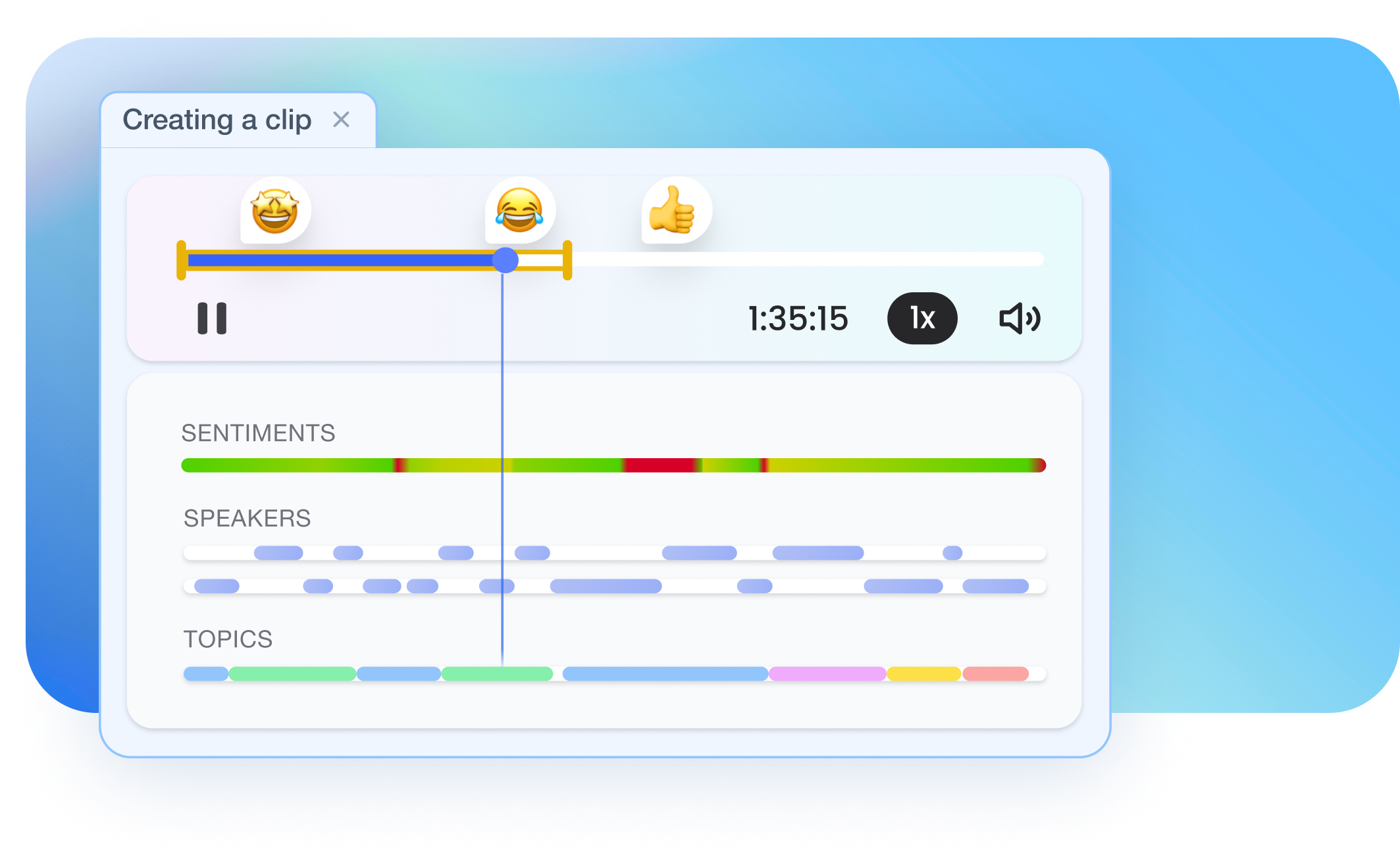
Noota automatically transcribes and organizes interview content so you can revisit every candidate’s responses in structured detail.
Here’s how Noota enhances your soft skill evaluations:
- Automatic transcription: Noota converts spoken responses into accurate text so you never miss what was said.
- Structured interaction summaries: Interviews become searchable, shareable records that your team can review collaboratively, which improves fairness and clarity in evaluation.
- Insight into communication style: Noota doesn’t just record words — it helps you spot patterns in how candidates express themselves, their confidence, and their engagement — key proxies for soft skills.
- Consistent reporting: Because every interview is captured the same way, your team compares apples to apples when reviewing interpersonal traits.
You want to assess soft skills easily with AI ? Try Noota for free now
Meet the Writer
.webp)
FAQ
Key soft skills include communication, teamwork, adaptability, problem-solving, emotional intelligence, leadership, resilience, and time management. These competencies predict long-term success across roles.
- Communication enables collaboration and conflict resolution.
- Adaptability helps teams thrive in fast-moving environments.
- Emotional intelligence strengthens team dynamics and leadership potential.
Behavioral interviews use structured questions about past situations to predict future performance. Candidates explain real examples, revealing communication style, problem-solving approach, and collaboration abilities authentically.
- Ask candidates to describe conflict resolution experiences.
- Listen for empathy, communication clarity, and decision-making logic.
- Compare responses objectively across all candidates fairly.
Noota automates interview documentation and analysis, saving 6.4 hours weekly while reducing admin by 80%. Teams assess soft skills faster with accurate transcripts across 80+ languages, improving hiring consistency.
- Captures complete interview context without manual note-taking.
- Enables objective soft skill comparison with detailed records.
- Trusted by 5000+ teams with 4.9/5 G2 rating.
Noota combines structured interviews with automated documentation, letting recruiters assess soft skills consistently across candidates. Save 6.4 hours weekly while improving hiring quality and fairness.
- Record and transcribe all interviews automatically.
- Review soft skill indicators with complete accuracy.
- Try Noota free — no credit card needed.