


Interview Questions & Techniques
8 min reading
Updated on:
Jan 27, 2026
The 8 Best Interviewing techniques
You want to conduct interviews the best way ? Here's your guide with the best pratices.

You can ask the “right” interview questions and still make the wrong hire.
The difference lies in how you interview.
In this article, you’ll discover the best interviewing techniques you can apply immediately.
1. Listen Actively
Listening is one of the most underrated yet impactful skills you can bring as a recruiter.
Recruiters who listen actively can pick up on subtleties — hidden motivations, concerns, or uncertainties — that might not show up on a résumé.
Here’s what active listening looks like in practice:
- Maintain eye contact and open body language. This shows engagement and encourages the candidate to open up.
- Pay attention to non-verbal cues, such as hesitation, tone shifts, and posture. Candidates often communicate deeper feelings or uncertainty through these signals.
- Avoid interrupting. Let candidates finish their thoughts, even if you’re eager to ask the next question — this gives you a fuller picture of their thinking process.
- Ask thoughtful follow-ups. When you catch something interesting or unclear, dive deeper instead of moving on too quickly.
- Summarise and reflect. Paraphrasing what a candidate said back to them not only shows you understand but also gives them a chance to clarify or expand.
2. Structure Your Interview Questions
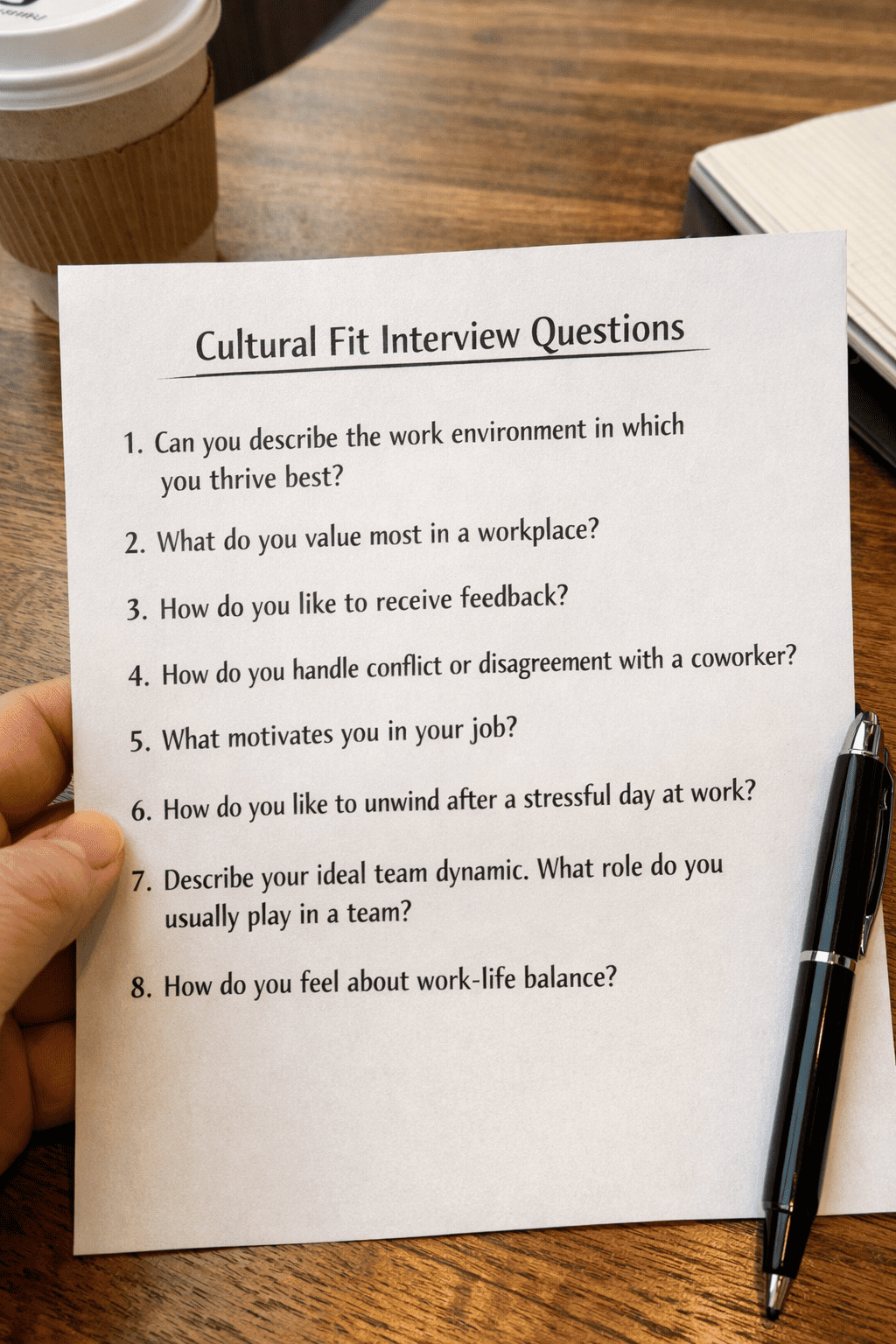
One of the biggest mistakes recruiters make is treating interviews like a casual conversation that flows naturally. But, without consistent structure, you risk comparing apples to oranges, and that makes it harder to hire the right person.
A structured interview means you use a consistent script that reflects the job’s realities and what success looks like on the job. That consistency lets you collect comparable information, so you can make decisions rooted in evidence.
A meta-analysis of interview methods even found that structured interviews are nearly twice as predictive of job performance.
To build a structured question set, start with a job analysis — deeply understand the skills, behaviours, and outcomes the role requires. Then craft questions that map to those criteria so you’re evaluating the right things
A structured approach can include several types of questions:
- Verification (to confirm factual experience)
- Behavioural (to see past actions)
- Situational (to test future thinking).
Each question should be tied back to a competency you care about.
3. Use a Consistent Scorecard
Instead of relying on gut feelings, you and your hiring team want to score candidates objectively and compare them side-by-side with confidence. Scorecards help you move from subjective impressions to evidence-based hiring decisions.
An interview scorecard is essentially a standardized evaluation tool that lists key competencies and behaviours tied to the role, provides a consistent rating scale, and gives space for comments that explain why a candidate scored as they did. It makes sure every candidate is assessed on the same factors and with equal attention, which drives fairness and clarity in your process.
Start by identifying the specific skills and attributes that are essential for the role. These should align with the job description and the actual demands of the position. For example, you might include :
- Technical skills (e.g., proficiency in certain software or programming languages)
- Soft skills (e.g., communication, teamwork)
- Cultural fit (e.g., alignment with company values)
Use a numerical scale to evaluate each skill or competency. A common system is a 1 to 5 scale, where 1 indicates the candidate lacks the required skill, and 5 shows they are highly proficient. For example:
- 1: Does not meet expectations
- 2: Partially meets expectations
- 3: Meets expectations
- 4: Exceeds expectations
- 5: Far exceeds expectations
Be sure to define what each number means to avoid different interpretations by interviewers.
Assign weights to each skill. For instance, a technical skill that’s crucial for the role could be given a higher weight than a soft skill that’s desirable but not essential. You could use coefficients to reflect this priority, like weighting a technical skill at 5 and a soft skill at 2.
4. Suggest Realistic Scenarios

If you want interviews that predict real performance, you need to put candidates in realistic scenarios they could actually face on the job.
Realistic scenario questions — also called situational or scenario-based interview questions — ask candidates to either imagine a potential challenge you might expect them to face or to describe how they actually handled a similar situation in the past. These questions put judgment and process front and center, giving you more reliable insight into future performance.
For example:
- “Imagine your team misses an important deadline because two key contributors had conflicting priorities. What would you do?”
- “Tell me about a time when you had to resolve a conflict between colleagues who were failing to collaborate.”
5. Look for Behavior (Not Just Words)
When you’re interviewing, the answers you hear are just the beginning. What truly matters is the behavior the candidate demonstrates through those answers.
Rather than focusing on rehearsed talking points or abstract claims of ability, look for concrete examples of behavior in real situations. This reveals how a person actually acted in contexts similar to the ones they’ll face on your team.
That’s precisely why many modern recruiters rely on behavioral interviewing: it lets you assess past actions as predictors of future performance.
Behavioral interviewing is based on a simple principle: past behavior is the best indicator of future actions in similar circumstances. Instead of asking “Would you handle X?” you ask candidates to describe situations they’ve already lived through : situations where they handled conflict, made tough decisions, adapted to change, collaborated under pressure....
A classic way to structure these responses is the STAR method (Situation, Task, Action, Result). With STAR, candidates break down their examples into digestible parts:
- Situation: the context or challenge they faced,
- Task: what they were responsible for,
- Action: what steps they took,
- Result: the outcome of those actions.
6. Ask Unexpected Questions

Unexpected questions break candidates out of autopilot. Too many interviews rely on the same predictable questions — “What are your strengths?” or “Why do you want to work here?” Candidates anticipate those and prepare canned responses.
In contrast, well-chosen unexpected questions require candidates to think on their feet and share authentic insight about their decision-making, values, and creativity.
For example:
- “If you could have any superpower, what would it be — and how would you use it at work?”
- “What’s one thing you would change about your last job if you could?”
- “It’s noon one year from now — what are you doing?”
Unexpected questions are especially useful when you want to gauge soft skills and non-technical traits. For instance, asking a candidate how they’d reinvent their previous job can reveal whether they’re curious and improvement-oriented.
7. Rephrase Answers to Test Understanding
One powerful interviewing technique you can adopt right away is rephrasing or paraphrasing candidate answers back to them.
After a candidate responds to a question, pause and reflect their answer in your own words — a bit like “I’m hearing that…” or “So you’re saying…”. This tells the candidate you’re actively present and gives them the chance to correct or expand on parts the first answer didn’t fully cover.
You don’t need special training to rephrase effectively, but there are a few tips to make this technique work smoothly in real interviews:
- Use neutral language — don’t “lead” with your own judgement (“You did great here…”), just restate the core meaning.
- Pause after their answer before rephrasing — don’t rush in. A brief silence helps you digest and respond accurately.
- Invite clarification or elaboration if something still feels vague (“Does that mean…?”).
8. Take Structured Notes with AI

Manual note-taking can distract you from listening actively. That’s where Noota comes in :
Automated Recording & Transcription
Noota records your interviews — whether they’re on Zoom, Google Meet, Teams, or even in-person — and converts speech into text accurately and quickly. You don’t have to juggle a laptop and candidate conversation at the same time, which means you stay present and engaged.
Structured Summaries & Reports
After the interview, Noota doesn’t just hand you a long transcript. It transforms your conversation into clean, structured insights — highlighting key points, decisions, candidate strengths, and important quotes — giving you a ready-to-share interview report in minutes.
Smart Scorecards Tailored to Your Criteria
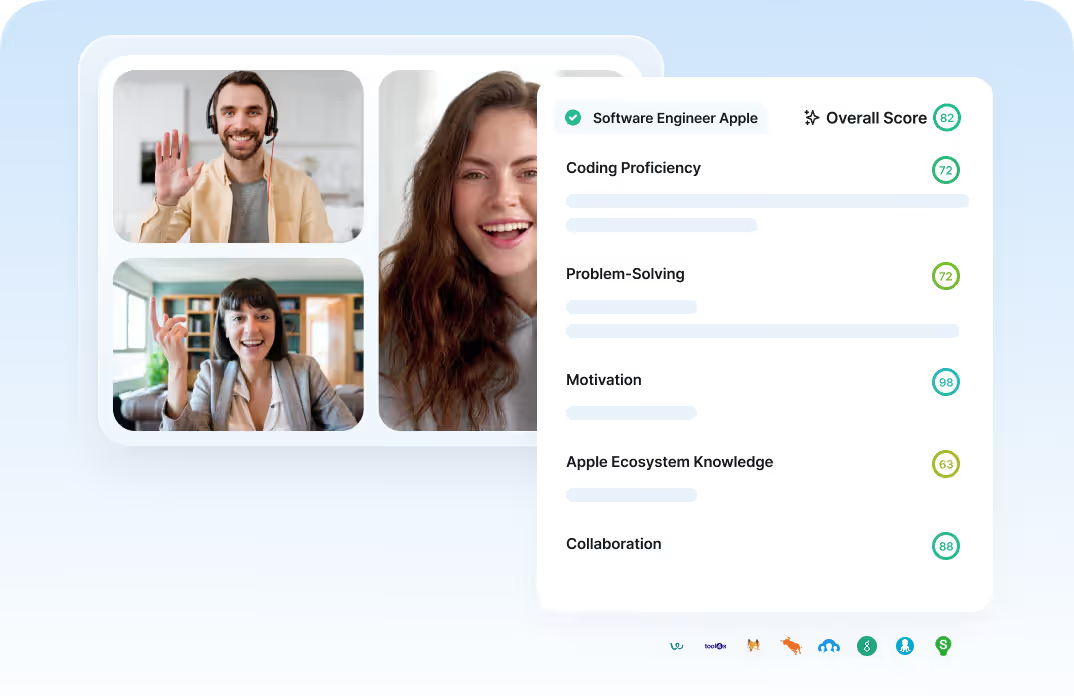
Instead of manually writing evaluation notes after each interview, AI can generate smart scorecards aligned with your hiring criteria. This makes it easier for you and your team to compare candidates objectively and consistently.
Integration with Your Tools
Noota syncs with ATS systems and communication tools like Slack, Notion, and CRM platforms, so interview insights don’t get stuck in one place. Your candidate records, notes, and summaries move seamlessly into the systems you already use — no copy-paste, no lost information.
Searchable Transcripts & Highlights
With Noota, you can quickly search through transcripts to find specific moments, phrases, or candidate responses you want to revisit. This is a huge advantage when you’re comparing answers across multiple candidates or just double-checking a detail before a decision.
FAQ
❓ What’s the difference between structured and unstructured interviews?
Structured interviews use a consistent set of questions for every candidate, asked in the same order. This helps you compare responses objectively because you’re gathering the same type of information from everyone. Unstructured interviews feel more like a casual conversation and can be useful for rapport, but by themselves they make comparisons between candidates less reliable and may introduce bias. Structured techniques lead to better hiring decisions and fairer evaluation.
❓ Why are behavioral and situational questions so important?
Behavioral questions ask candidates to describe real situations they’ve experienced, which gives you evidence of how they actually behave under pressure or in complex scenarios. Situational questions, on the other hand, present hypothetical challenges relevant to the role and assess how they would think on their feet. Both techniques help you move beyond generic answers and evaluate how someone might perform in similar situations at your company.
❓ How do I make sure I’m listening actively during interviews?
Active listening means focusing fully on the candidate’s words, tone, and body language without planning your next question while they speak. Techniques like paraphrasing answers back to the candidate and asking thoughtful follow-ups show you’re engaged and help clarify meaning. This improves your understanding and signals respect, which often leads to richer responses.
❓ What is a scorecard and why do I need one?
A scorecard is a structured evaluation tool that lists the key competencies, behaviours, and skills you’re assessing — each with a consistent rating scale. Using scorecards helps ensure every candidate is evaluated fairly and against the same criteria, which improves consistency and reduces bias in your hiring decisions. Recruiters often use them alongside techniques like STAR (Situation, Task, Action, Result) to evaluate responses to behavioral questions.
❓ How do I handle unexpected answers or silence?
Instead of letting silence hang, use it as an opportunity to dig deeper. Try rephrasing the question or summarising what you’ve heard so far and invite the candidate to clarify or expand. Silence often encourages candidates to think more deeply and reveal insights they wouldn’t otherwise share. This also gives you clearer data to score and compare later.
❓ Should I tailor questions for each candidate?
Yes — to a degree. You should have a core set of structured questions for consistency, but leaving room to follow up based on a candidate’s specific background or responses helps you understand their real thought process and how their experience translates to your role. Balancing structure with thoughtful flexibility is a key skill in effective interviewing.
❓ How do I avoid bias during interviews?
Bias often creeps in when interviewers rely on gut feeling or unstructured conversations. To reduce it:
- Use structured questions and scorecards so comparisons are consistent.
- Focus on behavioural evidence rather than impressions.
- Involve multiple interviewers and compare notes objectively.
These practices help ensure you hire based on skills and fit — not on charisma or first impressions.
❓ What’s the most actionable tip for better interviewing?
Prepare a list of job-relevant scenarios and behavioral questions ahead of time, use consistent evaluation criteria (like a scorecard), and practice active listening throughout the process. When you combine these techniques, you move from asking questions to gathering useful insights that truly predict future performance in your team.
Meet the Writer

FAQ
Active listening helps recruiters pick up on subtle cues and hidden motivations that don't appear on résumés, leading to better hiring decisions.
- Reveals candidate concerns through non-verbal signals and tone shifts
- Builds rapport and encourages candidates to share more openly
- Provides deeper insight into candidate thinking and problem-solving
Structured interviews use consistent questions tied to job requirements, making them nearly twice as predictive of job performance than unstructured approaches.
- Enables fair comparison between candidates using same criteria
- Reduces bias by focusing on evidence-based evaluation
- Ensures all candidates assessed on identical competencies
Noota automates interview documentation and scoring, saving 6.4 hours weekly while reducing admin by 80% compared to manual scorecard methods.
- Automatically transcribes and summarizes interviews across 80+ languages
- Generates objective scoring instantly without manual note-taking
- Trusted by 5000+ teams with 4.9/5 G2 rating for reliability
Noota combines structured interview frameworks with AI-powered automation, helping teams maintain consistency while reducing hiring admin by 80%.
- Captures and scores all interviews consistently across your team
- Eliminates manual documentation burden during hiring season
- Try Noota free — no credit card needed