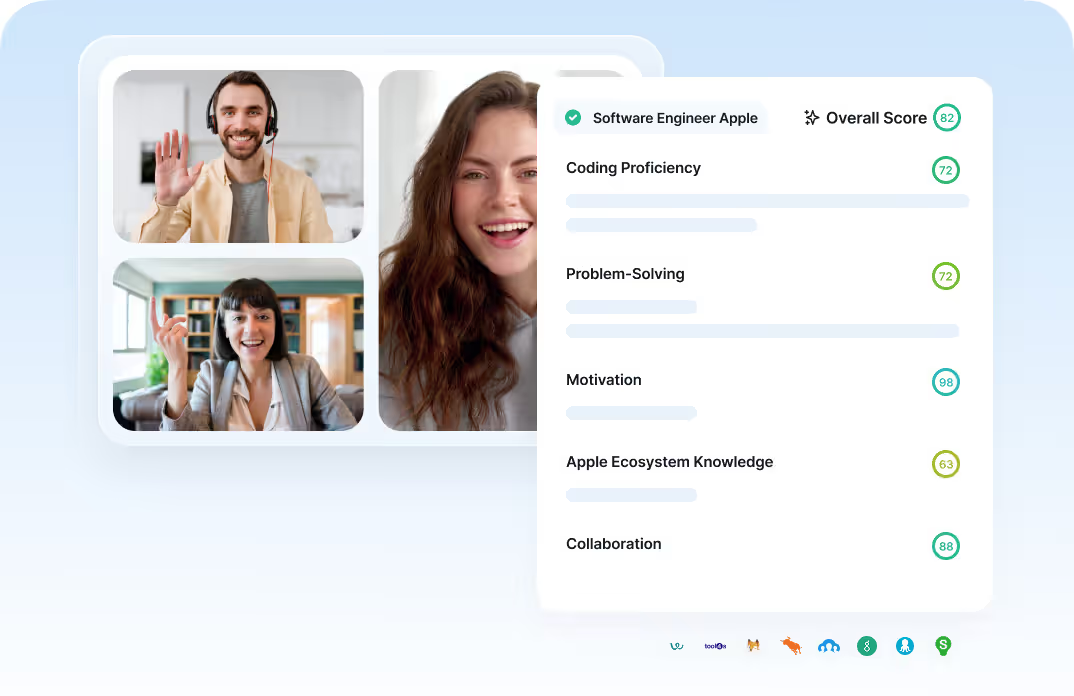



Interview Questions & Techniques
8 min reading
Updated on:
Dec 17, 2024
Interview Script : a Guide with Template
You want to know what a good interview script looks like ? Here's a template and example.

Staying on track while ensuring fair & consistent interviewing can be a challenge.
That’s where a well-structured interview script can help.
This article will explore what to include (and avoid) in an interview script, and a customizable template.
Is Relying on an Interview Script a Good Idea?
Absolutely. Scripts ensure consistency, a cornerstone of fair hiring practices. They make it easy to evaluate candidates against the same criteria, leveling the playing field and reducing the risk of favoritism.
Without it, you risk veering off course, missing critical questions, or letting unconscious biases creep in. It’s not just a tool for beginners; seasoned professionals benefit from this structure, too.
Critics argue that scripts can make interviews feel robotic or limit the conversation. But that’s a problem with execution, not the concept itself. A good script gives you a strong foundation while allowing room for adaptability. By reducing the mental load of remembering every question, they free you to focus on the candidate’s responses. This enables you to dig deeper and ask meaningful follow-up questions—something far more impactful than unstructured improvisation.
What to Put in an Interview Script

To create an effective script, you need to focus on elements that add value to the conversation while eliminating unnecessary clutter :
What to Include
- Opening Questions to Build Rapport: Start with light, conversational questions to put the candidate at ease, such as "What excites you about this role?"
- Role-Specific Questions: Tailor your script to the job requirements. For example, for a marketing role, include questions about campaign strategies or analytics experience.
- Behavioral Questions: Use frameworks like STAR (Situation, Task, Action, Result) to dive into past experiences. Questions like, "Can you describe a time you overcame a major challenge at work?" reveal valuable insights.
- Cultural Fit Questions: Ask about values and working styles to ensure alignment with your company’s culture. For instance, "How do you approach collaboration in a team setting?"
- Closing Questions: End with prompts that give candidates a chance to ask questions and summarize their strengths. "Do you have any questions for us?" or "Is there anything else you’d like to share about your qualifications?" are great options.
What to Avoid
- Literal Script of the conversation: be flexible to candidate's answers and give space to follow-up questions
- Leading or Biased Questions: Be careful not to phrase questions in a way that suggests a "correct" answer, such as "Don’t you think teamwork is important?"
- Overloading the Script: Too many questions can overwhelm both the interviewer and the candidate. Focus on quality, not quantity.
Interview Script Template

Below is a customizable interview script template that you can use and adapt for your specific hiring needs:
1. Opening (5 minutes)
- Greeting:"Thank you for joining us today. How are you doing?"
- Introduction:"Let me quickly introduce myself and the role we’re discussing today."
- Icebreaker:"What’s something you’ve recently worked on that you’re proud of?"
2. Role-Specific Questions (15-20 minutes)
- "Can you walk me through your experience with [specific skill or responsibility]?"
- "How would you approach [a common challenge in the role]?"
- "What tools or methods have you used to [specific task or outcome]?"
3. Behavioral Questions (10-15 minutes)
- "Tell me about a time when you faced a major obstacle at work. How did you handle it?"
- "Describe a situation where you had to collaborate with a difficult colleague. What was the outcome?"
- "Can you share an example of a project where you exceeded expectations?"
4. Cultural Fit and Soft Skills (10 minutes)
- "What type of work environment do you thrive in?"
- "How do you typically approach teamwork and collaboration?"
- "How do you handle feedback or constructive criticism?"
5. Closing (5-10 minutes)
- "Do you have any questions about the role or our company?"
- "Is there anything else you’d like to share that we haven’t covered?"
- "Here’s what you can expect next in the process."
AI Interview Guidelines & Notes: Noota
.webp)
Leveraging AI tools like Noota can elevate your interview process to a new level. Here’s how Noota simplifies and enhances your interviews:
- Streamline Your Interview QuestionsIt’s easy to get caught up in conversation and forget to ask key questions. Noota provides reminders to ensure you cover the essential topics. This helps you stay on track and maintain consistency across interviews.
- Automatic Recording and TranscriptionForget the stress of scribbling notes while trying to engage with the candidate. Noota records and transcribes interviews in real-time, allowing you to focus fully on the discussion. This feature ensures nothing important is missed.
- Generate Structured SummariesInstead of sifting through pages of notes, Noota creates concise summaries highlighting key takeaways, strengths, and improvement areas for each candidate. This makes post-interview evaluation more efficient and insightful.
- Ensure Objective Evaluation with Customizable TemplatesNoota enables you to use structured interview methods like the STAR framework and apply them consistently across candidates. This ensures fairness and removes subjectivity from the evaluation process.
Want to stop worrying about note-taking and start conducting interviews with confidence and precision ? Try Noota for free.
Meet the Writer
.webp)
FAQ
Interview scripts ensure consistency and fairness in hiring by evaluating all candidates against the same criteria. They reduce unconscious bias, prevent critical questions from being missed, and free you to focus on candidate responses rather than remembering questions.
- Eliminates favoritism and ensures level playing field
- Reduces mental load during interviews
- Enables deeper follow-up questions
Effective interview scripts combine multiple question types to assess candidates comprehensively. Include opening rapport-builders, role-specific technical questions, behavioral questions using STAR framework, cultural fit questions, and closing prompts.
- Opening questions to build rapport and ease
- Behavioral questions revealing past experiences
- Role-specific questions matching job requirements
While interview scripts provide structure, Noota automates the entire process with AI-powered recording, transcription, and analysis across 80+ languages. Teams save 6.4 hours weekly and reduce admin by 80% while maintaining consistency—plus 5000+ teams trust Noota with 4.9/5 G2 rating.
- Automated transcription eliminates manual note-taking errors
- AI analysis ensures objective candidate evaluation
- Reduces bias better than scripts alone
For teams conducting multiple interviews weekly, Noota combines interview scripts with AI automation. It records, transcribes, and analyzes interviews in 80+ languages while saving 6.4 hours per week per team member. Try Noota free — no credit card needed.
- Automates transcription and candidate comparison
- Removes interviewer bias with objective analysis
- Scales consistency across unlimited interviews